Mountain settlements with a living cultural heritage
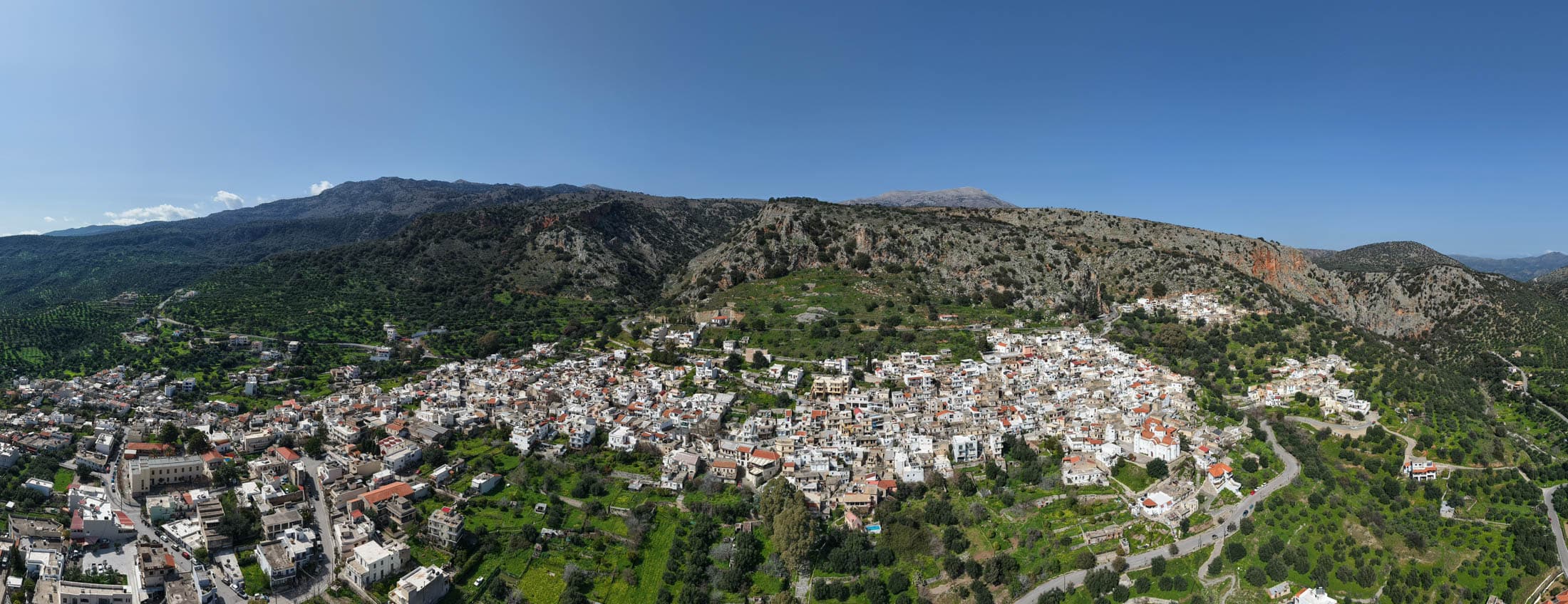
The Pomak villages offer a rare sequence of captivating landscapes, combining natural beauty with a distinctive cultural identity. Begin your journey in Sminthe, where the striking white mosque dominates the scenery. Continue to Myki, a lively settlement where women proudly preserve their colourful traditional dress, turning everyday life into a living folklore exhibition.
In the more austere village of Echinos, you will encounter the iconic Eski Mosque and Teke Mosque. In Glafki and Pachni, the higher altitude rewards you with breathtaking views over the gorges of the Rhodope Mountains. In Medousa, you will pause before a stone double-arched bridge that blends harmoniously with its natural surroundings. From there, a demanding road leads to Kotani, a village where houses date back more than two centuries. Conclude your visit at a local taverna-museum, where authentic recipes such as patatnik (a traditional Pomak pie made with grated potato), parenik (a cornmeal pie), aubergines with cheese, and pies with cured meat offer a true gastronomic journey through time.
The route towards the Greek–Bulgarian border passes through Satres, winding through cultivated land and fields, before reaching Thermes. This little-known spa town is renowned for its thermal springs, ideal for balneotherapy and drinking cures. Kidaris is the last village before the border crossing at Agios Konstantinos. Its distinctive architecture, featuring wooden drying racks for tobacco, and the warmth of its people create an experience that reflects a deep respect for the cultural heritage of Thrace.
In the more austere village of Echinos, you will encounter the iconic Eski Mosque and Teke Mosque. In Glafki and Pachni, the higher altitude rewards you with breathtaking views over the gorges of the Rhodope Mountains. In Medousa, you will pause before a stone double-arched bridge that blends harmoniously with its natural surroundings. From there, a demanding road leads to Kotani, a village where houses date back more than two centuries. Conclude your visit at a local taverna-museum, where authentic recipes such as patatnik (a traditional Pomak pie made with grated potato), parenik (a cornmeal pie), aubergines with cheese, and pies with cured meat offer a true gastronomic journey through time.
The route towards the Greek–Bulgarian border passes through Satres, winding through cultivated land and fields, before reaching Thermes. This little-known spa town is renowned for its thermal springs, ideal for balneotherapy and drinking cures. Kidaris is the last village before the border crossing at Agios Konstantinos. Its distinctive architecture, featuring wooden drying racks for tobacco, and the warmth of its people create an experience that reflects a deep respect for the cultural heritage of Thrace.