A Universal Legacy
Thessaloniki is an open-air museum, with UNESCO having recognised 15 Paleochristian and Byzantine monuments as World Heritage Sites. Every stroll through the city reveals the Byzantine splendour through temples, monasteries, and fortifications that have shaped the history of mankind.
Iconic Churches and Basilicas
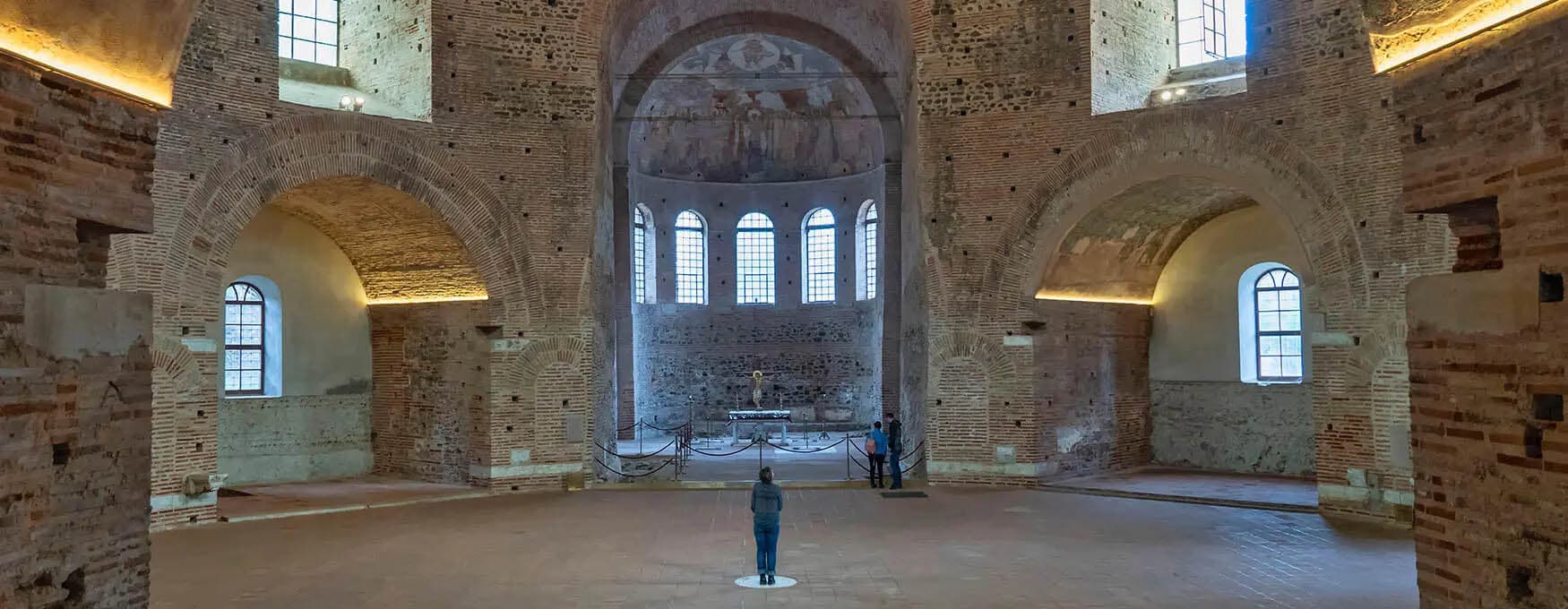
The Rotunda, the imposing circular structure from the 4th century, captivates with its mosaics, considered the oldest in the East. Saint Demetrius, the five-aisled church of the city's patron saint, serves as a spiritual centre, with its historic crypt functioning as a museum. Acheiropoietos (450-475 AD) remains a jewel of devotion as one of the earliest Christian churches, while Agia Sophia church (8th century) stands as an eternal spiritual beacon with its unique mosaics.
In Ano Poli (Upper Town), Latomou Monastery (Saint David) houses the only mosaic in the world depicting Christ in his youth. Panagia Chalkeon (1028), also known as the Red Church due to its brick enclosed masonry, adorns the Ancient Agora with its delicate Byzantine grace.
The Jewels of the Palaiologos
The Late Byzantine period bequeathed masterpieces to the city, such as the Church of the Holy Apostles (1310), with its rich decoration fully revealed in 2002. The Church of Saint Panteleimon and the enigmatic Church of Saint Nicholas Orphanos, with their exceptionally well-preserved mural icons, attest to the flourishing of the Macedonian school. The Church of Saint Catherine and the Church of the Prophet Elijah, built on a natural elevation with Athonite architecture, complete the artistic wealth of that era.
Monasteries, Convents, and Social Life
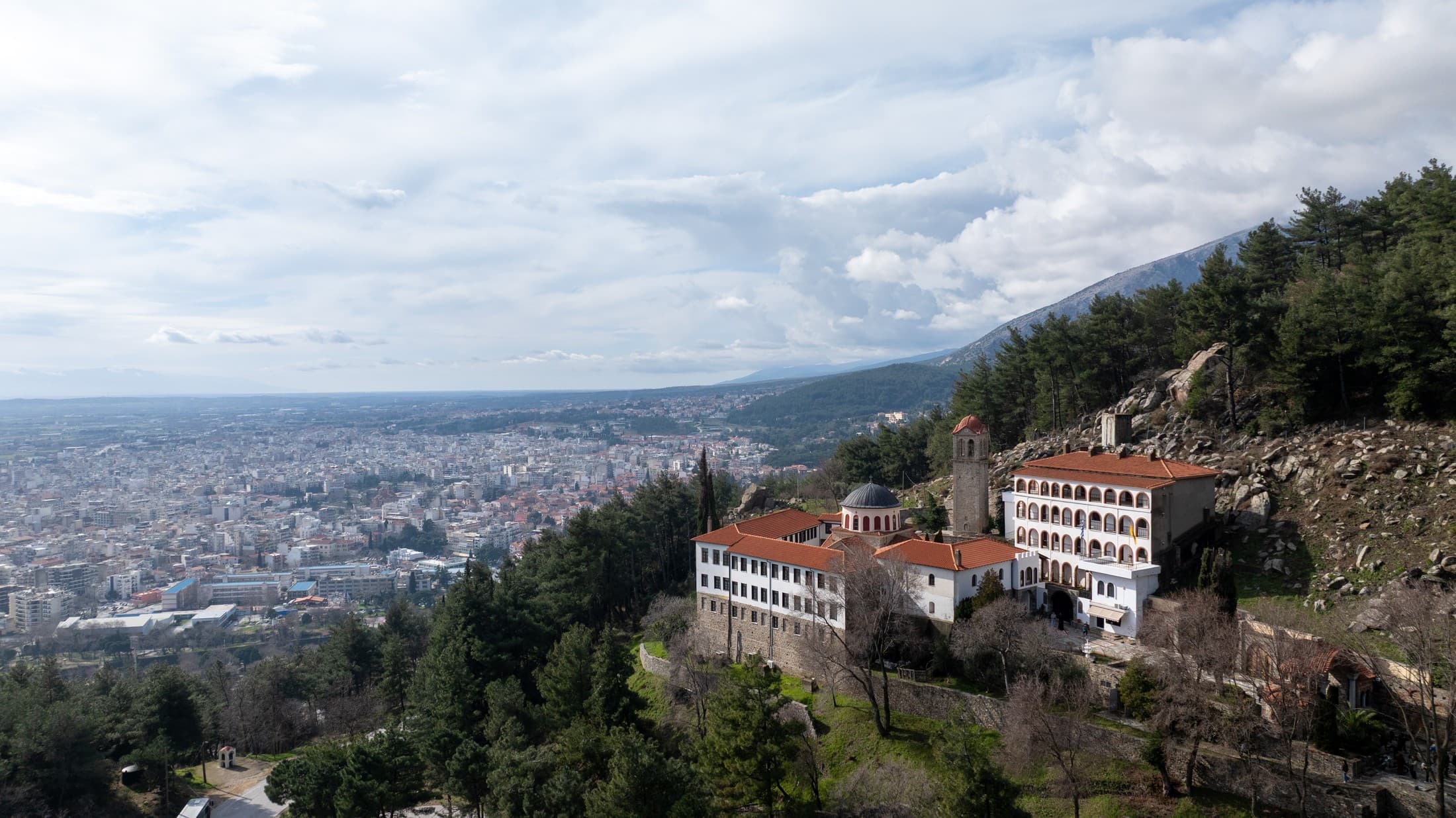
Vlatadon Monastery, the only functioning Byzantine monastery in the city, is located near the Heptapyrgion and is associated with the teachings of the Apostle Paul. The Church of the Transfiguration of the Saviour was built under the care of Anna Palaiologina, enhancing the religious sentiment of the empire. The Byzantine Bath in Upper Town is unique in Greece and it operated without interruption from 1300 until 1940.
The Walls and Fortifications
The city’s stone-clad history is enclosed within its Byzantine Walls. The Heptapyrgion fortress dominates the northeastern edge, standing as one of the most iconic fortresses in the Balkans. Trigonion Tower, along with the White Tower, were the strongest fortifications. Today, the Castle area offers the most breathtaking views of the Thermaic Gulf, allowing visitors to feel the magic of a history that began in Roman times and remains intact to this day.
Iconic Churches and Basilicas
The Rotunda, the imposing circular structure from the 4th century, captivates with its mosaics, considered the oldest in the East. Saint Demetrius, the five-aisled church of the city's patron saint, serves as a spiritual centre, with its historic crypt functioning as a museum. Acheiropoietos (450-475 AD) remains a jewel of devotion as one of the earliest Christian churches, while Agia Sophia church (8th century) stands as an eternal spiritual beacon with its unique mosaics.
In Ano Poli (Upper Town), Latomou Monastery (Saint David) houses the only mosaic in the world depicting Christ in his youth. Panagia Chalkeon (1028), also known as the Red Church due to its brick enclosed masonry, adorns the Ancient Agora with its delicate Byzantine grace.
The Jewels of the Palaiologos
The Late Byzantine period bequeathed masterpieces to the city, such as the Church of the Holy Apostles (1310), with its rich decoration fully revealed in 2002. The Church of Saint Panteleimon and the enigmatic Church of Saint Nicholas Orphanos, with their exceptionally well-preserved mural icons, attest to the flourishing of the Macedonian school. The Church of Saint Catherine and the Church of the Prophet Elijah, built on a natural elevation with Athonite architecture, complete the artistic wealth of that era.
Monasteries, Convents, and Social Life
Vlatadon Monastery, the only functioning Byzantine monastery in the city, is located near the Heptapyrgion and is associated with the teachings of the Apostle Paul. The Church of the Transfiguration of the Saviour was built under the care of Anna Palaiologina, enhancing the religious sentiment of the empire. The Byzantine Bath in Upper Town is unique in Greece and it operated without interruption from 1300 until 1940.
The Walls and Fortifications
The city’s stone-clad history is enclosed within its Byzantine Walls. The Heptapyrgion fortress dominates the northeastern edge, standing as one of the most iconic fortresses in the Balkans. Trigonion Tower, along with the White Tower, were the strongest fortifications. Today, the Castle area offers the most breathtaking views of the Thermaic Gulf, allowing visitors to feel the magic of a history that began in Roman times and remains intact to this day.