An element of Intangible Cultural Heritage from Lefkada
The Karsani stitch is a distinctive form of embroidery born from the ingenuity of the women of mountainous Karya in Lefkada. It is one of the most important examples of folk handicraft in the Ionian Islands and a living bearer of the island’s cultural identity.
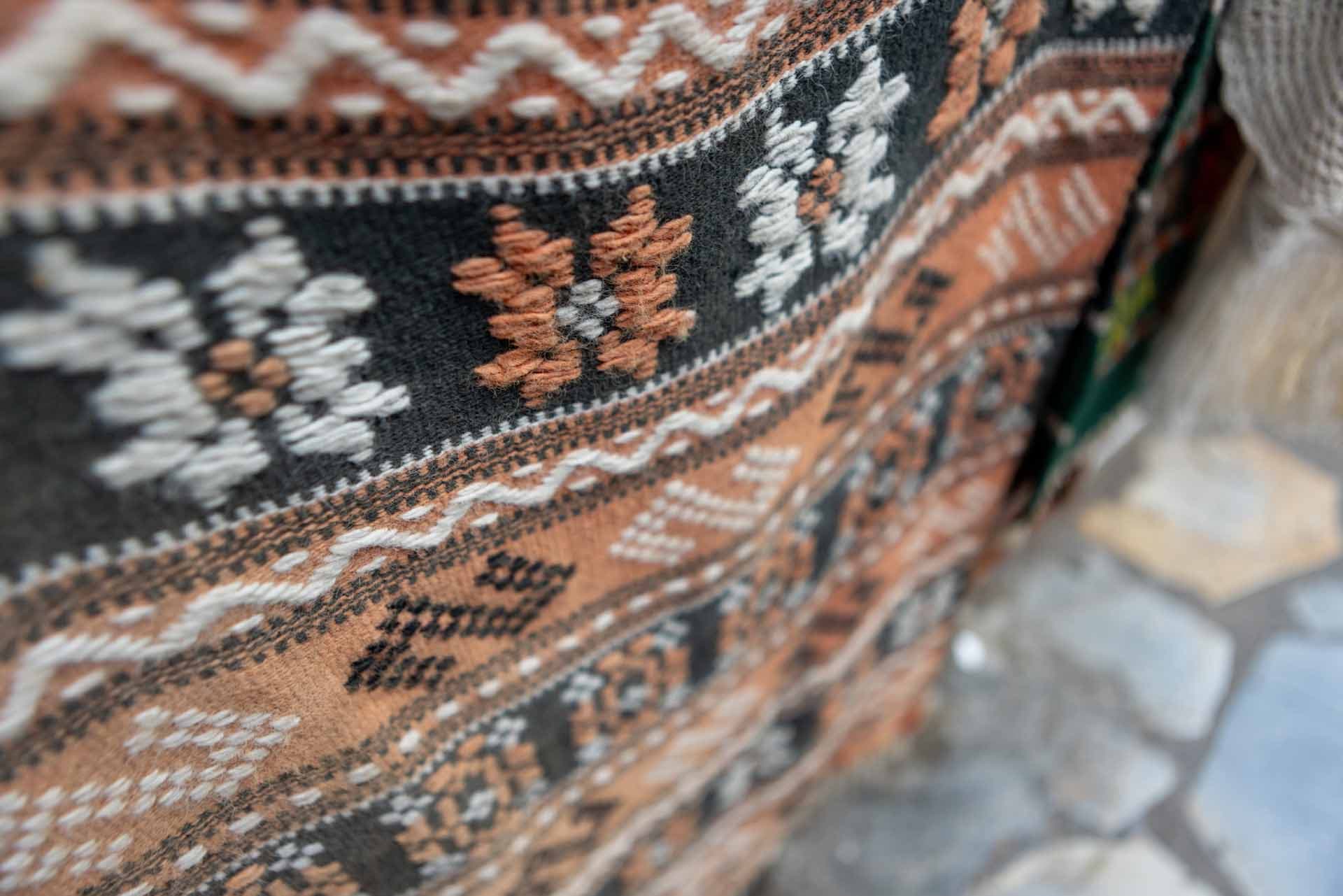
This is a unique technique that goes beyond the traditional cross-stitch, using the “stavrogazi” and the “kafasovelonia” stitches to create intricate geometric motifs marked by absolute precision and balance. Traditionally, the embroidery was made entirely by hand, without an embroidery hoop, on white fabric, using a needle and fine cotton or silk thread - a process that demanded great skill and patience. The result is double-sided masterpieces, with an aesthetic that surprises through its complexity and timeless finesse.
The motifs of Karsani embroidery were used mainly to decorate household textiles such as bed sheets, towels and bridal dowry items, drawing inspiration from nature, religion and everyday life.
A key figure in its history was the emblematic Maria Stavraka, who systematised and spread the Karsani stitch, turning the needlework of Karya into symbols of spirituality and refinement. It was an art passed down from generation to generation, mainly by women, serving both as a means of social cohesion and as a form of personal expression.
Karsani embroidery was inscribed in 2019 on the National Inventory of Intangible Cultural Heritage of Greece, a fact that highlights its importance for preserving local traditional art.
Through documentation initiatives, exhibitions and educational programmes, this folk art continues to be celebrated. In local shops, you can find embroideries that are true works of art and discover this precious cultural treasure of Lefkada up close.
This is a unique technique that goes beyond the traditional cross-stitch, using the “stavrogazi” and the “kafasovelonia” stitches to create intricate geometric motifs marked by absolute precision and balance. Traditionally, the embroidery was made entirely by hand, without an embroidery hoop, on white fabric, using a needle and fine cotton or silk thread - a process that demanded great skill and patience. The result is double-sided masterpieces, with an aesthetic that surprises through its complexity and timeless finesse.
The motifs of Karsani embroidery were used mainly to decorate household textiles such as bed sheets, towels and bridal dowry items, drawing inspiration from nature, religion and everyday life.
A key figure in its history was the emblematic Maria Stavraka, who systematised and spread the Karsani stitch, turning the needlework of Karya into symbols of spirituality and refinement. It was an art passed down from generation to generation, mainly by women, serving both as a means of social cohesion and as a form of personal expression.
Karsani embroidery was inscribed in 2019 on the National Inventory of Intangible Cultural Heritage of Greece, a fact that highlights its importance for preserving local traditional art.
Through documentation initiatives, exhibitions and educational programmes, this folk art continues to be celebrated. In local shops, you can find embroideries that are true works of art and discover this precious cultural treasure of Lefkada up close.