Travel Tips

Travel Tips

Travel Tips

Must-Taste: The Top Food Artisans in the Cyclades, Greece for 2024

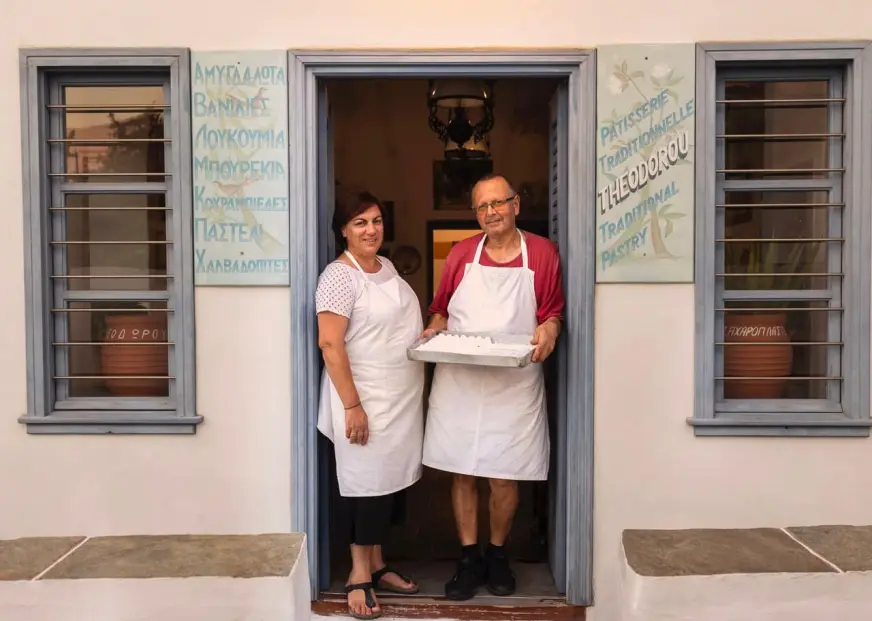
The 17th Gastronomos Quality Awards honored the best producers from the Cyclades for 2024 in a ceremony hosted at the iconic Apollon Theater, Syros, which celebrates its 160th anniversary. This year’s awards were dedicated to Cycladic producers. At a crucial historical crossroads for the Cyclades, where various circumstances have reduced engagement with agriculture and production, the Gastronomos Awards shed light on the exceptions. These are the people who continue to toil with the land and their animals, produce cheeses and traditional cured meats, cultivate local varieties, and fiercely protect the Cycladic way of life. Mykonos Koukas Cheesemakers of Mykonos Two cheesemakers were recognized and awarded by Gastronomos this year after a blind tasting; one is located on the island of winds, Mykonos: Tyrokomeio Mykonou Koukas. They produce myzithra, which the old Mykonians used to call kopanisti, along with the traditional Mykonian tyrovolia and xinotyro, all made with their own fresh milk from their farm in Ano Mera. Koukas - Mykonos | © Angelos Giotopoulos Dimitris Rousounelos, the figure preserving the ‘Old Mykonos’ Additionally, an honorary award was given to Dimitris Rousounelos, a passionate Mykonian who has extensively researched the island’s culinary traditions. Through his books, seminars and other efforts, he strives to preserve the essence of Old Mykonos. He recently completed an in-depth study on Cycladic cheesemaking for the Ministry of Culture, documenting it for inclusion in Greece’s National Intangible Cultural Heritage Registry and UNESCO’s Intangible Cultural Heritage list. He is considered a teacher by chefs and producers across the Cyclades. Rousounelos - Mykonos | © Angelos Giotopoulos Santorini Domaine Sigalas  A special award for contributions to the wine industry was given to Paris Sigalas from Santorini. Since 1998, Domaine Sigalas has led the island into a new era with its wines. Paris Sigalas is the cornerstone of Santorini’s modern wine history. Nomikos Estate Local Products Santorini also took home another award for traditional production, given to the Nomikos Estate, which produces local delicacies including fava beans, pistachios and tomatoes from native seeds with minimal intervention. Paros Moraitis Winery The wine production award went to the Moraitis Winery on Paros, the island’s oldest and one of Greece’s most historic wineries, founded in 1910 by the great-grandfather of the current owner. The winery continues to produce modern wines from the same varieties cultivated by the family for generations, which have since been recognized with a Protected Designation of Origin (PDO) label, the only PDO wines in the Cyclades outside of Santorini. Tinos Rouggeri Wild Artichokes From Tinos, farmer Favianos Rouggeris received recognition for his persistence in cultivating wild artichokes, battling against the island’s water shortages and supplying the entire island with his produce. Sifnos Theodorou Pastry Shop for their Amigdalota The Theodorou pastry shop on Sifnos was honored for its exceptional traditional amigdalota (almond sweets) with the Evi Voutsina Award, given annually to producers of standout local products. Vasilodimos Theodorou and his 90-year-old mother, Mrs Katerina, have handmade tens of thousands of these sweets in their workshop with its sea-blue doors in Artemonas. Nikos & Yiannis Lebesis Ceramics Sifnos also saw recognition for the Lebesis family of ceramists, with an award for traditional arts. High in Artemonas lies one of the oldest pottery workshops in Sifnos, operated by Nikos Lebesis and his father Yiannis. Four generations of the Lebesis family have made history in Sifnian pottery. Amorgos Hozoviotissa Fishing Association The sustainability award was given to the Hozoviotissa Professional Fishermen’s Association of Amorgos, which has been fighting to protect the island’s seas for years. The local fishermen have taken bold initiatives to ensure a healthy marine environment rich in fish, proposing to close the island’s three richest fishing grounds, including Katapola Bay, and halting fishing during the breeding season. They’ve also adopted recyclable nets and are working to clean the island’s coasts of plastic. Syros Prekas Grocery in Ermoupoli The award for best store went to the Prekas Grocery in Ermoupoli, a true ark of Cycladic production. From loukoumia and wines to louza, kopanisti and melitzanaki jam, over half of the store’s products come from the Cyclades. For 32 years, this grocery store has been a champion of localism. Prekas Grocery - Syros | © Konstantinos Tsakalidis Serifos Frygana Wild Lavender Honey The award for honey production was given to beekeeper Nikos Kokolakis from Serifos for his wild lavender Frygana Honey, a rare variety now threatened with extinction after a summer fire ravaged a third of the island, destroying many of its unique lavender and thyme bee pastures. Naxos Pittaras Cheesemakers The second cheesemaker awarded by Gastronomos after a blind tasting is Pittaras Dairy from Naxos. Their cheeses, available at major supermarkets, are certified for good animal management, animal welfare, and the use of non-GMO feed. Their specialty is Naxos’ PDO graviera cheese. The 12-month-aged version, with its rare complexity, stood out during the experts’ tasting. Andros Tridimas Brothers Charcuterie The charcuterie production award took us to Andros and the family-run Tridimas Charcuterie, which produces louza and other Cycladic cured meats without preservatives. Their products have a chewy texture, a rich, sweet, and intense flavor with minimal fat. Evangelia Roussou - Amorgos | © Michael Pappas Special Award: The 5 Cycladic Women Chefs Finally, a very special award was presented for the first time in memory of restaurant owner George Hatzigiannakis, creator of the iconic Selene restaurant on Santorini. He was the first to showcase fava and local tomatoes in his dishes and advocate for the connection between local production and gastronomy.  In his honor, Gastronomos celebrated five Cycladic women chefs who follow the same path, using the best local ingredients in their cooking. These women are Margarita Kalogeropoulou from Anafi, Rinio Dekavalla from Folegandros, Maria Anagnostopoulou-Katsouna from Paros, Evangelia Roussou from Amorgos, and Matina Koumerta from Naxos.  These women represent all the taverna owners and cooks who have kept tavernas and cafes alive, working tirelessly day and night over frying pans, pots and grills, peeling tons of potatoes and zucchinis, and making countless pies by hand. We owe a debt of gratitude to these unsung heroines of traditional cooking. Modern chefs, restaurateurs, producers and the Cyclades owe them much. Special thanks go to the President of the Hellenic Parliament Konstantinos Tasoulas, who honored us with his presence. Also, we would like to warmly thank the Mayor of Syros - Ermoupolis Alexandros Athanasiou, the Deputy Mayor for Culture Thomai Mendrinou, for her valuable help and hospitality at the Apollo Theater, as well as to the Deputy Mayor of Tourism, Christianna Papitsi. Special thanks to the Historical Museum of Ermoupolis for the design of this year's award. We would like to take the opportunity to thank our sponsors for their warm support: Lidl Hellas, Municipality of Syros - Ermoupolis, Chamber of Cyclades, Aegean Cuisine, Hermoupolis Heritage, hoper, Nespresso Professional, Athens International Airport "Eleftherios Venizelos", Kotsovolos - Dixons South East Europe, AQUA Carpatica, Blue Star Ferries. Finally, we would like to express our gratitude to the volunteers of the Vocational Training Public School of Syros, the Department of Product and Systems Design Engineering of the Polytechnic School of the University of the Aegean, and all the other volunteers for their valuable presence and contribution.
23/10/2024
Must-Taste: The Top Food Artisans in the Cyclades, Greece for 2024
Travel Tips

Zorba the Greek Project – The textiles of Palaiochori

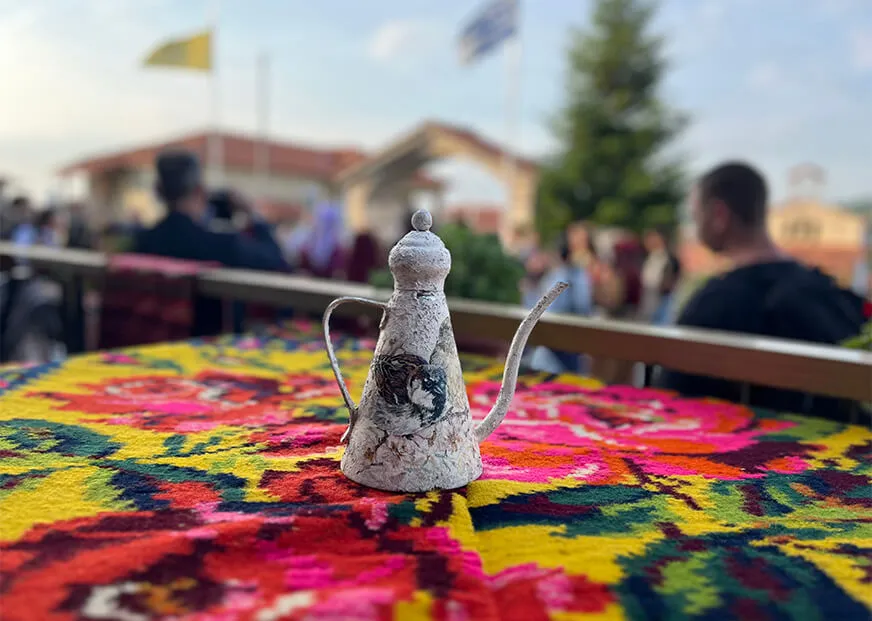
Zorba the Greek, the hero of author Kazantzakis “lives” in Eastern Halkidiki! White houses. Red roofs. Chimneys all around. The winter is cold in Giorgis’ village. It starts in September and until June it has run its course. Thick covers. Woven. Traditional wool rugs. Blankets. All in warm and bright colours. Rugs hanging on the wall. They protect people from the cold and shield the house from damages and dust. Textiles of silk and cotton are covering the beds. On the floor there are woven kilims and carpets. Calligraphic designs. Bright, Yellow, Red, Orange, Brown. As if the floor is laden with flowers. Like gardens blooming at your feet. Masterpieces of craftsmanship and patience. Intricate designs. Images. Beauty. A floor garden in full bloom. And bedding on the furniture. Silk or cotton – loom-woven, too. Fine work. And towels in the kitchen. Humble, but clean houses, fully tidy and packed with women’s dowries. Small, but ornamented salons, full of the light and colour of the tradition of Palaiochori. Beds barely fitting one person, hard and uncomfortable divans, but covered and adorned with intricate textile collections. The textiles of Palaiochori, the textiles of Giorgis and other heroes and heroines of Palaiochori’s everyday life, are part of our historical continuity.

04/10/2024
Zorba the Greek Project – The textiles of Palaiochori
Travel Tips

Sithonia – discover the gem of northern Greece

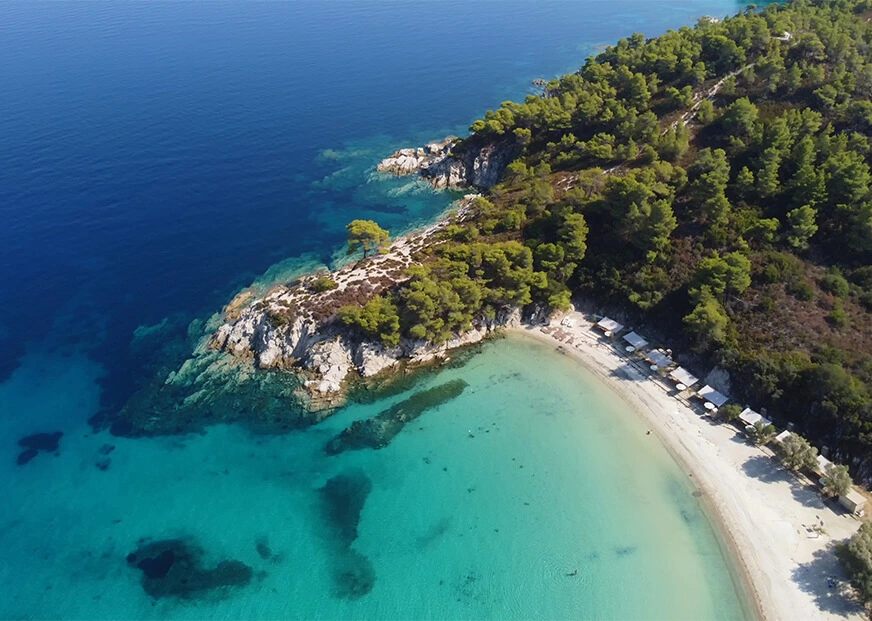
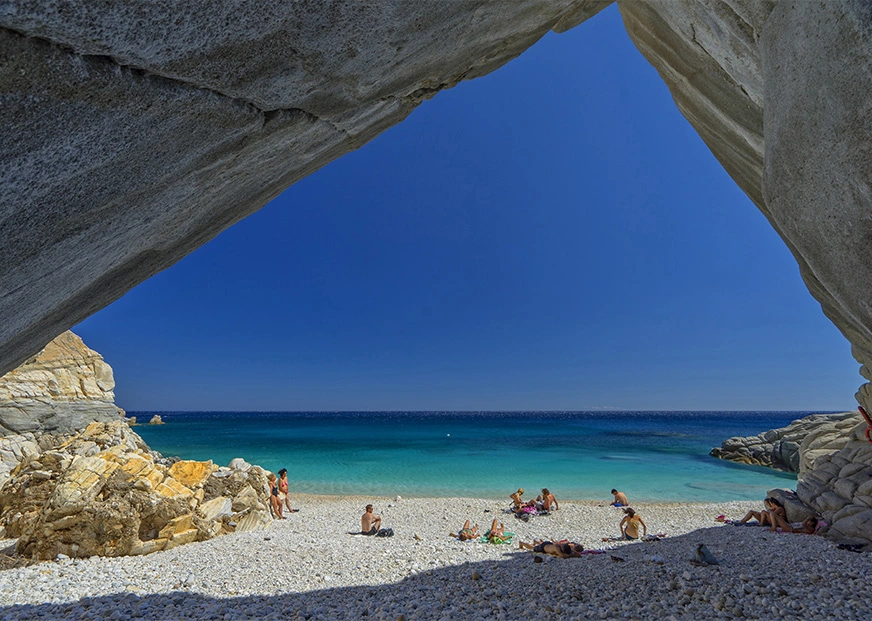
Ivan Andrejic is travel journalist and photographer from Serbia. He travelled to almost 60 countries around the world but his favorite destination that he is visiting each year is Greece. Every year he is trying to visit some new part of Greece, some new islands and villages, but place where he is feeling as at home is beautiful peninsula in northern Greece – Sithonia.  He is introducing his 3 favorite destinations in Sithonia but also presenting his free online book about Sithonia in Romanian language.  Sithonia is well known to tourists from Serbia and Romania and in recent years it has been discovered by German, Italian and French tourists. It is special place with more than 100 beaches and by many – this is region of Greece with the most beautiful beaches of northern Greece.   1. Nikiti and the beaches of western Sithonia:    Nikiti is one of the largest seaside towns in northern Greece that has year-round activities. It is also the place with the best location on the entire coast of Halkidiki, because it is located at the very entrance to Sithonia, in the middle of Halkidiki, at the crossroads that connects the west and east coasts of Sithonia, so you can make day trips and visit the most beautiful beaches of the peninsula during your vacation. Kalogria and Lagomandra are the most famous beaches of this part of Sithonia, but there is one hidden gem that just locals and frequent tourists knows about – it is Kastri beach, south of Nikiti.  2. Toroni and Porto Koufo:  One of the most important historical centers of Halkidiki is Toroni. A powerful city in ancient times, today Toroni is a small place ideal for a quiet vacation without big crowds and loud music. A beautiful sandy beach stretches along the entire town, in a length of two kilometers. Today's modern settlement was named after the former ancient colony of Chalkidians, natives of Evia, who settled present-day Halkidiki and founded numerous cities.  Porto Koufo is a real discovery for many foreign tourists and a secret that the Greeks have kept for a long time. Once a base for submarines with the deepest natural harbor in this part of the Mediterranean, Porto Koufo is slowly developing into a destination with significant potential for active and eco-tourism. As it is surrounded on all sides by massive rocks, cliffs and mountains, there is no wind and waves, and the name itself means "deaf port" in Greek. What is different from other places in Halkidiki is the landscape itself and the very steep massive rocks that rise out of the deep blue sea.  3. Kavourotripes - Orange beach:  One of the most beautiful and exotic beaches in Greece in general. Kavurotripes is an isolated beach that doesn't have many facilities, it doesn't even have organized parking, but because of its beauty and the turquoise blue color of the sea, which resembles the popular beaches of the Caribbean, it is always full of tourists. 

20/09/2024
Sithonia – discover the gem of northern Greece
Travel Tips

“5 Steps to Longevity-the Ikarian Way” Program

The Ikaria Longevity Retreat introduces the 5 Steps to Longevity Program: Meditation, Diet, Mild Movement, Siesta, Connecting. Angeliki Douka (Bs of Physical Education, MA in Psychology of Motor Behavior, PhD in Psychology of Sports and Aqua Fitness Expert) and Kyriaki Spanou (BS in Philosophy, MA in Theatre) have developed and apply this program. Both Angeliki and Kyriaki are two visionaries of Longevity and Wellbeing who spread the message of an alternative lifestyle based on the Ikarian way of living and have designed a program that can be communicated concisely and shared globally. Their warmth and generosity makes the experience enjoyable, emotional and unique. Ikaria is one of the five Blue Zones in the world and its inhabitants are globally famous for living a long and serene life due to their stress – free everyday life, healthy plant-based diet, community bonds and their easy going philosophy of living. Nearly one of three Ikarians make it to their 90s. They eat little, walk long distances, laugh and greet you with warmth and sincerity. They will often take you to their homes. One thing most Ikarians will never stop doing is: GIVING. MEDITATION The people in Ikaria Island used to have many lonely hours working in the fields and moving around. That gave them the time to contemplate life. Meditation is the ideal practice to reinvent this -invigorative habit. DIET Eating is our most direct and close relationship to the world (next to breathing). It shows deep respect to our self to get the best food we can and to make it an enjoyable experience by eating slowly with company. Ikarian diet is a plant and fish-based diet. The island has more than 150 antioxidant-rich herbs and wild greens that due to Ikaria’s acidic soil develop antioxidant qualities beneficial to people. It is a diet poor in meat. They consume only what it comes from home grown chickens and wild goats. Fresh fish is also an essential part of their diet. MILD MOVEMENT Mild movement in the water (Aqua Tai Chi and Aqua Yoga) combines the beneficial effects of movement, the therapeutic power of water and the meditative quality of yoga. This refers ideally to the Ikarian way of movement of walking and swimming. SIESTA At the Ikaria Longevity Retreat we encourage our quests to have a short midday rest or siesta. Harvard school of Public Health has shown naps help to relieve psychological stress and protect the heart from stress-related problems. CONNECTING The famous longevity of the Ikarians is due to their carefree attitude which is built through openness communication, solidarity, responsibility, and festive spirit. An attitude which is encouraged in our program with specially designed theater techniques. The program includes visits at hot springs, winery, beekeeping, along with mountain hicking and finally the famous panigyri (religious feast)! Angeliki and Kyriaki are exceptional ambassadors of Ikarian life and are committed in sharing the values and secrets of Longevity through their 5 Steps Program.

22/07/2024
“5 Steps to Longevity-the Ikarian Way” Program
Travel Tips

Top 6 Wines You Need To Try On Your Next Trip To Greece

It's no secret that wine has long been associated with Greece, with the ancient Greek God Dionysus even credited with its invention. With over 300 indigenous grape varieties, Greece has a lot to offer when it comes to delicious and unique wines that are gaining popularity worldwide. Beyond their distinctive taste, these wines are also rich in antioxidants, making them good for the heart and digestive health. From budget-friendly to high-end options, Greece truly is a wine lover's paradise. Here are the top 6 options to try on your next trip: Agiorgitiko Wine The actual name of the wine is Saint George, and it is grown mainly in the regions of Peloponnese, Central Greece, and some islands in the Aegean Sea. It produces a medium-bodied wine with soft tannins and flavors of red fruit, spices, and vanilla. Agiorgitiko is best combined with meat, pasta dishes with spicy sauces, pizza, sausages, and spicy cheeses. Assyrtiko Wine It is made out of the assyrtiko grape, found mainly in Santorini, and also found in different parts of Greece, such as Crete, some islands of the Aegean Sea, the Peloponnese region, the Attica region, Macedonia, and Thraki. Australia also produces assyrtiko wine. It is a white wine known for its bright acidity, mineral notes, and citrus flavors. Assyrtiko is best combined with shellfish, fish cooked on the grill, salmon, seafood, cheeses, and lamb cooked into lemon sauce. It is also versatile enough to be enjoyed on its own! Xinomavro Wine Xinomavro is a red grape variety that is grown in Northern Greece, specifically in Aminteo, Rapsani, Naousa, and Igoumenitsa. The wine produced is with high acidity and robust tannins, giving the wine a rich, complex flavor profile. Xinomavro and Nebollio, the grape used to make Barolo, are often compared. Xinomavro is best combined with lamb stew, meat, sausages, and mushrooms. Moschofilero Wine A wine that is part of the white grape variety grown in the Peloponnese region and some islands of the Ionian Sea. Moschofilero is a combination of floral aromas and flavors such as peach, grapefruit, lemon, and apricot.  Moschofilero is best combined with green salads, white cheeses, seafood, and chicken. Mavrodaphne Wine A red grape variety that is grown in Kefalonia, Zakynthos, and the Peloponesse region. It produces a sweet dessert wine with flavors of coffee, eucalyptus, and chocolate. Mavrodaphne is best combined with pork cooked with wine, stuffed turkey, pasta bolognese, blue cheeses, and chocolate desserts. It can also be enjoyed on its own as a digestif. Samos Wine Samos is made out of Muscat grape and it is produced on Samos island. Its flavor is sweet, with notes of peach and apricot. Samos wineis best combined with desserts like baklava, fruits, and cheeses. In addition to these grape varieties, Greece is also known for its retsina, a white wine that is flavored with pine resin. While retsina may not be for everyone, it is a unique and traditional Greek wine that is worth trying at least once. Whether you're a wine connoisseur or just looking to try something new, Greece has plenty of options to explore. From crisp, refreshing whites to bold, complex reds, there's a Greek wine for every palate. So the next time you find yourself in Greece, be sure to raise a glass and savor the flavors of this ancient wine culture. Cheers!  

15/07/2024
Top 6 Wines You Need To Try On Your Next Trip To Greece
Travel Tips

Zorba the Greek project – The Trekking

Zorba the Greek, the hero of author Kazantzakis “lives” in Eastern Halkidiki! Trekking, an unlimited source of life to the land of Zorba! Green hillsides surrounding the settlement of Palaiochori. Streams. Trails. Fertile mountains, with fruit-bearing trees and bushes. Nature at its purest and most authentic form. Nightingales singing of their freedom. And a Castle. The Castle of Neposi. Giorgis is walking. The spring hillside in its full glory. The fragrance of wildflowers. The soil damp with the morning dew. Bouquets of mushrooms and forest clearings. The sound of running water soaking the earth high and low. Spots where you cannot see the sky. The trees are intertwined in a green embrace. Giorgis is standing still. Lumberjacks are chopping timber for the coming winter. The mules are close. The beekeepers are a bit further down. They have brought their beehives for the spring ericas. Giorgis is having a small talk. He is lost in the forest. Grassy slopes leading to the water. He is picking up wild chards and poppies. With a little flour you can make the best pie. He stops by every small church, lighting up the oil lamp, making the sign of the cross and being on his way. Turtles are out on their morning stroll. Wild squirrels and butterflies are chasing each other aimlessly. The very picture of a green fairytale. It is this very same, pristine picture that you get to see and feel, should you decide to follow Giorgis’ route inside the forest of Zorbas in Palaiochori. It is hard to believe that people harboured such respect for nature that it has been preserved as a piece of yesterday welcoming trekkers from all over the world and leading them along the same paths that Zorba the Greek used to follow in the course of his life. You can find the route here and become a part of Giorgis’ story!

01/07/2024
Zorba the Greek project – The Trekking
Travel Tips

The Athenian Odyssey: History, Culture, and Cuisine

Hey there, fellow wanderers! If you’re ready to dive into the vibrant tapestry of Athens, where ancient history meets contemporary charm, then stay tuned for my full run down and complete guide to the capital city of Greece.  Whether you’re a history buff, a foodie, or simply in search of unforgettable experiences, Athens has something for everyone. Getting Around: First things first, let's talk logistics. Navigating Athens is a breeze thanks to its efficient public transportation system. From the airport, hop on the metro for €10 per person or grab a taxi for a standard rate of €30-40 to reach the city center. Once there, you can rely on buses, trams, and the metro to whisk you away to your local desired destinations. Consider getting an Athens Transport Ticket for unlimited rides on public transit, saving you both time and money for your stay.  Budget Breakdown:  Now, let's address the elephant in the room- budget. The good news is that Athens can be surprisingly affordable for savvy travelers. Accommodation options range from budget-friendly hostels to luxurious hotels, catering to every budget. As for dining, indulge in mouthwatering Greek cuisine without breaking the bank by opting for local tavernas and street food vendors. On average, you can expect to spend around €50-€70 per day, including accommodation, meals, transportation, and sightseeing. Unraveling Athens mythical origins: Nestled amidst the rugged landscapes of Attica, Athens stands as a testament to the enduring legacy of ancient Greece. But, before it became a beacon of democracy and philosophy, Athens was shrouded in the myths and legends of Greek mythology. According to ancient lore, Athens owes its name to Athena, the goddess of wisdom, courage, and civilization. Legend has it that Athena and Poseidon, the god of the sea, competed for the patronage of the city. As the myth goes, Poseidon struck the ground with his trident, unleashing a powerful spring, while Athena planted an olive tree, symbolizing peace and prosperity.  Impressed by Athena's gift, the citizens of Athens chose her as their patron deity, and the city was named in her honor. Echoes of modern Athens: As the myths faded into history, Athens emerged as a thriving center of culture, politics, and intellectual inquiry. Athens experienced a golden age of unprecedented prosperity and cultural achievement. At the heart of Athenian society was democracy, a revolutionary form of government that empowered citizens to participate in decision-making and governance. The Athenian Assembly, comprised of all eligible male citizens, debated and voted on laws and policies, shaping the destiny of the city-state. Today, Athens stands as a living testament to its storied past, where ancient ruins mingle with modern marvels. Visitors can wander through the Agora, where Socrates once walked and debated, or marvel at the towering columns of the Temple of Olympian Zeus. With each step, they are reminded of Athens' enduring legacy as the cradle of Western civilization and the birthplace of democracy. Five-Day Itinerary: Day 1: Kick off your Athens adventure with a visit to the iconic Acropolis, a UNESCO World Heritage Site. Marvel at the Parthenon, explore the ancient Theater of Dionysus, and soak in panoramic views of the city below. In the evening, wander through the charming streets of Plaka, where cozy cafes and traditional tavernas await. Day 2: Lace up your sneakers and head to the Olympic Stadium, the site of the first modern Olympic Games in 1896. Immerse yourself in sporting history as you stroll through the stadium grounds; imagine the thrill of victory that once filled the air. Afterwards, explore the National Archaeological Museum, home to a vast collection of ancient artifacts spanning thousands of years. Day 3: Journey back in time with a visit to the Agora, the ancient heart of Athens where democracy was born. Wander among the ruins of temples, stoas, and civic buildings, imagining life in ancient Greece. Don't miss the Temple of Hephaestus, one of the best-preserved temples in the city. Day 4: Escape the hustle and bustle of the city with a day trip to Cape Sounion, home to the breathtaking Temple of Poseidon. Perched atop a cliff overlooking the Aegean Sea, this ancient temple offers unparalleled views of the sunset, making it the perfect spot for a romantic evening. Day 5: Spend your final day exploring the vibrant neighborhoods of Athens, from trendy Psiri to artsy Exarchia. Discover local artisans, browse quirky boutiques, and sample delicious treats at bustling markets. End your day with a leisurely stroll along the Athenian Riviera, where sun-drenched beaches and seaside cafes beckon. Otherwise, take a short journey to the stroll around the boating hub of Piraeus marina (best in season between May- September) for delicious food and views of the spectacular yachts.  What to eat: Souvlaki: No visit to Athens is complete without savoring the iconic flavors of souvlaki. These succulent skewers of grilled meat, usually pork or chicken, are served with pita bread, tzatziki sauce, and a sprinkle of fresh herbs. Moussaka: A hearty and comforting dish that is sure to satisfy even the most picky palates, moussaka is a Greek favorite. Layers of eggplant, minced meat, and creamy béchamel sauce come together like a Greek lasagne to create a symphony of flavors that will leave you craving more. Spanakopita: For a taste of Greece's beloved spinach and feta pie, look no further than spanakopita. This savory pastry, made with layers of flaky phyllo dough filled with a mixture of spinach, feta cheese, onions, and herbs, is a popular snack or appetizer enjoyed by locals and visitors alike. Gyros: A staple of Greek street food, gyros are a delicious and satisfying meal-on-the-go. Thinly sliced meat, typically pork or chicken, is roasted on a vertical rotisserie and served wrapped in warm pita bread with tomatoes, onions, and tzatziki sauce. Loukoumades: Indulge your sweet tooth with a plate of loukoumades, Greece's answer to doughnut holes. These bite-sized balls of fried dough are drizzled with honey and sprinkled with cinnamon, creating a heavenly combination of sweetness and warmth. So there you have it! A complete guide to experiencing the best of Athens, from its ancient wonders to its modern delights. I can guarantee you, Athens will captivate both your heart and soul. So pack your bags, grab your camera, and get ready for the journey of a lifetime in the cradle of Western civilization. 

11/06/2024
The Athenian Odyssey: History, Culture, and Cuisine
Travel Tips

Elafonisos Eco Week 2024

Elafonisos, May 30th 2024: Be part of the change! Elafonisos Eco Week is an ecological symposium taking place for the 7th year in Elafonisos, between the 10th and 16th of June, set up by ecological association Elafonisos Eco. The event aims to highlight the importance of ecological strategies, while bringing together people from diverse backgrounds to discuss and introduce opportunities to promote environmental stewardship. The main objective is fostering sustainability for our planet. This symposium is an encounter for locals, authorities, academics, artists, entrepreneurs, and environmental enthusiasts, sharing proposals to enhance environmental solutions for endangered ecosystems such as islands. Throughout the week, the event will be focusing on the implementation of ecological solutions and sustainability, while showcasing gastronomy, art and local culture, through an environmental and sustainable lens. There will be talks with over 30 expert speakers, various workshops and over 100 guests from 12 countries, all focused on the same sustainability goal. A summit of local mayors will also take place, where they will commit to supporting environmental conservation efforts and projects in the area. Eco Week has the support of Albert II, Prince of Monaco, who attended in 2023. In attendance this year will be Dimitris Papastergiou, Minister of Digital Governance of Greece. There are six key topics we will cover: ⁃ Waste and water management: Utilising recycling, proper disposal and other conservation methods, to reduce waste and ensure the efficient use of water. Sustainable tourism: Responsible travel practices and conservation of local economies and cultures, to have minimal impact on the local environment and communities. Lionfish: a significant threat to the Mediterranean and its ecosystem, lionfish is highly invasive and jeopardises the otherwise thriving local fishing economy. Blue opportunities: Through the sustainable use and conservation of marine and coastal resources, targeting various opportunities for the island's economy. Health and wellness: Promoting and supporting our local community's physical and mental health with exercise, nutrition, mindfulness and stress management, workshops. Plastic-free future: By aiming to eliminate single-use plastics from all parts of the life cycle, reducing environmental pollution and safeguarding our ecosystems. It’s a plastic-free event, open to all, taking place at the Elafonisos Resort. Take a look at the agenda here.

04/06/2024
Elafonisos Eco Week 2024
Total 51 items<1234...7>

It takes a lifetime to discover Greece,

but it only takes an instant to fall in love with her.

—Henry Miller

Let Greece inspire you!

Subscribe to our newsletter and discover unique ideas and hidden treasures for your next trip.