Defence and Social Distinction
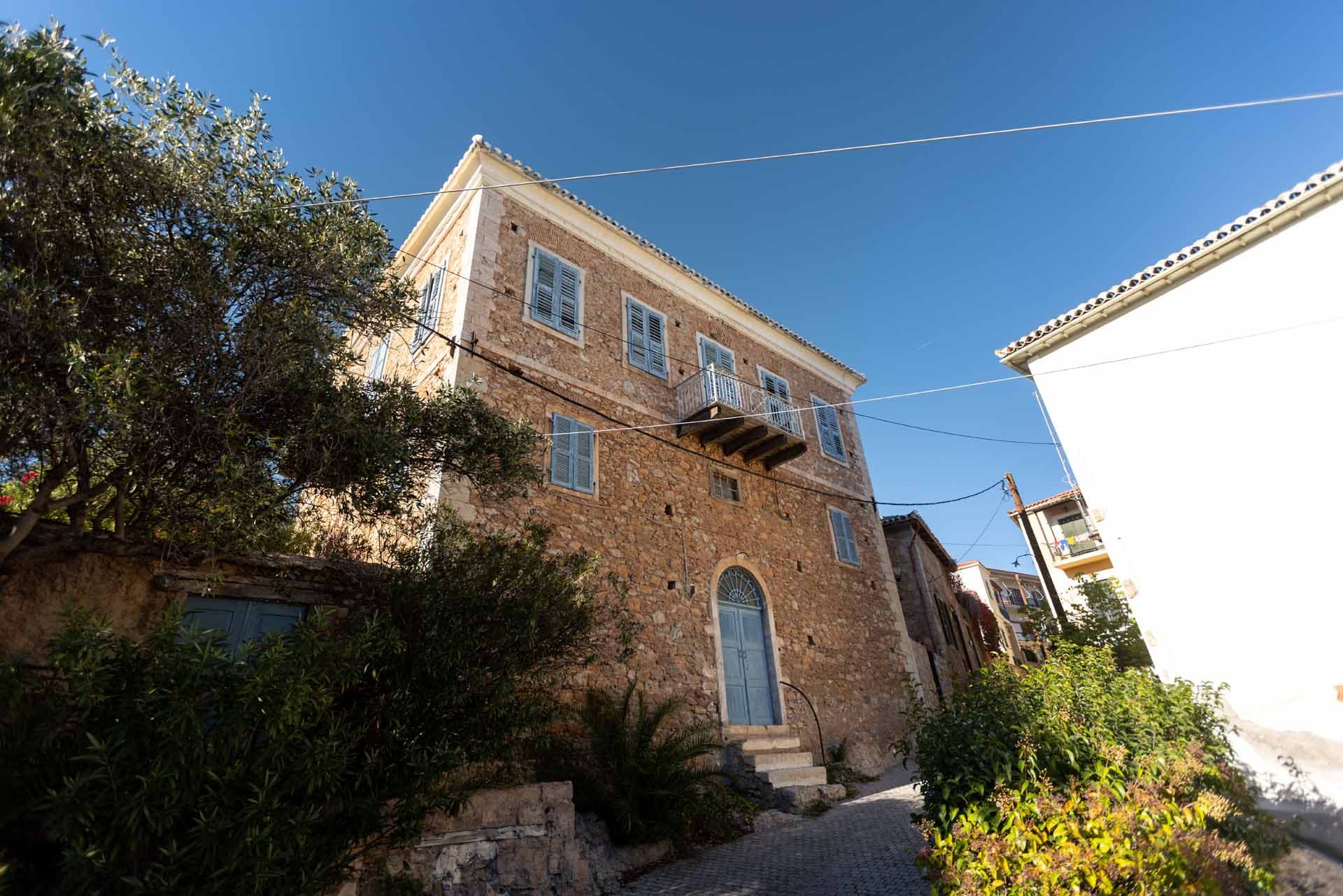
The Maniot towers of Areopoli are iconic monuments that recount the turbulent history and proud traditions of Mani. Built primarily between the 17th and 19th centuries, they served as fortified residences—symbols of power and means of defence during times of piracy, Ottoman threats, and intense family feuds. Thick stone walls, minimal openings, loopholes, and an imposing height that served as an indicator of a family’s social standing compose an architectural idiom unique to Greece.
In Areopoli, several structures stand out: the Pikoulakis Tower, which today houses the Byzantine Museum of Mani; the Stylianos tower house; the Tower of Kyriakoulis Mavromichalis, which is directly linked to the Greek War of Independence in 1821; and the Barelakos Tower. Together, they form a living core of memory where architecture converses with the history of modern Greece.
Approximately 20 km from Areopoli lies Koita, famously known as "Polypyrgou" (the village of many towers), once a centre for the region’s most powerful families. The towers here are distinguished by exquisite stone reliefs created by the renowned local craftsman, Kalapothos Lymperis.
In Areopoli, several structures stand out: the Pikoulakis Tower, which today houses the Byzantine Museum of Mani; the Stylianos tower house; the Tower of Kyriakoulis Mavromichalis, which is directly linked to the Greek War of Independence in 1821; and the Barelakos Tower. Together, they form a living core of memory where architecture converses with the history of modern Greece.
Approximately 20 km from Areopoli lies Koita, famously known as "Polypyrgou" (the village of many towers), once a centre for the region’s most powerful families. The towers here are distinguished by exquisite stone reliefs created by the renowned local craftsman, Kalapothos Lymperis.
Visitor Information
- Access: The historic centre features traditional cobbled streets (kalderimia) and some steep sections.
- Visiting: The Byzantine Museum of Mani – Pikoulakis Tower is open to the public, while the other towers are primarily viewed from the exterior.