Guided by Reverence
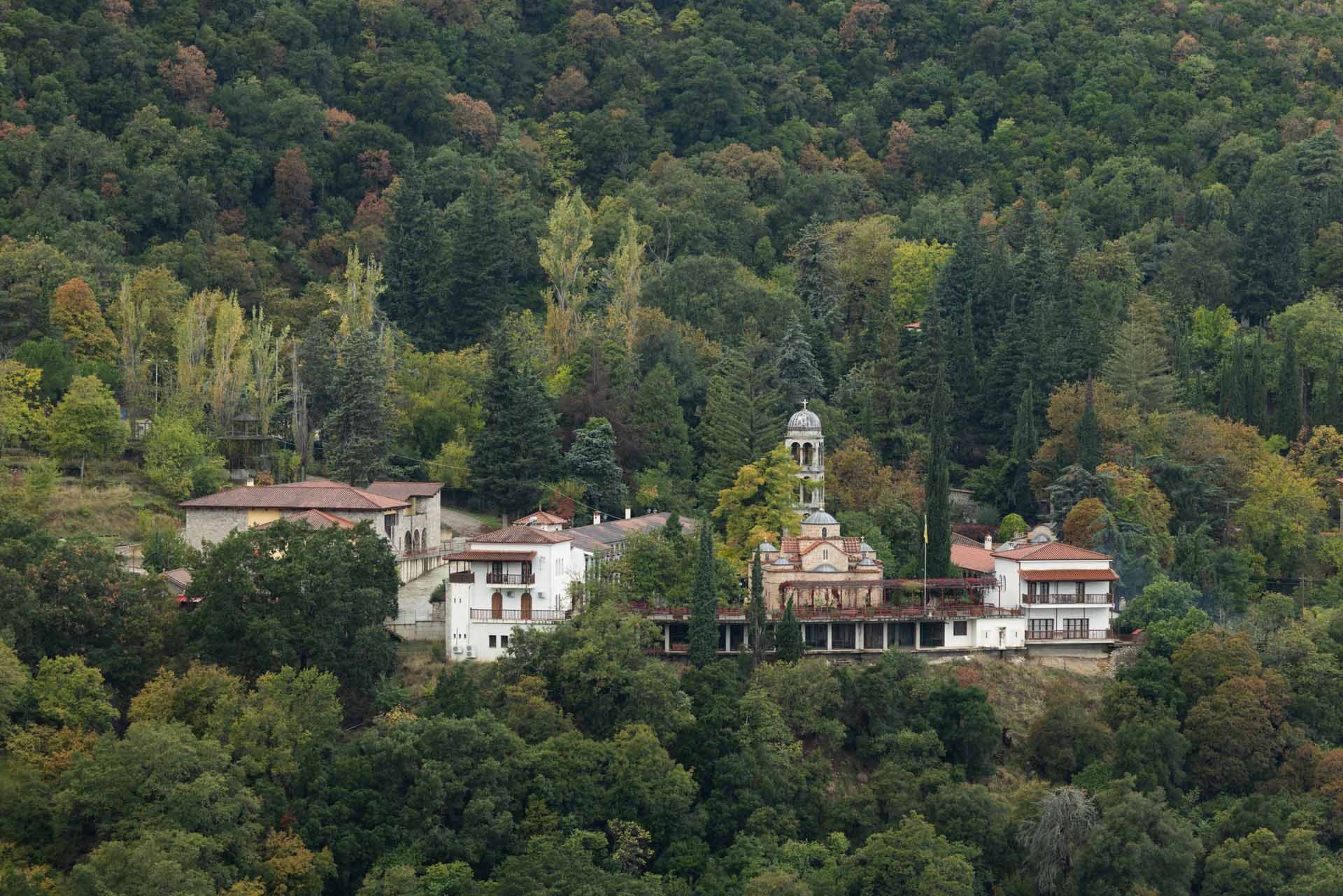
Greece is a country with a deeply rooted religious history. Its sacred monasteries, pilgrimage sites and places of devotion offer the opportunity to come into contact with our inner selves, with elders long experienced in human suffering, with the power of nature, and ultimately with God.
Three monasteries—the Nea Moni of Chios, the Monastery of Daphni, and the Monastery of Hosios Loukas—are inscribed on the UNESCO World Heritage List.
Yet the connection between them, the invisible threads that bind them, runs deeper. All three historic monasteries are adorned with some of the most significant mosaic masterpieces of the late Byzantine period.
Precious tesserae, like bursts of light, compose worlds of colour within these temples of devotion. The artists behind these mosaics created a tangible form of prayer that leaves both art historians and travellers alike speechless.
Nea Moni of Chios – A Vision and Three Emperors
During the 11th century AD, the ascetics Nikitas, Ioannis and Iosif, who lived in seclusion on Mount Provation on Chios, shared a common vision. An image of the Virgin Mary, which insisted on returning to the place where it had first been discovered, marked the site where the Old Monastery of Chios would be built.
The devout monks informed the exiled Emperor Constantine Monomachos of this divine sign. Constantine promised to place the monastery under his protection, sealing his vow by offering the monks his princely ring. Once restored to the Byzantine throne, he commissioned the construction of the Nea Moni of Chios, summoning the finest craftsmen, marble carvers and icon painters for the task. Since then, the Nea Moni of Chios has stood in a commanding position at the centre of the island, 12 kilometres west of the town.
Romanos Diogenes, who succeeded Constantine, and later Empress Theodora, kept the monastery under their continual protection. The care of the imperial throne for the monastery remained constant throughout the existence of the Byzantine state. The katholikon of the monastery belongs to the octagonal architectural type, a pioneering design in the 11th century, when it was built. With its elaborate decoration of semi-translucent and purple marble, its exquisite mosaics, and its overall sense of grandeur, it stands as one of the most representative examples of imperial sacred art.
Within the monastery complex there are two chapels, dedicated to Saint Panteleimon and the Holy Cross. During the period when the monastery functioned as a male monastic community, it was forbidden for women to enter. The two chapels served female pilgrims, who were not allowed access to the main church. The complex also includes the monks’ cells, the refectory—built between 1631 and 1637—a 11th-century cistern, and an imposing defensive tower constructed in the 14th century.
The Nea Moni of Chios, with its architectural unity, unique treasures, and serene surroundings, remains a true jewel of the island of Chios.
The Monastery of Dafni – Strength and Beauty
The Monastery of Dafni is located on the edge of the Haidari grove, 11 km west of Athens, along the axis that has, since antiquity, connected Elefsina with the Greek capital. The landscape surrounding the monastery, both outside and within its enclosure, radiates a sense of tranquillity and strength.
The traveller who arrives here is granted a face-to-face encounter with the Pantokrator, a mosaic masterpiece of Byzantine art. No camera can capture the spirituality, power, and radiant splendour emanating from the Christ of the dome in the katholikon of the monastery.
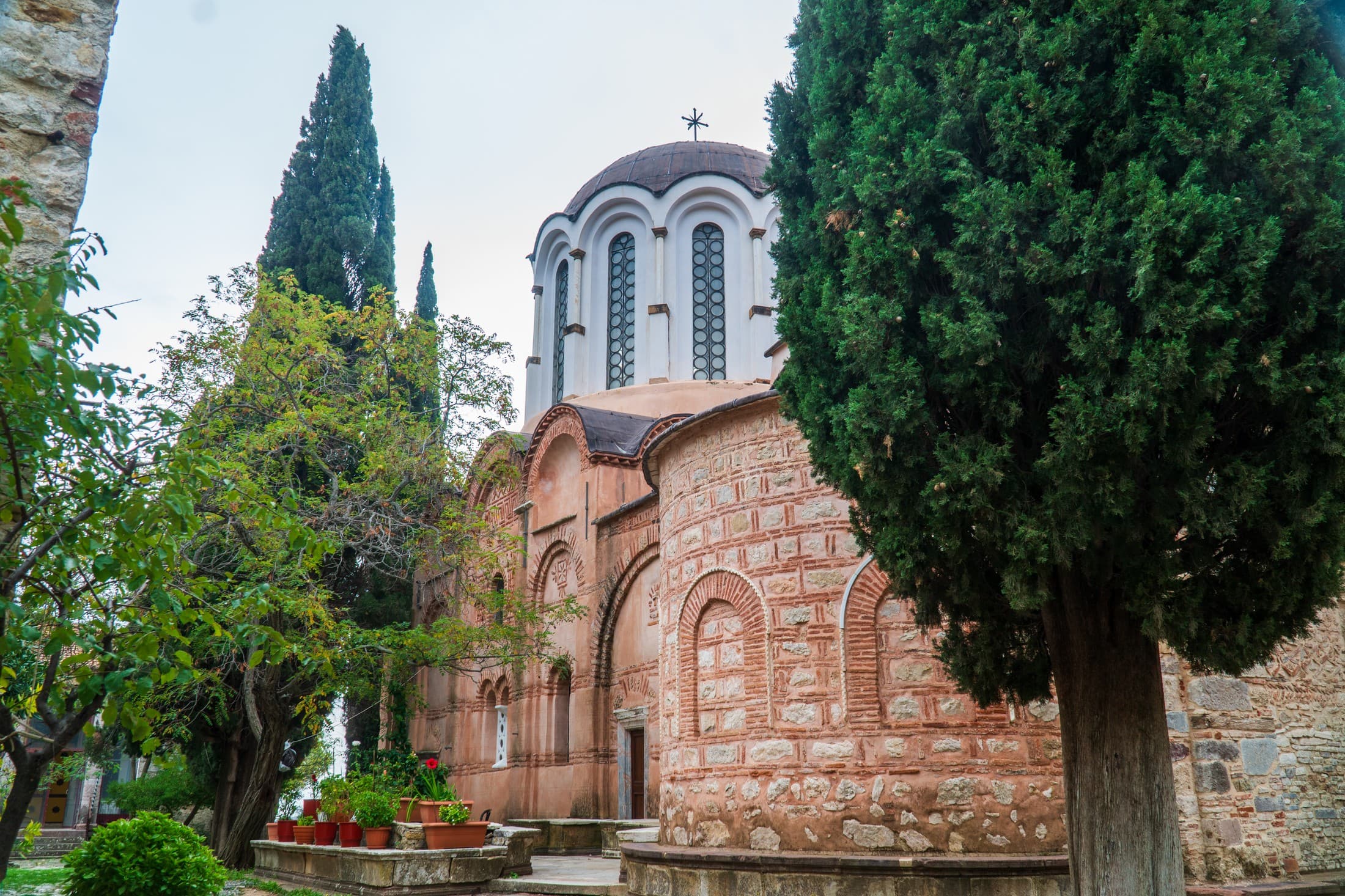
The architecture of the katholikon belongs to the octagonal type, as does that of the Nea Moni of Chios. The monastery was built in the 11th century and, over its thousand-year history, experienced periods of great flourishing. The complex is protected by towers and robust fortifications.
The Monastery of Dafni is open to visitors. It is a place where beauty and strength work in harmony, creating a captivating and compelling whole.
Hosios Loukas Monastery – The Ascetic of Mt Helicon
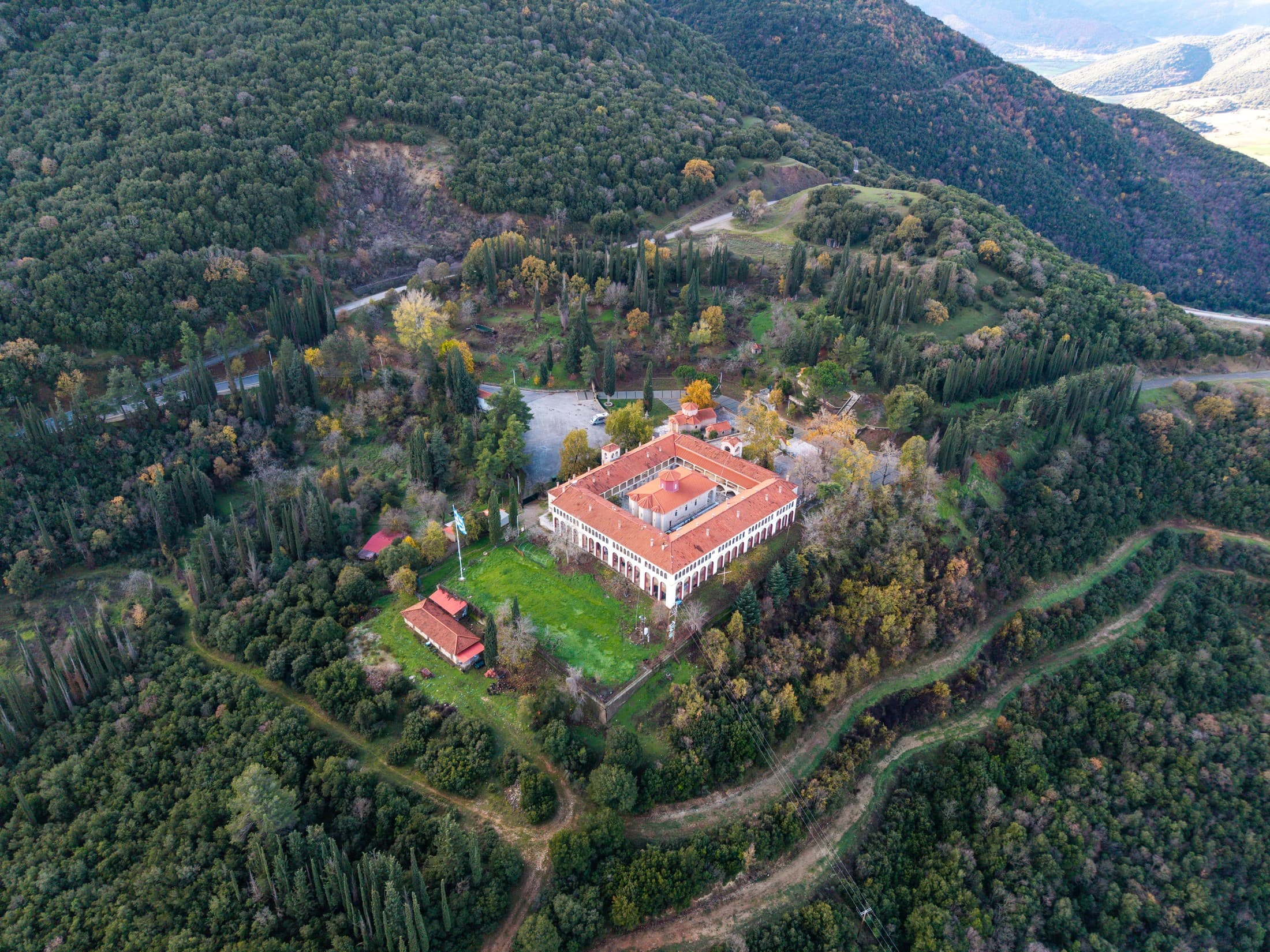
The Monastery of Hosios Loukas in Viotia is dedicated to an ascetic who was born, lived and died in the shadow of Mount Helicon in the 10th century: Hosios Loukas the Stiriotis. The monastery is built on a site that, in antiquity, served as a sanctuary of Demeter Stiritida.
The monastery’s church, dedicated to the Virgin Mary, is the only one constructed in mainland Greece during the 10th century. Its katholikon, dedicated to Saint Luke, also follows the octagonal architectural type, like those of the Nea Moni of Chios and the Daphni Monastery. Its splendid decoration with mosaics, luminous marble surfaces and gilded chandeliers bears witness to the monastery’s high status during the late Byzantine period.
From then until today, it has remained a revered place of pilgrimage, awaiting the traveller to guide them through Byzantine secrets and enchanting legends.
Greece is a country with a deeply rooted religious history. Its sacred monasteries, pilgrimage sites and places of devotion offer the opportunity to come into contact with our inner selves, with elders long experienced in human suffering, with the power of nature, and ultimately with God.
Three monasteries—the Nea Moni of Chios, the Monastery of Daphni, and the Monastery of Hosios Loukas—are inscribed on the UNESCO World Heritage List.
Yet the connection between them, the invisible threads that bind them, runs deeper. All three historic monasteries are adorned with some of the most significant mosaic masterpieces of the late Byzantine period.
Precious tesserae, like bursts of light, compose worlds of colour within these temples of devotion. The artists behind these mosaics created a tangible form of prayer that leaves both art historians and travellers alike speechless.
Nea Moni of Chios – A Vision and Three Emperors
During the 11th century AD, the ascetics Nikitas, Ioannis and Iosif, who lived in seclusion on Mount Provation on Chios, shared a common vision. An image of the Virgin Mary, which insisted on returning to the place where it had first been discovered, marked the site where the Old Monastery of Chios would be built.
The devout monks informed the exiled Emperor Constantine Monomachos of this divine sign. Constantine promised to place the monastery under his protection, sealing his vow by offering the monks his princely ring. Once restored to the Byzantine throne, he commissioned the construction of the Nea Moni of Chios, summoning the finest craftsmen, marble carvers and icon painters for the task. Since then, the Nea Moni of Chios has stood in a commanding position at the centre of the island, 12 kilometres west of the town.
Romanos Diogenes, who succeeded Constantine, and later Empress Theodora, kept the monastery under their continual protection. The care of the imperial throne for the monastery remained constant throughout the existence of the Byzantine state. The katholikon of the monastery belongs to the octagonal architectural type, a pioneering design in the 11th century, when it was built. With its elaborate decoration of semi-translucent and purple marble, its exquisite mosaics, and its overall sense of grandeur, it stands as one of the most representative examples of imperial sacred art.
Within the monastery complex there are two chapels, dedicated to Saint Panteleimon and the Holy Cross. During the period when the monastery functioned as a male monastic community, it was forbidden for women to enter. The two chapels served female pilgrims, who were not allowed access to the main church. The complex also includes the monks’ cells, the refectory—built between 1631 and 1637—a 11th-century cistern, and an imposing defensive tower constructed in the 14th century.
The Nea Moni of Chios, with its architectural unity, unique treasures, and serene surroundings, remains a true jewel of the island of Chios.
The Monastery of Dafni – Strength and Beauty
The Monastery of Dafni is located on the edge of the Haidari grove, 11 km west of Athens, along the axis that has, since antiquity, connected Elefsina with the Greek capital. The landscape surrounding the monastery, both outside and within its enclosure, radiates a sense of tranquillity and strength.
The traveller who arrives here is granted a face-to-face encounter with the Pantokrator, a mosaic masterpiece of Byzantine art. No camera can capture the spirituality, power, and radiant splendour emanating from the Christ of the dome in the katholikon of the monastery.
The architecture of the katholikon belongs to the octagonal type, as does that of the Nea Moni of Chios. The monastery was built in the 11th century and, over its thousand-year history, experienced periods of great flourishing. The complex is protected by towers and robust fortifications.
The Monastery of Dafni is open to visitors. It is a place where beauty and strength work in harmony, creating a captivating and compelling whole.
Hosios Loukas Monastery – The Ascetic of Mt Helicon
The Monastery of Hosios Loukas in Viotia is dedicated to an ascetic who was born, lived and died in the shadow of Mount Helicon in the 10th century: Hosios Loukas the Stiriotis. The monastery is built on a site that, in antiquity, served as a sanctuary of Demeter Stiritida.
The monastery’s church, dedicated to the Virgin Mary, is the only one constructed in mainland Greece during the 10th century. Its katholikon, dedicated to Saint Luke, also follows the octagonal architectural type, like those of the Nea Moni of Chios and the Daphni Monastery. Its splendid decoration with mosaics, luminous marble surfaces and gilded chandeliers bears witness to the monastery’s high status during the late Byzantine period.
From then until today, it has remained a revered place of pilgrimage, awaiting the traveller to guide them through Byzantine secrets and enchanting legends.