The art of ceramics marks eras and millennia with its creations
In Greece, ceramics first appeared in prehistoric times and reached a peak of explosive creativity during the Classical era. The shapes, colours, and motifs of ancient vessels—such as pithoi, amphorae, kraters, oinochoai, and lekythoi—reflect an entire world, capturing the daily life and customs of the societies that created them. Their remnants—the most abundant type of find in any archaeological excavation—bear witness to the evolution of civilisation and help historians chart the chronology of the past.
Modern traditional Greek ceramics developed their own distinctive forms and techniques, shaped by the practical needs of the time: large jars and storage pots for crops, pitchers and flasks for liquids, small pots and platters for table use. The shapes are simple, while the decoration—traditionally the domain of the women in ceramic-making families—is delicate and refined. Ornaments such as bands, spirals, and brushstrokes, as well as motifs of flowers, leaves, fish, birds, and ships, adorn the humble clay, elevating it into a true work of folk art.
Greece has many centres of ceramic production. While inland regions—such as Macedonia, the Peloponnese, Thrace, and Attica—played a role, it was primarily the islands—Thasos, Lesvos, Samos, Crete, Skyros, Aegina, Rhodes, and Sifnos—where modern Greek ceramics from 1700 to 1950 enjoyed a golden age of brilliance.
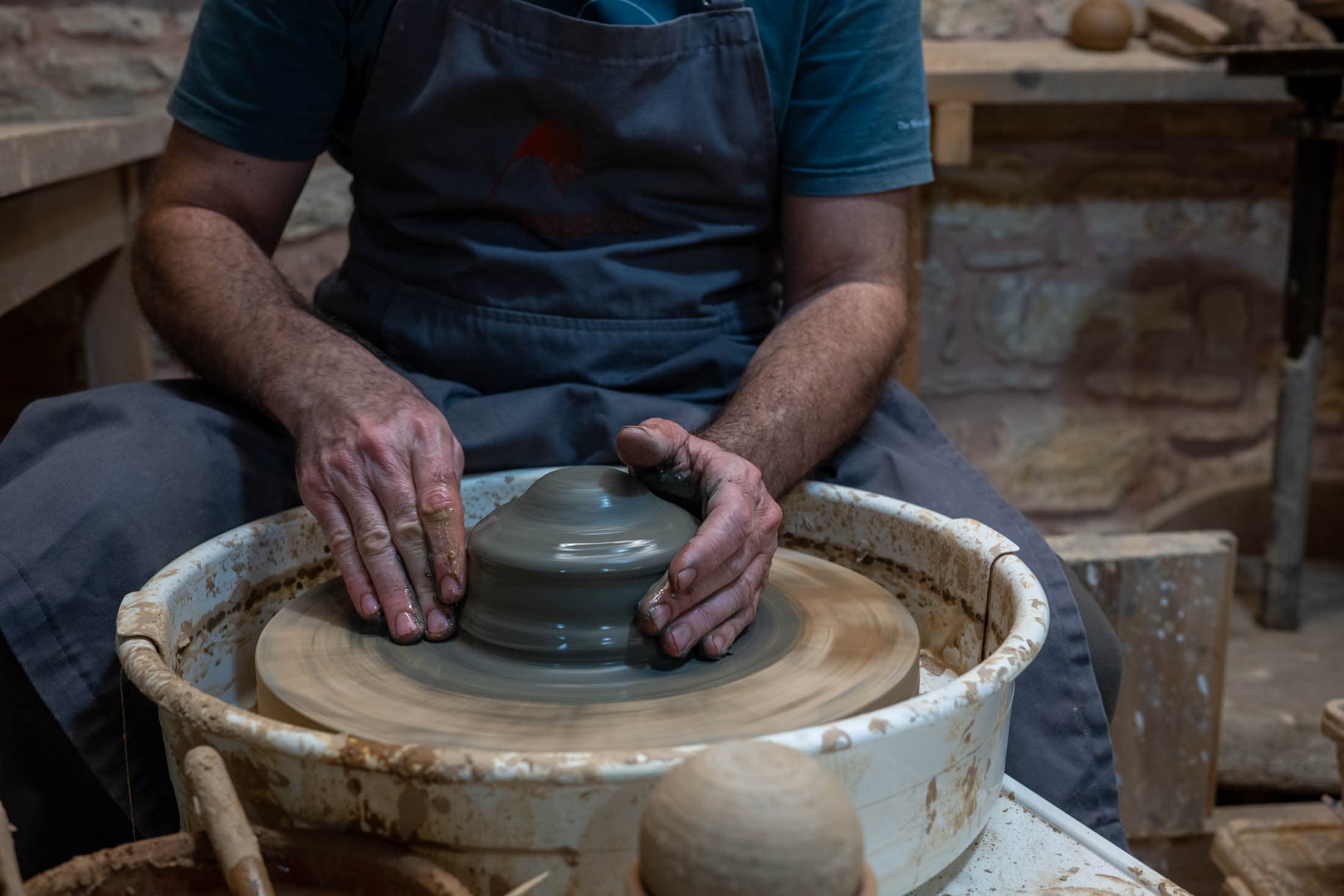
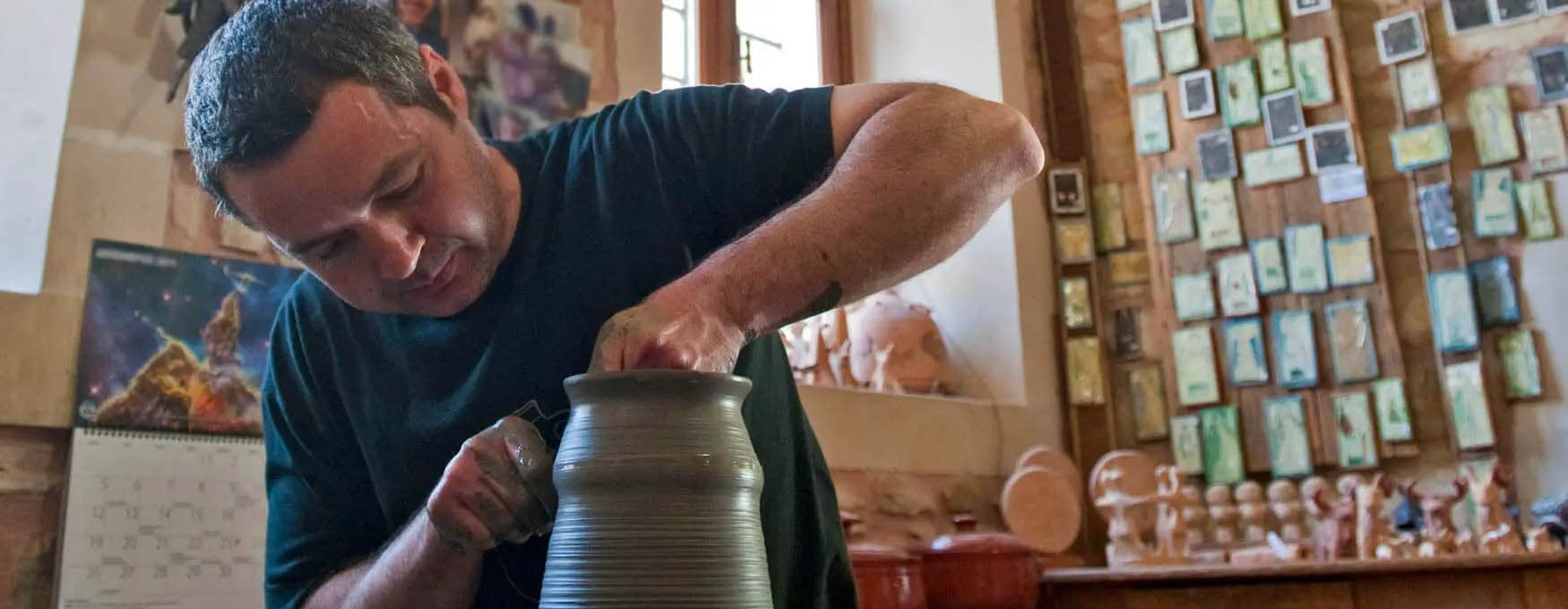
Today, skilled artisans continue to follow the footsteps of inherited knowledge, shaping clay with love and putting their soul into it to create ceramic pieces of unique artistry and beauty.
In Greece, ceramics first appeared in prehistoric times and reached a peak of explosive creativity during the Classical era. The shapes, colours, and motifs of ancient vessels—such as pithoi, amphorae, kraters, oinochoai, and lekythoi—reflect an entire world, capturing the daily life and customs of the societies that created them. Their remnants—the most abundant type of find in any archaeological excavation—bear witness to the evolution of civilisation and help historians chart the chronology of the past.
Modern traditional Greek ceramics developed their own distinctive forms and techniques, shaped by the practical needs of the time: large jars and storage pots for crops, pitchers and flasks for liquids, small pots and platters for table use. The shapes are simple, while the decoration—traditionally the domain of the women in ceramic-making families—is delicate and refined. Ornaments such as bands, spirals, and brushstrokes, as well as motifs of flowers, leaves, fish, birds, and ships, adorn the humble clay, elevating it into a true work of folk art.
Greece has many centres of ceramic production. While inland regions—such as Macedonia, the Peloponnese, Thrace, and Attica—played a role, it was primarily the islands—Thasos, Lesvos, Samos, Crete, Skyros, Aegina, Rhodes, and Sifnos—where modern Greek ceramics from 1700 to 1950 enjoyed a golden age of brilliance.
Today, skilled artisans continue to follow the footsteps of inherited knowledge, shaping clay with love and putting their soul into it to create ceramic pieces of unique artistry and beauty.