The Greek landscape is inextricably linked with the olive tree, which has been cultivated in this country since ancient times, offering its precious fruits: edible olives and olive oil of distinctive flavour and exceptional quality. The olive tree—an enduring symbol of peace, prosperity and wisdom—has inspired generations of Greeks and remains deeply intertwined with social and religious traditions.
A Journey Back in Time
Countless myths, stories and archaeological discoveries surround the olive tree and its products. Findings from the once-mighty Minoan civilisation on Crete, including those from the Palace of Knossos, reveal that its economy relied heavily on olive oil. The olive tree was sacred to the goddess Athena, who gifted it to the city of Athens during her contest with Poseidon for the patronage of the city of Cecrops. In antiquity, an olive wreath—known as a kotinos—was awarded as the highest honour to victors of the Olympic Games, while in classical Athens, the Panathenaic amphorae, highly coveted prizes awarded to victors in athletic contests, were presented filled with exceptional Attic olive oil. Referred to as “liquid gold” by Homer, olive oil was also praised by Hippocrates for its therapeutic properties.
Table Olives
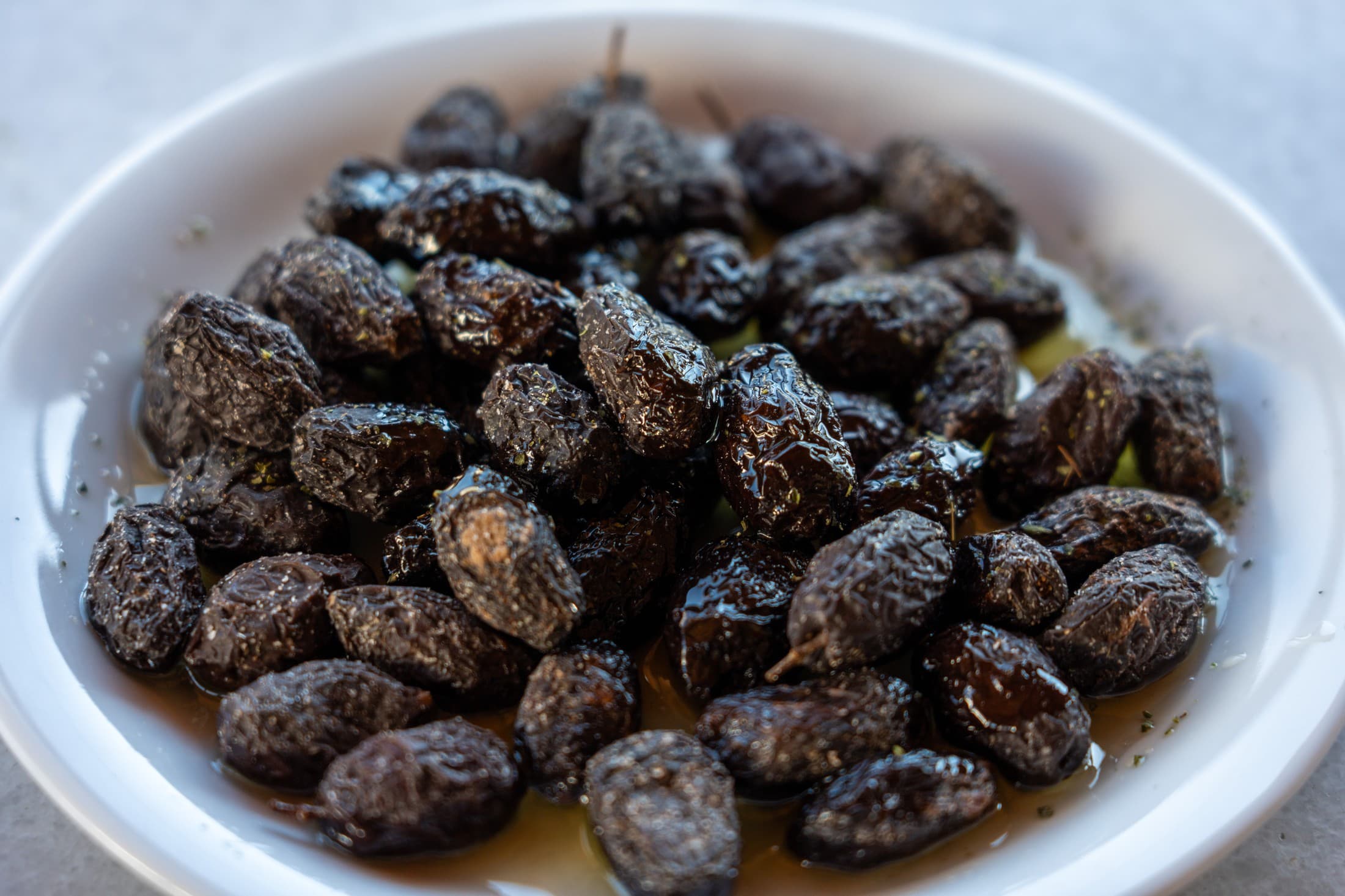
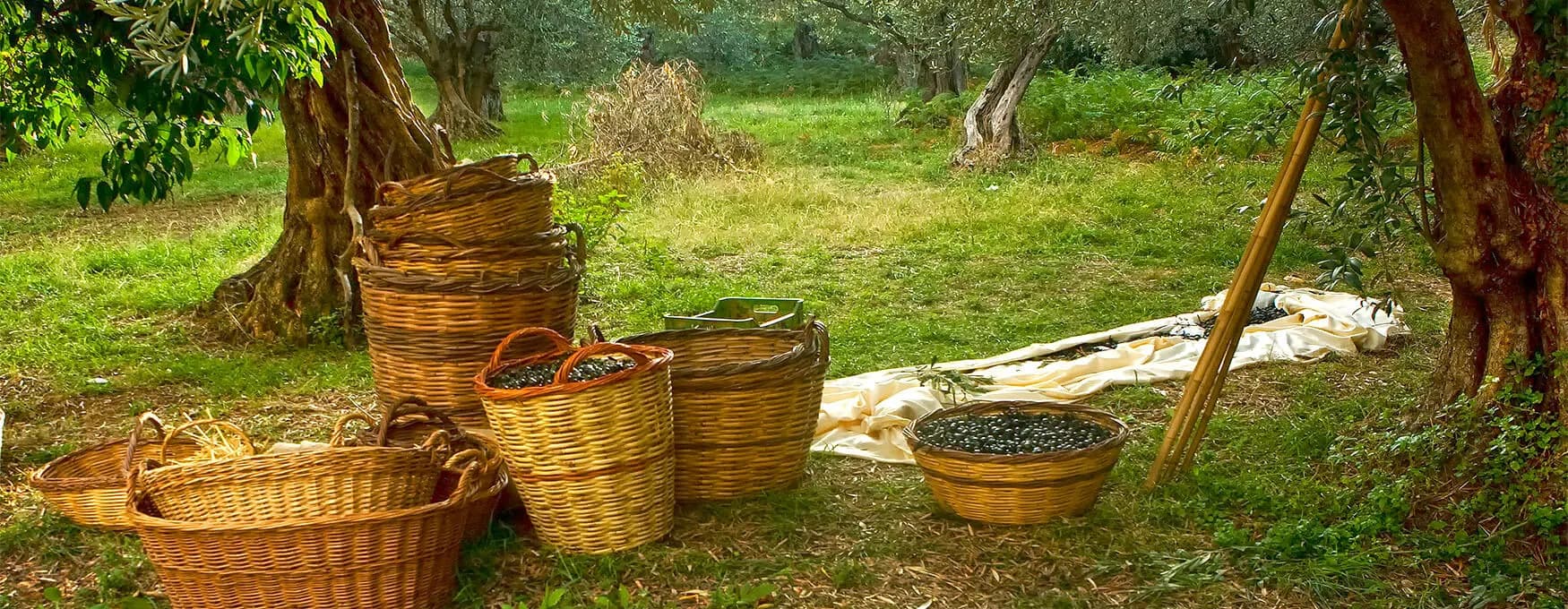
Table olives are undoubtedly one of Greece’s most important agricultural exports, with annual production reaching around 120,000 tonnes. The harvest begins in Octobre and lasts for approximately two months, depending on the variety and the region in which the olives are grown. Green olives are picked first, followed by the plump black varieties, which are the most popular in Greece—such as those from Kalamata (firm, juicy olives with pointed ends) and Amfissa (multi-hued olives in shades of brown, black and purple). The final stage of the harvest extends until March, when the well-known wrinkled olives, or throubes, are gathered and preserved in coarse salt.
A Perfect Match for Your Dishes
Olives make an excellent accompaniment to fresh vegetable salads, such as the famous Greek village salad, as well as lettuce salads and even pickled vegetables like red peppers and cauliflower. They are also widely used in breads, pies and sauces—particularly tomato-based sauces for pasta. In various regions of Greece, olives feature in cooked dishes; on the island of Zakynthos, for instance, they are slowly simmered with potatoes, tomatoes and onions. In mainland Greece, olives are often grilled and served as a meze to accompany ouzo or tsipouro, while on Crete, the renowned oftes olives—simply roasted—are a local speciality.
Today, many Greek chefs are showing a renewed interest in this versatile ingredient, experimenting with olives in both traditional and contemporary recipes. They are used in casseroles and pan-fried dishes, baked into breads and pies, blended into sauces, or served as fillings, pâtés and dips—bringing fresh creativity and remarkable flavours to Greek cuisine. We recommend trying a dip made with green olives, fennel root and coriander for a truly distinctive taste.
Olive Oil: Liquid Gold
Olive oil production in Greece has a long history spanning 4,000 years. Although around 65% of domestic output comes from Crete and the Peloponnese, olive trees thrive in almost every corner of the country. Annual production reaches approximately 350,000 tonnes. Thanks to the Mediterranean climate and the rich diversity of Greek soils, olive groves yield the renowned Greek olive oil, celebrated worldwide for its exceptional quality. Remarkably, around 80% of Greece’s olive oil is classified as extra virgin—the finest grade available globally. In terms of exports of virgin olive oil, Greece ranks among the world’s leading producers, with between 150,000 and 200,000 tonnes exported each year, primarily to Italy and Spain.
Greece ranks third in global olive oil production, with more than 150 million olive trees and 2,800 olive mills producing approximately 450,000 tonnes of olive oil annually, of which 75–85% is extra virgin. This proportion makes Greece the world’s leading producer of extra virgin olive oil!
There are 27 certified labels from across the breadth of the Greek countryside with Protected Designation of Origin (PDO) or Protected Geographical Indication (PGI) status. Among the most renowned are the Kalamata olives, Amfissa, Arta, Atalanti, Rovies (Evia), Stylida and Volos, as well as Throuba olives from Thasos, Chios and Crete, all recognised with PDO status.
Champions in Consumption
Greece also holds the top position worldwide in per capita olive oil consumption, as each Greek consumes more than 15 litres annually. Notably, there has been a 30% increase in the consumption of organic and PDO olive oil in our country. As the foundation of virtually all traditional Greek cuisine, olive oil occupies a prominent place in the Greek diet. It is internationally recognised for its purity, exceptional taste and high nutritional value. Olive oil is considered one of the healthiest fats, with numerous studies demonstrating that it is an essential component of a balanced diet, as it is rich in antioxidants.
A Journey Back in Time
Countless myths, stories and archaeological discoveries surround the olive tree and its products. Findings from the once-mighty Minoan civilisation on Crete, including those from the Palace of Knossos, reveal that its economy relied heavily on olive oil. The olive tree was sacred to the goddess Athena, who gifted it to the city of Athens during her contest with Poseidon for the patronage of the city of Cecrops. In antiquity, an olive wreath—known as a kotinos—was awarded as the highest honour to victors of the Olympic Games, while in classical Athens, the Panathenaic amphorae, highly coveted prizes awarded to victors in athletic contests, were presented filled with exceptional Attic olive oil. Referred to as “liquid gold” by Homer, olive oil was also praised by Hippocrates for its therapeutic properties.
Table Olives
Table olives are undoubtedly one of Greece’s most important agricultural exports, with annual production reaching around 120,000 tonnes. The harvest begins in Octobre and lasts for approximately two months, depending on the variety and the region in which the olives are grown. Green olives are picked first, followed by the plump black varieties, which are the most popular in Greece—such as those from Kalamata (firm, juicy olives with pointed ends) and Amfissa (multi-hued olives in shades of brown, black and purple). The final stage of the harvest extends until March, when the well-known wrinkled olives, or throubes, are gathered and preserved in coarse salt.
A Perfect Match for Your Dishes
Olives make an excellent accompaniment to fresh vegetable salads, such as the famous Greek village salad, as well as lettuce salads and even pickled vegetables like red peppers and cauliflower. They are also widely used in breads, pies and sauces—particularly tomato-based sauces for pasta. In various regions of Greece, olives feature in cooked dishes; on the island of Zakynthos, for instance, they are slowly simmered with potatoes, tomatoes and onions. In mainland Greece, olives are often grilled and served as a meze to accompany ouzo or tsipouro, while on Crete, the renowned oftes olives—simply roasted—are a local speciality.
Today, many Greek chefs are showing a renewed interest in this versatile ingredient, experimenting with olives in both traditional and contemporary recipes. They are used in casseroles and pan-fried dishes, baked into breads and pies, blended into sauces, or served as fillings, pâtés and dips—bringing fresh creativity and remarkable flavours to Greek cuisine. We recommend trying a dip made with green olives, fennel root and coriander for a truly distinctive taste.
Olive Oil: Liquid Gold
Olive oil production in Greece has a long history spanning 4,000 years. Although around 65% of domestic output comes from Crete and the Peloponnese, olive trees thrive in almost every corner of the country. Annual production reaches approximately 350,000 tonnes. Thanks to the Mediterranean climate and the rich diversity of Greek soils, olive groves yield the renowned Greek olive oil, celebrated worldwide for its exceptional quality. Remarkably, around 80% of Greece’s olive oil is classified as extra virgin—the finest grade available globally. In terms of exports of virgin olive oil, Greece ranks among the world’s leading producers, with between 150,000 and 200,000 tonnes exported each year, primarily to Italy and Spain.
Greece ranks third in global olive oil production, with more than 150 million olive trees and 2,800 olive mills producing approximately 450,000 tonnes of olive oil annually, of which 75–85% is extra virgin. This proportion makes Greece the world’s leading producer of extra virgin olive oil!
There are 27 certified labels from across the breadth of the Greek countryside with Protected Designation of Origin (PDO) or Protected Geographical Indication (PGI) status. Among the most renowned are the Kalamata olives, Amfissa, Arta, Atalanti, Rovies (Evia), Stylida and Volos, as well as Throuba olives from Thasos, Chios and Crete, all recognised with PDO status.
Champions in Consumption
Greece also holds the top position worldwide in per capita olive oil consumption, as each Greek consumes more than 15 litres annually. Notably, there has been a 30% increase in the consumption of organic and PDO olive oil in our country. As the foundation of virtually all traditional Greek cuisine, olive oil occupies a prominent place in the Greek diet. It is internationally recognised for its purity, exceptional taste and high nutritional value. Olive oil is considered one of the healthiest fats, with numerous studies demonstrating that it is an essential component of a balanced diet, as it is rich in antioxidants.