The Byzantine “Jewel” of Thrace
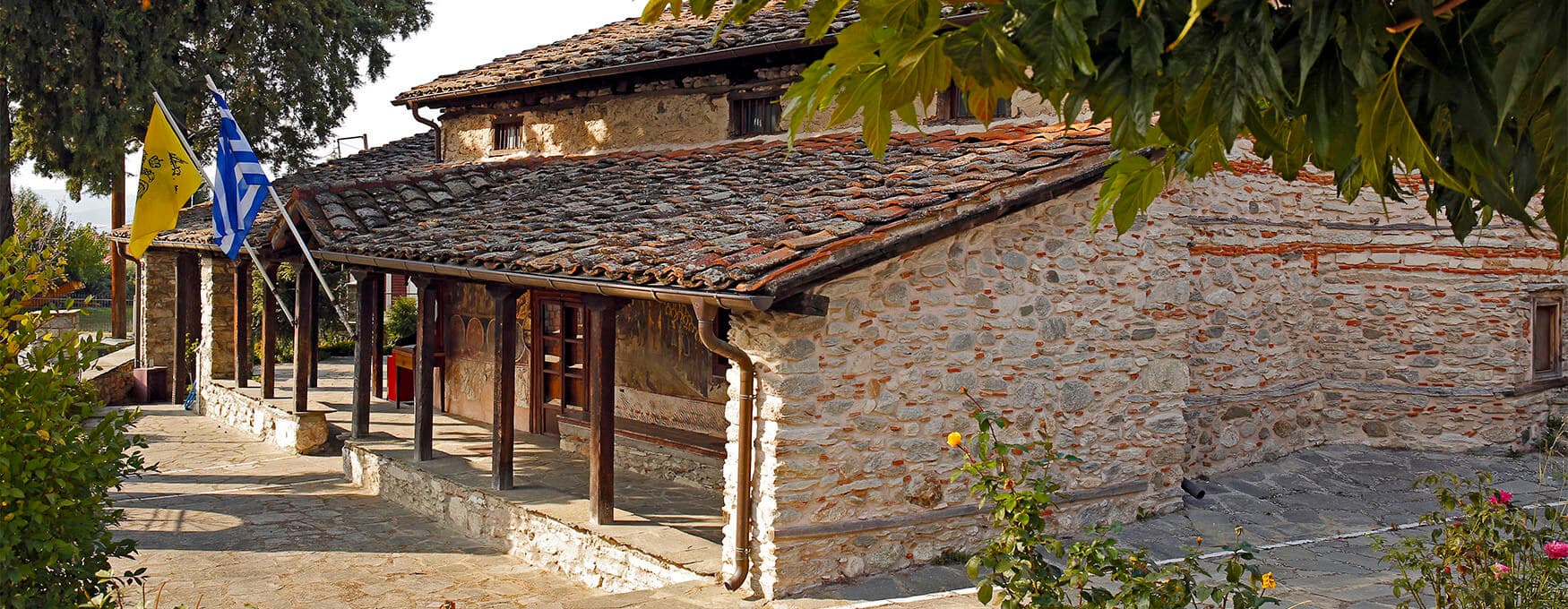
At the heart of Feres stands the Church of Panagia Kosmosoteira, the katholikon (main church) of a monastery once enclosed by strong fortification walls and towers. It was founded around 1151–1152 AD by the sebastokrator Isaac Komnenos, who envisioned the monastery as his final residence (mausoleum) and even composed its monastic rule (typikon) himself.
The Church of Panagia Kosmosoteira is a rare architectural example of Byzantine art. Its central dome, measuring 7 metres in diameter, lends a remarkable sense of scale to the interior and inspires awe. Among its distinctive features is a marble relief depicting the single-headed eagle, emblem of the Komnenos dynasty. The surviving 12th-century frescoes represent a significant milestone in art history; according to tradition, the rare depictions of military saints bear the likenesses of members of the imperial family.
The church’s journey through the centuries is truly remarkable. During the Ottoman period, it was converted into a mosque, which led to the frescoes being covered with limewash—ultimately preserving them from the wear of time. Today, it is recognised as a place of pilgrimage of great significance for the people of Thrace.
The sacred icon of the Kosmosoteira serves as a unifying symbol for Thracians around the world. Beyond the Feast of the Assumption on 15 August, when it is displayed for public veneration in Feres, the icon now travels to various regions across Greece. This “pilgrimage tour” to parishes with Thracian communities strengthens the bond of the faithful with their roots, while bringing the blessing of this historic monastery to the wider country.
The Church of Panagia Kosmosoteira is a rare architectural example of Byzantine art. Its central dome, measuring 7 metres in diameter, lends a remarkable sense of scale to the interior and inspires awe. Among its distinctive features is a marble relief depicting the single-headed eagle, emblem of the Komnenos dynasty. The surviving 12th-century frescoes represent a significant milestone in art history; according to tradition, the rare depictions of military saints bear the likenesses of members of the imperial family.
The church’s journey through the centuries is truly remarkable. During the Ottoman period, it was converted into a mosque, which led to the frescoes being covered with limewash—ultimately preserving them from the wear of time. Today, it is recognised as a place of pilgrimage of great significance for the people of Thrace.
The sacred icon of the Kosmosoteira serves as a unifying symbol for Thracians around the world. Beyond the Feast of the Assumption on 15 August, when it is displayed for public veneration in Feres, the icon now travels to various regions across Greece. This “pilgrimage tour” to parishes with Thracian communities strengthens the bond of the faithful with their roots, while bringing the blessing of this historic monastery to the wider country.