Hilopites, short-cut macaroni, kouskousaki (couscous), kritharaki (orzo), and trachanas in its many variations… Pasta has always been a staple of the Greek diet, whether for everyday meals or festive Sunday gatherings.
Made from simple, pure ingredients such as milk, wheat, and eggs, these traditional pastas are served with red or white sauces, generously topped with grated cheese, and pair beautifully with seafood or meat. They also combine wonderfully with legumes, transform into delicious, nourishing soups, or become wonderful cold salads.
Just Like the Old Days…
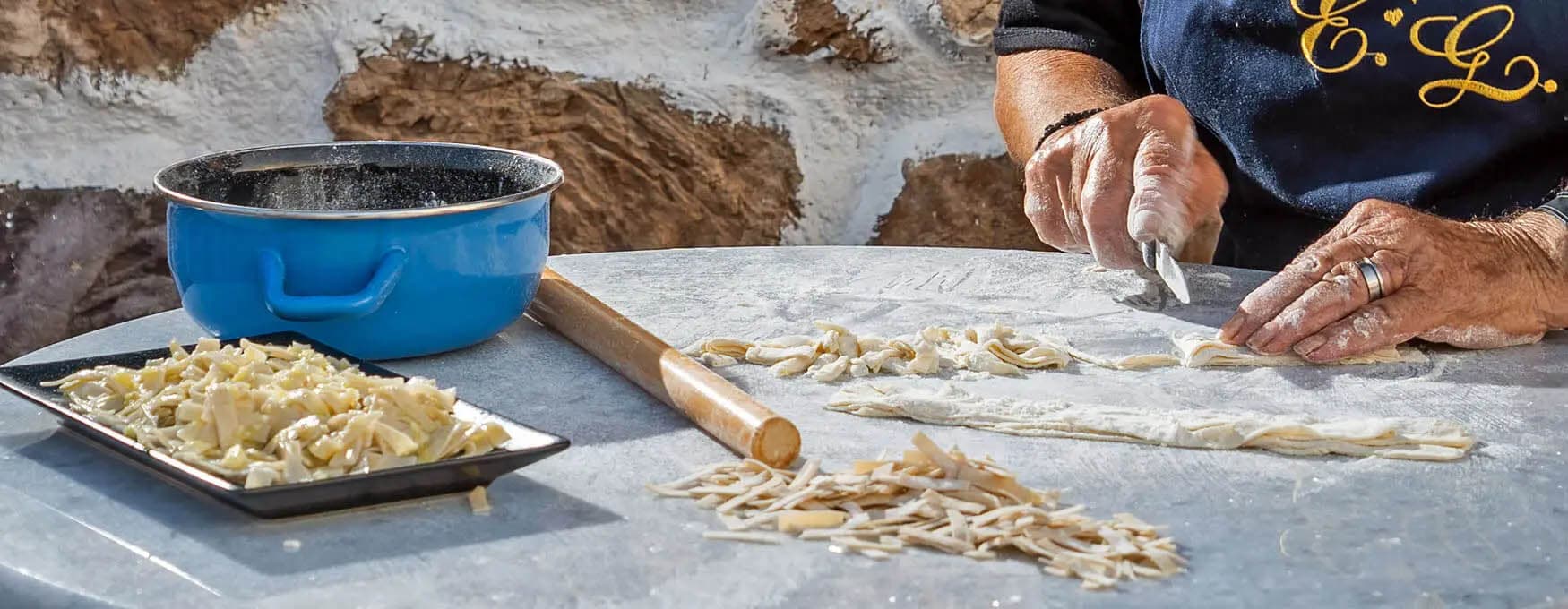
In the past, especially in rural villages, homemakers would prepare their own homemade pasta. This process took place during the summer months—usually after the harvest and threshing—when essential ingredients such as grains, fresh goat’s milk, and eggs were plentiful. They would knead the dough by hand, cut or shape it, and lay it out under the sun to dry thoroughly. Once ready, it was stored in cloth bags in cool cellars, ensuring a supply that would last throughout the year. Today, this cherished tradition lives on through women’s cooperatives and small-scale artisanal producers across Greece, who continue to craft high-quality pasta with the same care and passion, using the purest ingredients.
Discovering Greece Through Pasta
Greek imagination and creativity have given rise to wonderfully inventive names for traditional pasta. Although many of them share similar ingredients, they are known by different names across the country. Let us introduce you to some of them:
In the Peloponnese—especially in the regions of Laconia and Argolida—the traditional pasta is gkogkes, a classic festive dish often associated with Carnival celebrations. Shaped like small shells, they are boiled in water, then topped with grated local manouromyzithra cheese and finished with hot olive oil. Striftades (tiny, rice-like pasta) and toutoumakia (small hilopites) also form part of the local culinary tradition.
In mainland Greece, trachanas takes pride of place. Whether sweet or sour, coarse or fine, made with semolina, flour, or cracked wheat, and prepared plain, with butter, milk, or tomato, it is the perfect dish for cold winter nights. Thanks to its high nutritional value, in rural areas it is even enjoyed as a breakfast. Trachanas can be served on its own as a light or thick soup with pieces of feta cheese, cooked with legumes or vegetables, paired with meat dishes, or used as a filling in pies, stuffed vine leaves, and vegetables.
In Epirus, mushrooms are added to the basic pasta dough, while in Thrace, sesame seeds and boukovo (chili flakes). In Macedonia, red pepper paste is incorporated. Fasting (Lenten) trachanas is made with flour or semolina combined with vegetable purée.
On Crete, trachanas is known as hondros (xinohondros when prepared with soured milk or yogurt) and is a beloved ingredient in local cuisine. When combined with seasonal vegetables and chochlioi (foraged snails), it creates an exceptionally flavourful traditional dish. The island is also home to a variety of distinctive pasta types, such as sioufichta and kalogeristika makarounia, avgohylos (similar to short tagliatelle), hylofhta (resembling linguine), triftoudia (tiny rice-shaped pasta), and mangiri, small square pieces of pasta. Drizzled with hot stakovoutyro and generously topped with grated anthotyro cheese, these dishes are simply divine!
Across the islands of the North and East Aegean, the local pasta is known as makarounes. On Karpathos and Tilos, they resemble tagliatelle in shape. On Kos, they are called pasa makarounes and consist of large, flat sheets of dough—similar to wide lasagna—layered and cooked fresh with generous fillings of minced meat or cheese. On Kasos, they take on a shape similar to penne and, when served with sitaka (a soft local cheese made using a unique traditional method), they form the island’s signature dish. Chios offers its own specialities, such as aftoudia—simple flour-and-water pasta shaped like little “ears”—and valanes, small spiral-shaped pasta, perfect when paired with slow-cooked rooster in tomato sauce. The traditional pasta of Lemnos, known as flomaria, is made with eggs, milk, and local durum wheat flour. It is cut either into wide strips resembling hilopites or into thin strands similar to spaghetti.
Made from simple, pure ingredients such as milk, wheat, and eggs, these traditional pastas are served with red or white sauces, generously topped with grated cheese, and pair beautifully with seafood or meat. They also combine wonderfully with legumes, transform into delicious, nourishing soups, or become wonderful cold salads.
Just Like the Old Days…
In the past, especially in rural villages, homemakers would prepare their own homemade pasta. This process took place during the summer months—usually after the harvest and threshing—when essential ingredients such as grains, fresh goat’s milk, and eggs were plentiful. They would knead the dough by hand, cut or shape it, and lay it out under the sun to dry thoroughly. Once ready, it was stored in cloth bags in cool cellars, ensuring a supply that would last throughout the year. Today, this cherished tradition lives on through women’s cooperatives and small-scale artisanal producers across Greece, who continue to craft high-quality pasta with the same care and passion, using the purest ingredients.
Discovering Greece Through Pasta
Greek imagination and creativity have given rise to wonderfully inventive names for traditional pasta. Although many of them share similar ingredients, they are known by different names across the country. Let us introduce you to some of them:
In the Peloponnese—especially in the regions of Laconia and Argolida—the traditional pasta is gkogkes, a classic festive dish often associated with Carnival celebrations. Shaped like small shells, they are boiled in water, then topped with grated local manouromyzithra cheese and finished with hot olive oil. Striftades (tiny, rice-like pasta) and toutoumakia (small hilopites) also form part of the local culinary tradition.
In mainland Greece, trachanas takes pride of place. Whether sweet or sour, coarse or fine, made with semolina, flour, or cracked wheat, and prepared plain, with butter, milk, or tomato, it is the perfect dish for cold winter nights. Thanks to its high nutritional value, in rural areas it is even enjoyed as a breakfast. Trachanas can be served on its own as a light or thick soup with pieces of feta cheese, cooked with legumes or vegetables, paired with meat dishes, or used as a filling in pies, stuffed vine leaves, and vegetables.
In Epirus, mushrooms are added to the basic pasta dough, while in Thrace, sesame seeds and boukovo (chili flakes). In Macedonia, red pepper paste is incorporated. Fasting (Lenten) trachanas is made with flour or semolina combined with vegetable purée.
On Crete, trachanas is known as hondros (xinohondros when prepared with soured milk or yogurt) and is a beloved ingredient in local cuisine. When combined with seasonal vegetables and chochlioi (foraged snails), it creates an exceptionally flavourful traditional dish. The island is also home to a variety of distinctive pasta types, such as sioufichta and kalogeristika makarounia, avgohylos (similar to short tagliatelle), hylofhta (resembling linguine), triftoudia (tiny rice-shaped pasta), and mangiri, small square pieces of pasta. Drizzled with hot stakovoutyro and generously topped with grated anthotyro cheese, these dishes are simply divine!
Across the islands of the North and East Aegean, the local pasta is known as makarounes. On Karpathos and Tilos, they resemble tagliatelle in shape. On Kos, they are called pasa makarounes and consist of large, flat sheets of dough—similar to wide lasagna—layered and cooked fresh with generous fillings of minced meat or cheese. On Kasos, they take on a shape similar to penne and, when served with sitaka (a soft local cheese made using a unique traditional method), they form the island’s signature dish. Chios offers its own specialities, such as aftoudia—simple flour-and-water pasta shaped like little “ears”—and valanes, small spiral-shaped pasta, perfect when paired with slow-cooked rooster in tomato sauce. The traditional pasta of Lemnos, known as flomaria, is made with eggs, milk, and local durum wheat flour. It is cut either into wide strips resembling hilopites or into thin strands similar to spaghetti.