All Articles

What are you looking for?

Travel Tips

Uncover Ancient Corinth And Acrocorinth In The Peloponnese

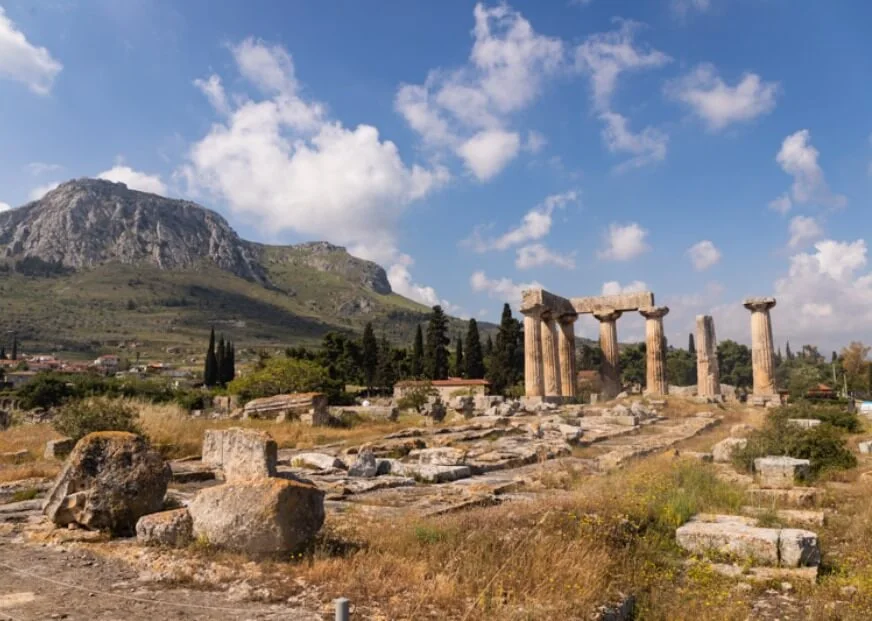
Roughly halfway between Athens and Sparta on the Peloponnese Peninsula of Greece is Corinth. It’s a famous city, though not for the modern city that now sits on the Isthmus of Corinth (the narrow stretch of land that joins the Peloponnese to mainland Greece) but for the ancient city it once was. Visiting Corinth and the Acrocorinth is a must-do for history buffs and fans of ancient Greek mythology. These two important historic sites are some of the most important in the Peloponnese and can easily be seen together in one day. I saw them on my way from Athens to Nafplio on my 7-Day road trip of the Peloponnese. In this guide, I’ll be showing you how to explore the ruins of ancient temples of Corinth, take you on a step back in time and give you the best tips for how to immerse yourself in the rich history and culture of Greece. Is Ancient Corinth and the Acrocorinth Worth Visiting? I mentioned earlier that Corinth and the Acrocorinth are two of the most important sites in the Peloponnese, not just for their historic importance but also their religious. Heard of St Paul anyone? If you’re of the Christian faith then you certainly have heard of his letters to the Corinthians. Ancient Corinth is where he lived for a time on his mission to convert the Gentiles to the Corinthians, and those letters he wrote came after once he moved to Ephesus in Turkey. I knew that when I started planning my Peloponnese road trip. Since I visited the place where Jesus was baptized in Jordan last year, and Ephesus many years ago I felt it was a great addition to my own personal travel journey to also visit here. I was baptized a Catholic and attended Catholic schools all the way up to University, but am no longer practicing. But it’s not just Christians and Catholics who will find Corinth and the Acrocorinth worth visiting, it’s also located in a stunning natural location. I had no idea of the beauty of not just Ancient Corinth, but Acrocorinth that stands guard over the city high above on a mountain peak. Acrocorinth is one of the best places to visit in the Peloponnese for travelers with an adventurous spirit and curious nature. Whether you’re a history enthusiast, a culture lover, or simply seeking a unique experience, Ancient Corinth and Acrocorinth are must-visit destinations. A Brief History of Ancient Corinth The ancient city of Corinth holds a significant place in Greek history for its strategic location, prosperous trade, and influential culture. Situated between the Ionian Sea and the Aegean Sea, Corinth controlled the narrow Isthmus, a key trade route connecting the Mediterranean and the Black Sea and founding location of the Isthmian Games. It had a strong military presence as a strategic location for many wars over its ancient history and it experienced a series of political changes, alternating between periods of independence, Spartan control, and domination by other regional powers. Even after a period of decline during the Roman Conquest, it maintained its cultural importance until it underwent a significant urban renewal project initiated by Julius Caesar and later completed by Emperor Augustus. The city was rebuilt with a Roman architectural style, including temples, basilicas, and a forum. It became the capital of the Roman province of Achaea and a bustling cosmopolitan center. Corinth continued to thrive through the Roman period and during the early Christian era. The Apostle Paul visited Corinth in the 1st century CE and established a Christian community there. It was said he arrived in Corinth in 49 or 50 AD and created the first Church of Corinth, where he met Priscilla and Aquila, who became two of the Seventy Disciples. His letters to the Corinthians, known as the First and Second Epistles to the Corinthians, form an integral part of the New Testament. Ancient Corinth Wars Ancient Corinth was a city-state that played a significant role in many of the major wars of Ancient Greece. One of the most famous wars involving Corinth was the Peloponnesian War, which lasted from 431 – 405 BCE and pitted Corinth, Sparta and other allies against Athens and its allies. Corinth also played a leading role in the Corinthian War (395–387 BC), which saw an alliance of Greek city-states go to war against Sparta. Additionally, Corinth was involved in the famed Battle of Leuctra (371 BCE), where Thebes defeated Sparta and marked a turning point in Greek history. These conflicts helped shape ancient Greece and are important events in the history of Corinth. Temple of apollo | © Ytravel Ancient Corinth Mythology Ancient Corinth is also steeped in mythology and religious belief, with many stories and legends associated with the city. One of the most famous myths is that of King Sisyphus’s Grandson, the ancient ruler of the city and a hero who tamed the winged horse Pegasus and defeated the fearsome Chimera, a monster with the body of a lion, head of a goat, and tail of a serpent. Another myth involves the god Poseidon, God of the Sea, who is said to have visited Corinth and blessed the city with his presence. The goddess Aphrodite was also revered in Corinth, and her temple there was one of the most famous and well-visited in ancient Greece. Where is Corinth and How to Get There? Ancient Corinth is about an hour’s drive from Athens – depending on traffic. Follow the A8/E94 highway towards Corinth, and then take the Corinth Canal Road (EO8) to reach the archaeological site. Parking is available near the entrance. There is a train from Athens to Corinth, where you can take a taxi or bus. You will need a car to get to Acrocorinth, which is located ten minutes from Ancient Corinth. While it is a windy road to the top of the mountain, it’s not overly scary or steep. Buses do not go up here, so you will need your own car, or hire a taxi from Ancient Corinth. You can also hike up to the top. Note, it will be a steep hike, and there are a lot of trails once you get to the top to see the expansive area, so it could be tiring combining the two. Alternatively, there are tour options from Athens to visit Ancient Corinth. I visited Ancient Corinth and Acrocorinth on my way to Nafplio from Athens on my 7-day Peloponnese road trip. I spent about three hours exploring this area. I could have stayed longer in Acrocorinth, but being honest here, I desperately needed a bathroom break and there were no facilities up here! So now you know to take care of that before coming up! I make the mistakes to help you avoid them! What to Do in Ancient Corinth You’ll need 1-2 hours to explore the archaeological site of Ancient Corinth. Best news is, it’s a free Peloponnese attraction! One thing I noticed at the tourist attractions in Greece, there are not a lot of great informational boards. I was disappointed to learn of the CULTURE APP self-guided audio tour of Old Corinth after my visit. I loved the one I had for the ancient history sites in Athens and think it would be a great addition to your visit at this important historical site. You may even want to join a guided tour, so you don’t miss some of the stories, can understand what you’re looking at in the excavations, and learn about the highlights. There is a small museum you can begin or end your visit with. Beside the museum on this slightly elevated level are more ruins of Ancient Corinth that I only saw as I drove away! And it’s where some of the top highlights, like the Odeion and the Theatre are!! Simply wandering through the archaeological park allows you to appreciate the layout and organization of ancient Corinth. The remains of various buildings, streets, and monuments provide a tangible connection to the city’s past, offering a fascinating journey through time. I also loved the many beautiful trees in the archaeological park, giving you a shady place to rest and ponder should you wish. Here are some of the highlights. Temple of Apollo One of the few standing Archaic Greek Temples in the world, this Doric temple, dedicated to the god of light and music, is the poster child for Archaeological Site of Ancient Corinth. It’s said to be one of the oldest temples in the complex and dates back to the 4th century BCE. Take your time to walk around its perimeter and admire imposing monolithic columns. The views from the front with the mountain behind it are extraordinary. Peirene Fountain Fountain of Peirene is a well-preserved ancient spring. It was a vital water source for the city and holds mythological significance as it was believed to be the spot where Pegasus, the winged horse, struck the ground with its hoof, causing the water to gush forth. Myth also says that after one of her children was killed by Artemis, the nymph Peirene Peirene was consumed by grief to such an extent that she underwent a remarkable metamorphosis—she dissolved into tears, ultimately transforming into a flowing spring. Whatever, it may be, the fountain is a beautiful site. Imagine what it must have looked like when it was decorated with vibrant frescoes depicting ocean creatures like fish, shrimp, and lobsters. Lechaion Road This ancient Roman road connected the city of Corinth to its port of Lechaion on the Corinthian Gulf. Walking along this well-preserved road, bordered by what was once shops and public buildings, offers a glimpse into the infrastructure and urban planning of ancient times. Bema of St Paul The Berna is a large elevated rostrum standing prominently in the center of the Roman Forum and is where the city’s officials once addressed the public. It’s of large historical significance for Christians as it’s said to be the place where St Paul was put on trial for illegal religious teachings. He was found not guilty because he was just having discussions. Probably because of the monument’s connection to Saint Paul, the Bema was transformed into a Christian church during the Byzantine period. Lunch Break Outside the Gates Outside of the Ancient Corinth Gates are a row of restaurants to fuel up with coffee and lunch before driving up the mountain. I enjoyed sitting at a cafe enjoying lunch in the sun while looking up at the Acropolis of Ancient Corinth above. My meatballs were just okay – a little on the dry side – but I loved my haloumi, cucumber, and tomato drizzled in balsamic! Visiting Acrocorinth All good things come to those who are prepared to climb. Acrocorinth is where you can escape the crowds as few dare. I was undecided on whether to visit Acrocorinth until I saw it from Ancient Corinth. I’m so glad I followed that curiosity because it quickly became one of my favorite attractions in the Peloponnese. It is considered to be the largest, highest, and most spectacular akropolis of Ancient Greece. © Ytravel A Brief History of Acrocorinth Acrocorinth is the ancient fortress perched on a 575 meters above sea level table mountain. As any good acropolis its purpose was to protect the city below. Its elevated position enabled the military to monitor the isthmus of the Gulf of Corinth and protect Ancient Corinth below. Its history spans several millennia, and the site has played a significant role in various periods of Greek, Roman, Byzantine, and Ottoman history. Over time, Acrocorinth gradually lost its military importance, and the fortifications fell into disrepair. Today, you can clearly see the influence of the different ruling eras in the fortress’s interior: walls of Byzantine houses and churches stand next to ruins of old temples, Venetian towers and Ottoman mosques. 17th Century travelers reported that houses occupied the area close to the gates were inhabited by Muslims and Christians. The population of the castle and lower city was under 1,500. Three to four mosques and five to six small churches were inside the castle grounds, some of which the remains of are still visible today. What to Do at the Castle of Acrocorinth I would allow for 1-2 hours to explore this ancient site of Greece. I wish I stayed longer than an hour. Spend time hiking the trails to see the remnants of ancient walls, towers, byzantine springs, gates, churches, and mosques, and temples, reflecting the diverse cultural influences that have shaped the hilltop fortress throughout the centuries. Not only did I get extraordinary views of the Corinth countryside and Gulf of Corinth but, on my May visit, the grounds were vibrant with wildflowers, and lush greenery. Here are a few of the highlights of an Acrocorinth Visit. Upper and Lower Gates Firstly, you’ll be swept away by the steep ascent up the cobblestone path through the impressive gates of the fortress on its west side. This is basically the only entrance to the fortified citadel and was heavily fortified by three huge walls, defensive towers and a moat. These unstable, rocky, steep slopes continue as you explore the fortress. Ensure you wear grippy, supportive shoes. Check out the Fortifications The extensive fortifications of Acrocorinth take up a wide circle on the edge of the rocky outcrop. You can walk along the well-preserved walls, which showcase various architectural styles from different historical periods. The fortified gates, towers, enclosures, and bastions provide insights into the defensive strategies employed throughout the centuries. The remarkable defensive wall system has a total length of almost 2 km, and was built to incorporate into the natural monolith face. On the north, east, and south sides of the mountain the site is protected by steep, rocky slopes and cliffs. Temple of Aphrodite Located near the highest point of Acrocorinth, the Temple of Aphrodite was a prominent sanctuary dedicated to the goddess of love and beauty. Though now in ruins, you can still see the foundations of the temple and appreciate its significance as a place of worship in ancient times. This was the most famous and important sanctuary of Aphrodite, known for the alleged practice of “sacred prostitution”. Agios Dimitrios Church Don’t miss the Venetian church, Agios Dimitrios Church. It’s one of the only largely intact buildings inside the castle grounds. You can go inside to see its wall frescoes and ring the bell on the outside if you wish! There is a path going behind here leading to the fortress walls and another viewpoint! Fountain of Upper Peirene The Fountain of Upper Peirene is an ancient spring located within Acrocorinth. It is believed to be the upper part of the spring associated with the mythological nymph Peirene, who turned into tears and transformed into a spring. (You’ll see the lower part down in Ancient Corinth!) Others say that Sisyphos witnessed Zeus “ravish” the daughter of Asopus, Aegina. He told Asopus about the abduction, and in return for the information, Sisyphos requested a spring. And that’s how the spring in the fountain of Upper Peirene came to be. Whichever story you believe, the fountains archaeological remains are a testament to the importance of water sources in ancient fortresses. Regretfully, I did not make the trail out here but could see it in the distance. If you have time, I highly recommend it! Acrocorinth Mosque Constructed during the Ottoman period, the domed Acrocorinth mosque is an impressive structure within Acrocorinth. It represents the influence of Islamic culture and architecture in the region and offers a unique blend of styles. Frankish tower acrocorinth peloponnese | © Ytravel The Frankish Tower One of the most prominent structures in Acrocorinth, which you’ll see from every trail is the Frankish Tower. Perched on top of the smaller of the citadel’s two peaks, it keeps watch over the surrounding countryside. You can climb up this two-story observatory tower for a view. Views and Panoramas in Acrocorinth One of the highlights of Acrocorinth is the breathtaking panoramic views it offers. From the elevated vantage points, you can enjoy stunning vistas of the Corinthian Isthmus, the surrounding countryside, and the Aegean Sea. The views provide a remarkable perspective on the geographical significance and strategic location of Acrocorinth. The maps on the informational boards are a little confusing and trails are running everywhere. Just follow the trails pointing to the fortification walls, for amazing views. My favorite was right in the northeastern corner – it involved a slightly steep climb. You’ll have 360 gorgeous views of ancient Corinth, the olive grove covered slopes and plains sprawling below including a great view of the isthmus which this fortress was designed to monitor. Visiting Penteskoufi / Montesquieue Castle On the other side of the acropolis is another fortress sitting on a small peak called Penteskoufi or Montesquieue Castle. It was built by the Franks in 1205 when they were attempting to overthrow Acrocorinth. I could see a trail going there but did not see where it began in the parking lot. It looks steep and challenging but may be an option if you want more adventure. Tips for Visiting Ancient Corinth and Acrocorinth Apart from my aforementioned bathroom tip, here are a few more suggestions to help ensure you’ll have a great time exploring these ancient historical Greek sites. Plan your visit: Before heading to Ancient Corinth and Acrocorinth, take the time to research and plan your trip. Look into the opening hours, ticket prices, and any guided tours available. This will help you make the most of your time and ensure you don’t miss any important landmarks or sites like I did. Although this post will be a big help to you! Wear comfortable shoes: Exploring Ancient Corinth and Acrocorinth involves walking and climbing, so it’s essential to wear comfortable shoes that provide good support. The terrain can be uneven, so sturdy footwear is recommended. Bring water and snacks: It’s important to stay hydrated and energized during your visit, especially in the warm weather. Carry a bottle of water and some snacks to keep yourself refreshed throughout the day. I did not take my water bottle with me to Acororinth thinking it would be a short visit. I regretted it after the first hill in the beating sun. You’ll spend longer than you think there. Sun protection: The Greek sun can be intense, so don’t forget to bring sunscreen, a hat, and sunglasses to protect yourself from harmful UV rays. Consider bringing an umbrella or seeking shade during the hottest hours of the day. Learn about the history of Corinth: Familiarize yourself with the history of Ancient Corinth and Acrocorinth before your visit. This will enhance your experience and allow you to appreciate the significance of the ruins and archaeological sites you encounter. Take your time to explore: Ancient Corinth and Acrocorinth are rich in historical and archaeological treasures. Take your time to wander through the ruins, admire the architecture, and soak in the atmosphere. Don’t rush through the sites; instead, allow yourself to be transported back in time. Enjoy the panoramic views: Acrocorinth offers breathtaking panoramic views of the surrounding area. Take a moment to appreciate the stunning vistas and capture some memorable photos. Follow the rules and respect the sites: Ancient Corinth and Acrocorinth are important historical sites, so it’s crucial to respect the rules and regulations. Avoid climbing on restricted areas, touching the artifacts, or littering. By being a responsible visitor, you contribute to the preservation of these ancient sites for future generations. Engage with a guide: Consider hiring a knowledgeable guide or joining a guided tour. They can provide valuable insights, share fascinating stories, and help you gain a deeper understanding of the sites. Visit early or late in the day: To avoid crowds and the midday heat, plan your visit to Ancient Corinth and Acrocorinth during the early morning or late afternoon. This will allow you to enjoy a more tranquil and comfortable experience. There were few visitors when I visited Ancient Corinth in the early morning (only some school groups) but the crowds were coming in later that afternoon when I passed through here after Acorcorinth (on my mad dash to find a bathroom!) Stay in Nafplio: It’s only 45 minutes from here and is a stunning Venetian coastal town with many things to do. It was my favorite place on the Peloponnese. I loved Kapodistrias Hotel in the Old City. At €65 a night, it was a great deal especially for its location, and patio with views. Other Nearby Attractions Take advantage of the location and explore other nearby attractions, such as the Corinth Canal, the ancient city of Mycenae and Nemea, Epidaurus or the beautiful seaside town of Nafplio. I found the engineering marvel of the Corinth Canal to be underwhelming, but you will pass through it if coming from Athens, so you might as well stop for five minutes to see it. Final Thoughts on Visiting Ancient Corinth and Acrocorinth Ancient Corinth and Acrocorinth was an unexpected surprise on my Peloponnese vacation. It’s well worth a visit either on a day trip from Athens or part of a larger holiday in this region. It’s hard to believe that Acorcorinth is a lesser known and visited historical site in Greece. It was very impressive and if you have an interest in Ancient Greek, this is one of the must-see places in the Peloponnese to give you an insight into the layers of history and the cultural influences that shaped this ancient fortress. Spend time immersing yourself in the captivating history, and archaeological wonders of Ancient Corinth and Acrocorinth. By following these tips, you’re sure to have an unforgettable and enriching experience that will transport you back in time to the glory days of ancient Greece. Happy exploring!
01/11/2023
Uncover Ancient Corinth And Acrocorinth In The Peloponnese
Travel Tips

13 Top Reasons to Add Sparta to Your Greece Bucket List

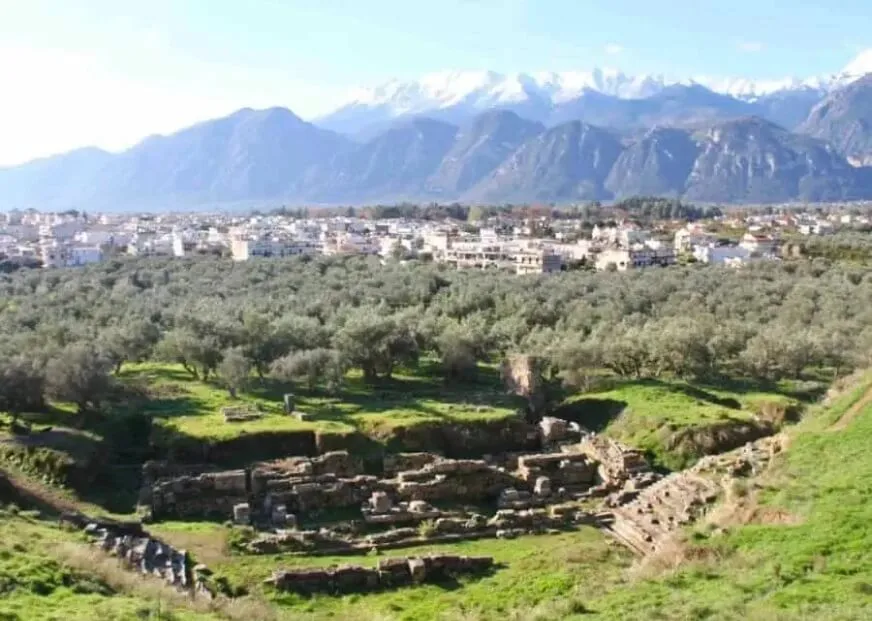
Wondering if it’s worth visiting Sparta, Greece? You might be surprised to discover that there’s a wealth of fascinating things to do in Sparta! With the ruins of its ancient Acropolis, proximity to the UNESCO World Heritage site of Mystras, delicious regional cuisine and beautiful scenery dominated by the forested Taygetos mountains, Sparta is one of the most overlooked and appealing destinations in Greece. It’s Worth Exploring Greece Beyond the Obvious When it comes to travel in Greece, popular places like Athens and the Greek islands tend to rise to the top of people’s itineraries. While I’d never recommend skipping such cultural centres and beautiful hot spots, other, less obvious, places can be equally rewarding. Especially if you may not have considered them in the first place! Visiting Sparta was a surprise for us. It exceeded our expectations in many ways. We arrived in Sparta midway through a 7-week journey through Greece. The city was part of a post-TBEX Kalamata FAM tour hosted by JayWay Travel, a boutique tour operator specializing in custom tours in Europe. Founded in 2006, JayWay works with travellers to craft bespoke itineraries and then takes care of planning and logistics. Our 3-day tour was designed to give us a taste of the activities, excursions and experiences they can set up. It’s safe to say that we would have missed much of this special region of Greece had we been left to our own devices. Sparta takes up only a paragraph in many guidebooks to Greece. It deserves so much more! Why Visit Sparta, Greece Venture to this city in the heart of the Peloponnese and you’ll be rewarded with views of towering mountains, fields of wildflowers, seas of shimmering olive trees and the stone ruins of a civilization descended from ancient gods. You’ll dine on unique regional cuisine beneath the stars and sip wine from vineyards cultivated in centuries past. It’s an incredible destination that should be experienced at least once in a lifetime! We can’t wait to return! Maniatiki salad with oranges from Laconia | © Michele Peterson This travel guide to Sparta (Sparti), Greece will help you see all the attractions, soak up its rich culture and experience the best this historic destination has to offer. We’ve also included some insider tips on local food and drink you don’t want to miss. Location of Sparta Sparta is located in the region of Laconia within the southwestern area of the Peloponnese. It refers to both the modern city of Sparti and the archeological site of ancient Sparta. Sparti (and ancient ruins of Sparta) are 220 kilometres (132 miles) west of Athens, around a 2.5 hour drive. Be sure to factor in a few days in Athens. We stayed at and recommend the InterContinental Athenaeum Athens. It’s also easy to combine Sparta with a trip to Kalamata, the capital of the Peloponnese or Monemvasia (the picturesque castle town) or Areopoli, as they’re each a 1-1.5 hours drive away. We rented a car in Athens and drove to Kalamata. Spartans in History and Modern Culture Early Greek mythology shows the Spartans as descendants of Heracles. The first king of Laconia was even said to have been the son of Zeus by the mountain nymph Taygete. This pedigree of strength was built on through a social system that emphasized military proficiency, obedience and loyalty. By the 5th century BC, Sparta was the dominant military power over its main rival Athens. The effectiveness of Sparta’s elite professional soldiers combined with their valor in battle led to Spartans being held in high esteem by Greeks and other non-Spartans. This admiration increased exponentially after the Battle of Thermopylae which took place in 480 BCE. In the battle, 300 Spartans held off up to one million invading Persian forces for three days, choosing to die–under a volley of spears and arrows–rather than surrender. ‘Come and take them’ is said to have been King Leonidas’s response to the enemy when they demanded his army lay down their weapons. The fascination with Spartan military courage and society has endured to modern times, influencing political belief systems and popular culture. For example, the movie ‘300’ (and the earlier Marvel comic series) is a retelling of the Battle of Thermopylae starring actor Gerard Butler in the title role of King Leonidas. Top Things to Do in Sparta Marvel at Acropolis Hill in Ancient Sparta One of the top things to do in Sparta is to visit the archeological site of ancient Sparta. While much of the ruins are still being restored, it’s possible to see the remains of the Agora, the Theatre and the Temple of Artemis. You’ll also gain a new understanding of who the ancient Spartans were. ‘In Athens they make art. In Sparta, we make men.’ This saying, recounted by my father, a retired professor of political science, is said to capture the differences between the two rival city-states. But during our guided tour, I learned that the role of arts, culture, music and theatre in ancient Sparta may have been understated. Spartan society was much more than a brutal militaristic state. It was comprised of more than the fearless warrior class. Women enjoyed more rights and autonomy than any other Greek city state in the Classical Period. Even the belief that Spartans practiced eugenics by infanticide may have been a myth. No mass graves with skeletons of children with deformities have ever been found. Exploring this site is made all the more memorable since its free of the crowds you’ll see at many other archeological sites in Greece. Pay Homage to the Statue of Leonidas the Lacedaemonian At the northern edge of the city in front of the ruins of ancient Sparta, a towering statue of Leonidas the Lacedaemonian depicts the Spartan leader looking defiantly towards Thermopylae, the location of his last stand. One leg is thrust forward, his shield and sword at the ready. For many people, the statue is more than a monument. Leonidas (and Spartan soldiers of antiquity) have long been admired for being honourable members of society, demonstrating courage, kinship and loyalty in battle, and fighting for one’s beliefs against all odds. One famous saying ‘Come back with your shield – or on it‘ is attributed to Spartan mothers sending their sons off to battle. Touching the statue’s bronze foot is a way to pay respect to the fallen hero and Spartan ideals. And earn good fortune perhaps. In fact, runners who complete the Spartathlon, a gruelling 246 kilometre (153 mi) ultramarathon race from Athens to Sparti, earn the right to touch and then kiss the feet of the statue of Leonidas. They’re also presented with an olive wreath and a bowl of sacred water. Marvel at Antiquities in the Archeological Museum of Sparta To get the most out of a visit to the small but important Archeological Museum of Sparta, it’s best to go with a qualified guide. Founded in 1875, this attraction contains artifacts from the sanctuaries of Sparta as well as findings from important sites across Laconia. Spending a few hours in this museum is one of the best things to do in Sparti. During our visit, the professional archeologist drew our attention to antiquities we likely would have missed and explained their historical significance. Highlights in the museum include early mosaics from the Hellenistic (3rd to 2nd centuries BC) and Roman periods, votive figurines and terracotta masks. Also remarkable is the mural crown of the Goddess Tyche (Fortuna), who was worshipped as the personification of a city and its fortune. This statue shows her crown or headpiece with warriors, city walls, towers and fortifications. Pro Tip: The most notable statue within the museum is the bust of Leonidas. It’s located in the far exhibit hall. Gaze at Ancient Mosaics within the House of Mosaics Another compelling reason to visit Sparti, Greece is to see the exceptional collection of mosaics unearthed during archeological excavations in 1872 and 1897. In total, 170 mosaic pavements were discovered in Sparta’s ancient neighbourhoods. A select few are now on display in situ at the House of Mosaics museum in the heart of modern Sparti. Dating from the Roman (3rd century AD) period, when Sparta was held in high esteem, the mosaics once decorated the floors of villas, baths and public buildings. Made of coloured stone, marble, glass and tiles, the mosaics depict geometric patterns and figures from Greek mythology. It’s a remarkable experience to gaze on these ancient mosaics portraying Orpheus seated on a rock playing his lyre and the abduction of Europa (mother of King Minos of Crete) by Zeus. The vibrant colours of the mosaics, intricate patterns and expressiveness of the figures’ faces demonstrates the skill and creativity of the artisans who created these art works. That Roman emperors would have invested such hefty sums in public works also signals the economic and cultural power Sparta yielded during this period. Fun Fact: A representation of the “Rapture of Europa” is also represented on the 2 EUR coin. Create your Own Mosaic at an Artisan Workshop If you were inspired by the ancient mosaics within the Archeology Museum of Sparta and House of Mosaics, a unique thing to do in Sparta is to channel your inner artist at a contemporary mosaic studio. Set in a wildly-lush garden of a neoclassical building in central Sparti, this multicultural space is hosted by acclaimed artist Dimitra Colomvakou. It’s a welcoming community hub for visiting artists, cultural events and the public. Things to do at Mosaic Art Greece include: Visit (free) and sit beneath the shade of the orange tree and watch Dimitra create works of art using pebbles, stones, stained glass, mirror and more. Shop for unique handcrafted jewellery and decor items. Book a 2-hour introductory mosaics session. Cost is 15 EUR (price subject to change). Book a 3-hour hands-on workshop and make your own stone mosaic. Cost is 70 EUR (price subject to change). Insider Tip: While at the studio, you might have the opportunity to sample a spoon sweet (fruit marinated in syrup). Or enjoy a sip of raki or tsipoura (a potent distilled spirit made of grape pomace) both symbols of Greek hospitality and friendship. Learn About Olive Oil at the Museum of Olive and Greek Olive Oil I’ve studied olive oil production and standards in Spain, Italy and other regions of Greece. But this modern museum in the heart of Sparti is the most comprehensive resource I’ve ever seen on the subject. Spend a few hours at the Museum of Olive and Greek Olive Oil and you’ll come away with a really good understanding of the uses of olive oil and the history and culture of olive oil production in Greece. While there, try your hand at pressing olives using a traditional stone olive mill, learn about olive cultivars and see scale models demonstrating the industrialization of olive oil production through the centuries. Make It: Kalamata olives are delicious as table olives but you can also cook with these Greek treasures. Make a delicious olive tapenade or a Greek village salad using kalamata olives. Dine on Delicious Laconian Cuisine Laconian cuisine is distinctive and delicious. Here are some must-try dishes to try in Sparta: Bouzopoula: Slow-roasted suckling pig. Bardouniotikos: Rooster baked in a clay pot with tomatoes and onions with melted cheese. Cheeses: Mizithra, sfella (dubbed ‘fire cheese’ due to its strong flavour), graviera and feta are the most popular. Kayanas: Scrambled eggs with tomato, cheese and syglino (smoked pork from the Mani Peninsula). Mountain Tea: Also known as Tea of Taygetos, this restorative brew is made of wild botanicals such as sage harvested from the Taygetos Mountains. Peloponessian Salad: Greens, Laconian oranges, pine nuts, shaved cheese and balsamic vinegar. Ktima: An appetizer salad of chopped tomato, Kithera (olive oil bread rusks made on the island of Kythera in the southern Peloponnese) and feta cheese. Taygetos Olives: Table olives of kalamata olives with dried thyme. Orange Pie: Cake made with Laconian oranges and phyllo rather than flour. Sample Fine Regional Beer and Wine Bottle of Sparta beer in Sparti, Greece. | © Michele Peterson No trip to Laconia (or any region of Greece!) would be complete without sampling the local wines, beer and spirits. You’ll appreciate the refreshing taste of the local beer after full days in the sun exploring the archeological sites of Sparta and Mystras. A must-try is the local Sparta beer, a 5% ABV lager brewed by Lakoniki Brewery, from spring water sourced from the Taygetos Mountains. Also worth seeking out is Nymph beer, a lager made of five different hops, from Thessaloniki. Viticulture in the region dates back to antiquity. So be sure to sample the fine-quality Peloponnesian white, red, rosé and dessert wines. Many, such as Monemvasia-Malvasia have PDO and PGI designations. Interesting regional varietals such as moschofilero (rosé), thrapsa (red from Laconia), kydonitsa and mavroudi (whites from Laconia) pair perfectly with a plate of mezes (Greek appetizers). Sip Potent Regional Spirits at a Local Taverna For another delicious taste of Laconian hospitality, head to a taverna to sample products produced by local distillers. There are quite a variety of potent concoctions to sample. But pace yourself. At 40-45% alcohol by volume they pack a potent punch! Tsipouro (distilled grape pomace), ouzo, tsikoudia and rakomelo are good places to start. Many contain aromatic herbs and flavours such as anise and wild botanicals. Enjoy a Tutoured Olive Oil Tasting Once you’ve learned about Greek’s liquid gold at the Museum of Olive and Greek Olive Oil, it will be time to try it for yourself. Participating in an olive oil tasting is an especially fun thing to do in Sparta and throughout the Peloponnese. The region produces PDO and PGI extra virgin olive oil that’s treasured for its biological and nutritional value. A tutoured tasting will help you understand the range and intensities of the aromas, fruit intensity, bitterness and phenols of Greek olive oil. It will also help you to be able to identify defects (such as rancidity) and provide tips on proper storage. During our tour we visited the Liotrivi Organic Estate near Monemvasia, a 70 minute drive from Sparta. After a tour of their verdant olive grove and onsite museum, we enjoyed a tasting of Athenoelia, Koroneiki, Myrtolia, Kalamata, a blend of Laconian varietals and even an olive oil harvested from wild olive trees. Once you’ve learned about the health benefits of Greek EVOO and tasted it, you won’t want to go back to your supermarket brand made of mystery olives at home. The good news is you can shop online for Liotrivi olive oil and get it shipped to your doorstep. Pro Tip: At the Liotrivi Organic Farm you can ‘adopt an olive tree’ and receive 5 litres of high quality, organic, cold-pressed extra virgin olive oil from your own tree annually. Explore the Mystic Archeological Site of Mystras Just five kilometres from the heart of Sparti you’ll find the Archeological Site of Mystras. Spending a day here is a must-do on every Greek itinerary. For us, exploring Mystras was a highlight of our trip to Greece. Set on a steep slope of Mount Taygetos overlooking the valley where Sparta lies, this UNESCO World Heritage Site is so vast you really need a plan to tackle it. Our guide suggested we begin at the top of the site and walk down rather than the bottom. That was a wise idea. Not only was it easier to climb down but we mostly avoid the busloads of tourists and school children. The site is composed of several zones. The oldest, a fortress dating to 1249, was built by the Franks but taken by the Byzantines, Turks and Venetians. It thrived economically due to trade in figs, olive oil and silk from the mulberry trees. But it was also important due to the renown of its libraries and philosophers. So, the site is a treasure trove of historical landmarks from different periods. Highlights include the Palace of the Despots, the cathedral of Agios Demetrios, church of Panagia Hodegetria and the archeology museum. Mystras is like a giant open-air museum with the remains of opulent palaces, frescoes, Byzantine churches, and fortified walls scattered across a hillside dotted with wildflowers, herbs and olive trees. It’s so vast that you can easily step away from the crowds, walk down a secret alley and soak up the beauty and magical atmosphere of this ancient site. Pro Tip: The rock stairs are slippery, steep and uneven. Be sure to bring water and wear hiking shoes or good footwear. Visit the Tomb of Leonidas If you’re sightseeing in Sparta and have a bit of extra time, another popular thing to do is visit the Tomb of Leonidas. The tomb is mostly in ruin and has no signage but is a must-do pilgrimage site for hard-core Leonidas fans. This historical landmark is located in the heart of Sparti, a five-minute walk from the statue of Leonidas. Soak Up Some Wellness at a Destination Hotel Set on 30 acres of gardens and olive groves, the Mystras Grand Palace Hotel & Spa is a stunning place to recharge and unwind after busy days tramping through archaeological sites. It features several outdoor pools, an indoor plunge pool, steam rooms, full-service spa and a fine-dining restaurant with a locally-inspired menu. The breakfast buffet is among the best we encountered in Greece. The elegant guest rooms and suites offer mountain and/or garden views with furnished balconies and terraces to soak up the pastoral atmosphere. Stone walls and wooden beams channel the historic architecture of the region but offer modern comforts such as AC, rainfall showers and luxury linens. Mani Sonnenlink is another good option for a wellness-focused getaway. One of the top vegan hotels in Greece it’s located in Pyrgos near the city of Kalamata. Final Thoughts on Things to Do in Sparta In summary, visiting Sparta offers a memorable experience for travellers looking for a glimpse into the ancient history of Greece. Mostly free of crowds, it’s especially scenic with the impressive Taygetos mountain range serving as a striking backdrop to fields of olive groves, orange trees and vineyards. And, as we discovered, Sparta also makes a handy gateway to other attractions in the Peloponnese such as the Mani Peninsula and beyond. Getting Around the Peloponnese Although there is a bus from Athens to Sparta, it’s better to rent a car or arrange a transfer with a car and driver so you can explore beyond the city of Sparta itself. During our tour, we appreciated our skilled driver (aptly named Leonidas) so we could focus on enjoying the scenery. And a wine-tasting or two! However, for much of our time in Greece, we did rent a car. Once you’re off the main toll highways, the roads in the Peloponnese are mountainous and narrow. The views are incredible and it’s fun to stop in the mountain villages on market days. We found the best car rental rates on Discovercars.com, an online reservation system that compares rates from different companies. Best Hotels in Sparti Greece Mid-range: For a centrally-located hotel in Sparti, try the Menelaion Hotel. Built in 1935, this Neoclassical building has been renovated and features spacious rooms (some with balconies), AC, and a swimming pool. Luxury: The Mystras Grand Palace Hotel & Spa is the best luxury hotel near Sparti. It features 2-storey stone villas with access to seasonal outdoor swimming pools set amid beautifully landscaped gardens. It’s an 8 minute drive from Mystras Grand Palace Hotel & Spa to the Archeology Museum (and other major attractions in town)

31/10/2023
13 Top Reasons to Add Sparta to Your Greece Bucket List
Travel Tips

4 Stunning Nafplio Beaches Not To Miss

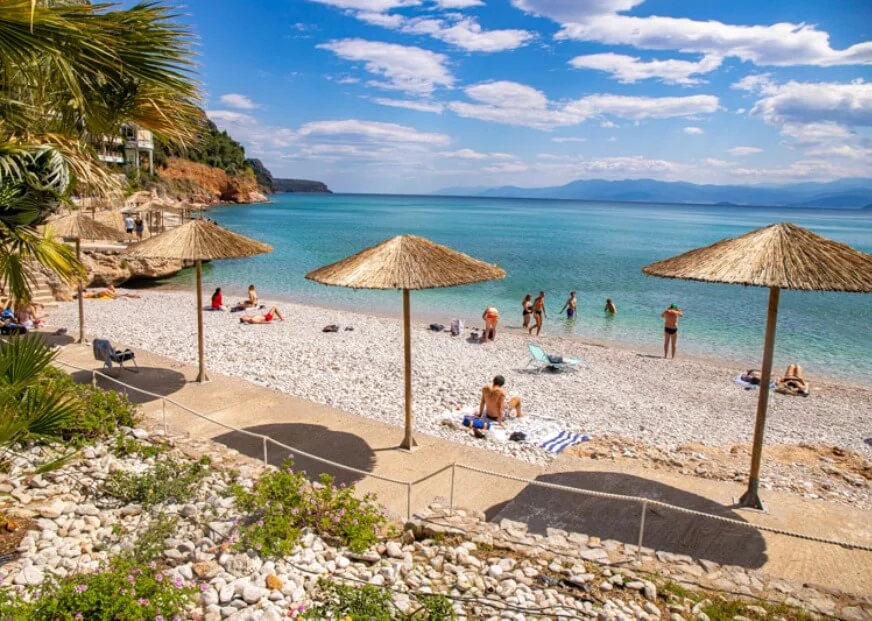
Nafplio, a captivating coastal town in Greece, boasts a treasure trove of pristine beaches that will leave you in awe. You could keep driving all day down the west coast of the Peloponnese region and see beautiful beach after beautiful beach, but Nafplio beaches are arguably the best. However, like me, you could max out your driving time to about an hour and spend longer on four beautiful beaches near Nafplio (and one in town!). This is a relatively undiscovered part of Greece. In this comprehensive guide, we’ll explore the top beaches in Nafplio, highlighting why they are worth visiting, their proximity to Nafplio, how to reach them, and what exciting activities await you. But first… Does Nafplio have nice beaches? After an incredible morning hiking up to the Palamidi Fortress in Nafplio, I jumped in my rental car for a mini-beach road trip. I had not done any research on Nafplio beaches beforehand, I just wanted to drive and see what I could discover. Pristine beauty is what I found. From secluded coves to family-friendly stretches of sand, each beach offers its own unique charm. Three of the beaches are blue flag beaches – Karathona, Kondyli and Tolo – which is an award given for beaches that have excellence in water quality, cleanliness, and commitment to the environment. So, if you’re wondering whether Nafplio has nice beaches, the answer is yes; they have the flag to prove it. You don’t have to go to overcrowded Greek Islands to enjoy beautiful beaches in this European country. You may want to visit all these beaches like I did on a half day road trip, or you might want to choose just one of these to spend a few hours. You have options. Karathoas Beach | © Caroline Makepeace How to Visit Beaches in Nafplio: Get A Car Rental To visit the beaches near Nafplio, you’ll need your own vehicle. You still can explore two of the beaches mentioned in this post without one. So, keep reading! I rented a car from Athen’s airport which I used for my Peloponnese trip. You can also rent one from Nafplio. I searched and booked my car via DiscoverCars.com and had a positive experience. They are now my preferred rental car booking partner. I had an issue the other day with my Italy booking (for the summer) and the customer service in helping me fix it was outstanding. Make sure you have adequate rental car insurance. My annual travel insurance with Allianz Travel covers me for rental car loss/damage coverage. Fill your tank up with gas as well. There are small towns along the way but it’s one less thing for you to worry about on your day’s adventure. My rental car | © Caroline Makepeace The Best Nafplio Beaches First things first, sync your playlist up to Bluetooth, and blast your favorite road trip tunes. For me, it was Pearl Jam. For a heightened sense of freedom, I rolled down my windows and sang as loud as I wanted to. I was traveling for 10 days as a solo mom. This was a total bliss moment. Certain memories just stick, and for me, singing Just Breathe at the top of my lungs while enjoying this stunning scenery of the Aegean Sea and Argolic Gulf was a moment to savor. 1. Karathona Beach Your first beach in Nafplio to visit is only 3 km South of Nafplio, about a 10–15-minute drive from Old Town. Drive slowly as the expansive views are pretty as you come over the hilltop. There aren’t a lot of areas to pull over for photos. Karathona Beach is a popular choice for locals and tourists alike because of its proximity to Nafplio and its wide sandy beach. The long beach in town is tiny and filled with pebbles. The beach is quite shallow and clear for some way out, which families especially love. In the summer, there are a lot of watersports, including banana boats, jet skis, and an inflatable sea park. Karathonas beach | © Caroline Makepeace Karathonas beachfront is well organized with sun beds and beach umbrellas close to the bar and restaurant. There are also beach showers and public toilets that you can use. So, pack a picnic or buy something from the cafe. After a long day, grab a drink and watch a breathtaking sunset at the Big Fish Beach Bar. The beach is easily accessible by car, bicycle, or even on foot from Nafplio town and there is free parking. Before you settle in, drive around to the other side of the beach, where you can pull over and appreciate some stunning panoramic views of Karathona Beach. There was quite a breeze blowing here, which was unlike the other Nafplio beaches that were more sheltered. As it was May it made it a little too cool for me, so I kept driving on. Want to hike to Karathona Beach? I wish I knew about the hike to Karathonas Beach before arriving in Nafplio. I would have made time for it. There is a trail from Arvanitias Beach that goes around the coastline to Karathona Beach. It takes about 45 minutes and is meant to be a flat leisurely walk with beautiful views the whole way! 2. Tolo Beach Tolo beach | © Caroline Makepeace Tolo is a popular beach vacation town that has the spirit of a small fishing village. It’s only 11km, or 15 minutes’ drive from Nafplio. It’s a beautiful beach with smaller coves to the north and south. There are little islands offshore you can boat out to that would make a fun excursion. Tolo is clean and shallow and because it’s in an enclosed bay, the crystal-clear waters are often calm. Tolo beach is a terrific family swimming beach, a three-minute walk from many hotels. As this is a town beach, you’ll have convenient access to everything you require, ranging from suncream to grilled octopus. The area offers several amenities, including beachside cafes, comfortable sun loungers and umbrellas. However, there are no bustling beach bars that would disrupt the peaceful serenity of an idyllic afternoon by the shore. At the western end of the beach, the shore is lined with charming tavernas, their tables right at the blue water’s edge. It makes for some pretty views for lunch. Further south is a wider, sandier stretch of beach for sunbathing, swimming, and water sports. There are cafes and beach bars opposite here on the main road. I chose this spot for lunch and coffee break. Assini Beach | © Caroline Makepeace Just to the east of the main beach is a tiny rocky beach called Assini Small Beach with quite a picturesque view. There was a small restaurant, the bar Red Rock that had a prime position here! Right near Tolo is Ancient Assini, which was the port of Mycenae. Homer refers to Assinians in the Iliad, for their part in the Trojan War. I think Nafplio is a far more interesting and charming place to stay. But if you want a true beach holiday, you may want to stay in Tolo.  3. Kondyli Beach Agios Nikolaοs, or Kondyli Beach is known to be one of the best beaches in the area. It’s also known as Agios Nikolaos from the church on the opposite shore. The drive along the coast through Vivari is quite beautiful. Unfortunately, I had someone on my tail and couldn’t quite pull over to snap pictures of the view. There were several elevated taverns that would have been beautiful for a drink, especially with the magnificent schooner sailing by in Vivari Lagoon. This area is a little different as a lagoon comes in from the sea so offers you quite a calm, sheltered beach and swimming experience.  Panoramic View of Kondyli beach | © Caroline Makepeace The drive into Kondyli then swerves and narrows down to the beach. The view is spectacular. I was able to pull over on the way back up for these photos. It’s a wide stretch of beach that consists of part fine and coarse pebbles. There were few people on it when I visited. I’ve heard it can get terribly busy in the summer and will have beach bars, and water sports. There were no beach bars set up and no amenities. The only thing set up were a couple of tents beach camping on the left side of the beach. It doesn’t have campsites, but beach camping is allowed. I went for a walk along the beach to the point for a look back to Vivari and that boat. Nudism is popular here; there were a couple of nude bathers here. The beach in its largest part consists of fine and coarse pebbles. It’s meant to be beautiful at sunset. If you want to keep going, I heard Katsigianneika Beach and Lepitsa Beach were great. Porto Heli is also in this area a popular luxury resort town in the south-eastern part of the Argolis (40 kms southeast of Nafplion). It is one of the more cosmopolitan and upmarket destinations in Greece and is home to the incredible luxury Amanzoe resort, which has Acropolis style vibes and which is situated on a hilltop and offers panoramic views of the Peloponnese coastline, a private Beach Club in a picturesque bay. I considered driving all that way to Lepitsa but, after long travel days previously, decided to return to Nafplio and swim in Nafplio’s Old Town Beach instead. 4. Arvanitia Beach While this charming pebble beach is situated near the historic center of Nafplio, I saved it for the end of my road trip, so I could relax and swim there. There is a free parking lot above the beach where I had to park my car overnight anyway, as there is no hotel parking in Old Town. This is one of the Nafplio beaches you do not need a car for. Simply walk 15 minutes from Old Town and you’re there. It’s a pebble beach so wear shoes down to the edge and the beach is small so come early to avoid crowds. My icy swim here in the May waters was very refreshing after a near perfect day hiking and beach road tripping. It’s quite sheltered here so it was lovely and warm in the sun. During the summer there is a beach bar, Blublanc – the only true beach bar in Nafplio, it’s the perfect place to pair a cocktail with a sunset – they are meant to be pretty here. After an hour swimming and napping in the sun, I walked back into Old Town along the Arvanitias Promenade – a short 1km walk that hugs the coastline offering panoramic vistas of the sea and cliffs. Arvanitia Promenade | © Caroline Makepeace I ended this fantastic beach road tripping day with a cold glass of wine at the Mentor Bar while people watching in Syntagma Square. Be sure to read my guide to Nafplio, so you don’t miss all my other great suggestions for Greece’s first capital city, including the Palamidi Castle. It was my favorite place on my Peloponnese road trip. Where to stay in Nafplio Nafplio offers a range of accommodation options to suit various budgets and preferences. I loved my little pension at the Kapodistrias Hotel in the Old Town. I stayed in the Nafplion room, which was tiny, but adequate since I was rarely there. Thanks to the gorgeous views from my small balcony, easy access to walk to Nafplio attractions, and the price of sixty-five euro a night, I was very happy. Here are a few other recommendations: Hotel Grande Bretagne: Situated in the heart of the Old Town, this elegant hotel blends traditional charm with modern comforts. Its central location allows for easy access to Nafplio’s top attractions. Amfitriti Palazzo: This boutique hotel offers luxurious rooms with comfy beds and air-conditioning, and breathtaking views of the sea and the town. It’s located near the waterfront, ensuring a memorable stay. 3 Sixty Hotel & Suites is located in the centre of Nafplio, just 100 metres from the port. This 4-star property offers free WiFi throughout and elegant accommodation with a spa bath. The restaurant and bar here are popular. Nafplia Palace Hotel & Villas located on the slope of the ancient fortress of Akronafplia. It offers rooms with views of the Argolic Bay and villas and bungalows with private pools. In Summary Nafplio’s stunning beaches cater to all tastes, whether you seek vibrant seaside fun or secluded tranquility. With options such as Karathona, Arvanitia, Tolo, and Kondyli, each beach offers its own allure. There’s no need to keep driving to see all the beautiful beaches of the Argolid Peninsula. These four beaches will offer you the dream beach experience without having to spend too long in your car. Whether you’re a family, a couple, or a solo traveler, Nafplio’s beaches promise an unforgettable coastal experience, just a stone’s throw away from this enchanting Greek town. Kondyli Beach | © Caroline Makepeace

30/10/2023
4 Stunning Nafplio Beaches Not To Miss
Travel Tips

The Sunken City of Ancient Epidaurus – Wonders of the Past

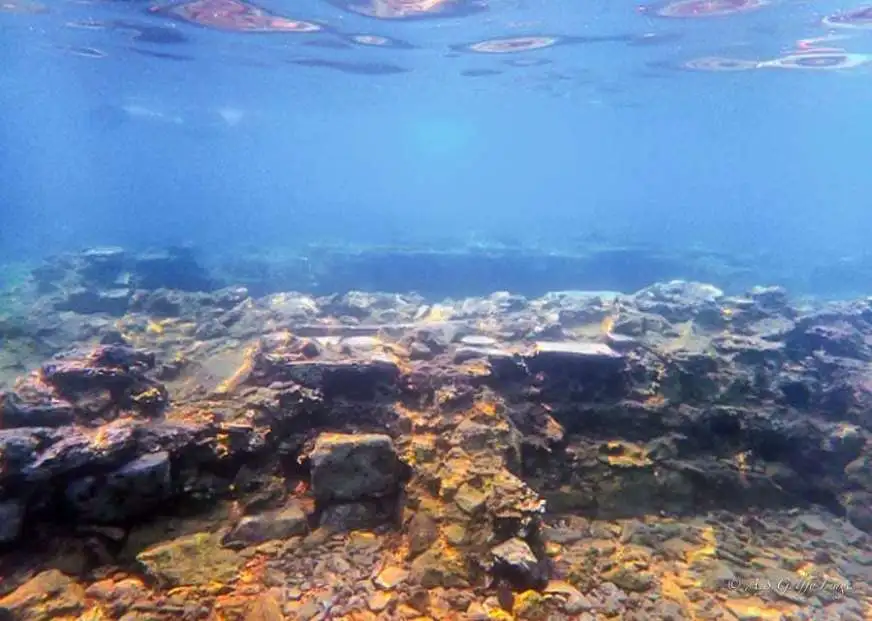
Epidaurus is one of the places that brings back great memories from our road trip to the Peloponnese. In ancient times, Epidaurus was an important commercial center on the eastern coast of the Argolid, in the northeastern Peloponnese. Today the city is mostly famous for its well preserved Ancient Theater which sits near the sanctuary of Asclepius, the ancient Greek God of medicine. But few visitors know that just a little beyond the renowned Theater of Epidaurus there is an ancient sunken city. What Is the Sunken City of Ancient Epidaurus? If you dig around a little, you’ll discover that the Sunken City is actually not so much a city, but rather a small settlement which might have been a trading post in ancient times. The Sunken City was accidentally discovered in the 1970s due to an aerial photo taken from a hot-air balloon. The architectural remains include traces of an ancient port, various walls and a cluster of three buildings, the closest of which is located only 45 meters from the shore. This is the structure you’ll be seeing when visiting the site. Archeologists believe these are the remains of a rural Roman villa from the 2nd century, which was inhabited by a wealthy Roman family and their staff. Amphorae at the archeological site of the Sunken City | © Anda Galffy What to Expect at the Site Although not a huge site, the underwater city of Epidaurus is very unique and fun to explore. The ruins lie very close to the shore and just 2 meters below the sea level. They are relatively easy to visit when it’s warm enough to swim, or snorkel. And once you get into the water the true magic happens! Swimming between these vestiges for the first time feels almost surreal. It’s a special experience that you won’t soon forget. You can clearly distinguish building foundations, amphorae, remnants of the ancient walls and even floor sections which seem almost intact. Mementos of a forgotten city whose only residents today are the colorful fish and giant urchins that hide among the ruins! Snorkeling is the best way to visit the Sunken City, as floating above it will give you a pretty clear view of the ruins below. However, to get an overall perspective of the entire city you’ll have to look from a drone. Luckily we brought one with us, so we were able to film a few images. Paved road in the underwater ancient city | © Anda Galffy Best Time to Visit the Sunken City of Ancient Epidaurus We arrived at the Sunken City at around 3 pm, after visiting the Ancient Theater of Epidaurus. Although it was only mid May, the water was ok for swimming (around 19º-20ºC which is 66º-68ºF. Of course, during the summer months it gets much warmer, so it’s even more fun to soak in it. But even if you visit Epidaurus when it’s too cold to swim, you can still see the Sunken City by booking a kayak tour that will take you above the ancient ruins. We also noticed a scuba-diving boat that brought some people to the site, so diving trips are also available if you want to explore the underwater city. The area around is also very scenic, with a beautiful coastline and crystal-clear, blue waters. If you plan to spend some time on the beach, there are beach chairs available to rent, or you can bring your own towel. There is also a rustic taverna that serves simple but delicious Greek dishes and cold drinks. This is a great place to stop for a bite after visiting the ruins. We had some fried fish with chips and lingered there for a while. How to Reach the Sunken City The Sunken City is located in the bay of Agios Vlasios, on the beach of “Kalymnios” in Ancient Epidaurus. The location is at the end of a cul-de-sac road, where the road meets the sea. Park your car at the Athina Tavern, which is right next to the beach, and start walking towards the left, past the tavern. About 50 meters from the site you’ll notice a sign on the beach for the Sunken City. Finding Kalymnios beach was a little difficult, but once we found it the underwater area was easier to spot thanks to the drone that we flew over it. There are signs pointing towards the sea, but without the drone it would have been a little more difficult to find the exact spot. However, not having a drone shouldn’t be a deterrent. If you visit during the summer, you’ll most likely see many people in the water swimming over the ruins. Sing for the Sunken City | © Anda Galffy Getting There from Athens The Sunken city of Epidaurus makes an easy a day trip from Athens. So if you are in Athens for a few days and want to visit this site but don’t have a car, there are two other options to reach it. One option is to book a private boat tour that will take you there and let you snorkel among the ancient ruins. Although that’s an expensive option (it costs around €180 per person) it’s the fastest and most pleasurable one. The cheapest alternative is to take the bus from Athens to Epidaurus and get off at Palaia Epidavros. From there you can walk to the beach of Kalymnios, where the Sunken City is. The bus trip will take approximately 3.5 hours (one way), which is a rather long trip. Tips for Visiting the Ruins of the Sunken City Visiting the Sunken City is not difficult if you come prepared. So here are a few things to keep in mind if you are planning to come here: If the water is rough and you see big waves, don’t bother to go in as you may not be able to see much. Besides, it can also be dangerous as there are many rocks and sea urchins which can hurt your feet. You should’t touch or walk on the top of the walls when visiting the ruins, although you could. While there is nothing to stop you from doing it (other than the needle sharp sea urchins which are everywhere), stepping on the ruins will endanger the preservation of this site. Keep in mind that what you see today was barely discovered 50 years ago. These ruins are fragile and could easily disappear if we don’t protect them. Bring water shoes and snorkeling equipment. This beach has pebbles which makes waking on it and entering the water rather difficult without water shoes. Also, bringing a snorkel and some googles will help you see better under the water. If you visit Greece in fall or in spring, when the water it’s a little cooler, also bring a liner or a rash guard to keep you warm. If you plan to visit the Sunken City in summer make sure you come here early in the morning, before other people arrive. The locals told us this beach is very popular and can get crowded, especially on weekends.

26/10/2023
The Sunken City of Ancient Epidaurus – Wonders of the Past
Visit Greece

Spray, Stroll, and Soak: Unveiling Greece’s Urban Art Tapestry

Art is an aspect of culture; one of many faces and expressions. Street art has become very popular in recent years in Greece, as a branch of culture that promotes creativity, extroversion, and innovation, one that is free for all people to enjoy! Here’s a glimpse of the outdoor creative scene of some Greek cities that are definitely worth exploring on your next trip to the country. Starting with Athens, the Petit Paris d’ Athènes (Little Paris of Athens Festival) takes place in October. This year, the theme title is “Love in the Arts” and it includes a number of happenings, such as concerts, theatre, art exhibitions, street painting, and educational programmes for children and young people. The events on public spaces are free of charge and there is a low-ticket price for indoor happenings. Enjoy them in the neighbourhoods of Omonoia, Vathi Sq, Karaiskaki Sq, and Larissa Station. In Keramikos, Psyrri, Anafiotika, Exarcheia, and Gazi districts, look for the pretty impressive murals on the side walls of hotels and other public spaces: apart from their great beauty, some of them also carry powerful political and social messages. Alternatively, to save time, you can follow a guided street art tour around the city. The music fans among you will enjoy a walk down Dionysiou Areopagitou St, in Athens’ historical centre. It is a pedestrian zone lining the south perimeter of the Acropolis Rock, and it is a favourite spot for street performers, who deploy their talents under the Rock and against the impressive Acropolis Museum. You will listen to Greek traditional instruments, guitar, and keyboard music, and you’ll pause to enjoy the artists’ singing; some of these voices are too good to be true, making this experience all the more memorable. Graffiti in Athens Downtown | © Y. Skoulas Compared to Athens, Thessaloniki City is none the less impressive when it comes to street art creations. The once grey colourless side walls of blocks of flats, hospitals, the university campus, and other buildings have brightened up with graffiti that are eye-catching as well as food for thought, as their themes relate to various sensitive social issues. Check out some of them downtown on Stathmou St, Monastiriou St, Giannitson St, Sokratous St, Melenikou St, Gonata St, Ethnikis Aminis St, Stratou Ave, and Konstantinoupoleos St (Hippocratio Hospital). Patras City, too, is no stranger to street art activities. This port city in the North of Peloponnese has been hosting the International Street Art Festival for quite a few years with great success, as shown by the growing numbers of visitors, and it is a contributing factor to the city’s ambitious cultural tourism plans. The Art Walk (this year ‘Art Walk 8’) takes place annually in September and October, attracting renowned artists from Europe and across the world, who work on selected walls. The city is the proud owner of some jaw-dropping murals, created by Greek and foreign artists during the festival, who also participate in workshops for children, teenagers, and adults. Graffiti in Athens Downtown | © Y. Skoulas

25/10/2023
Spray, Stroll, and Soak: Unveiling Greece’s Urban Art Tapestry
Visit Greece

Exploring the Michelin Star Restaurants List: Athens 2023

Athens has once again emerged as a gastronomic hotspot with the release of the highly anticipated Michelin Star restaurants list for 2023. This year's list not only reaffirms Athens' position as a culinary destination but also signifies a remarkable renaissance in the city's dining scene, showcasing the ingenuity and artistry of its local chefs, as well as some restaurants’ commitment to sourcing the freshest local produce. Among the distinguished eateries featured on the envied Michelin Star list, Athens' culinary landscape boasts a captivating fusion of contemporary creativity and traditional flavours, celebrating the rich tapestry of Greek cuisine. The 2023 selection of the Athens MICHELIN Guide holds 31 restaurants, including 1 Two MICHELIN Star restaurant, 11 One MICHELIN Star restaurants (3 new), 5 Bib Gourmand restaurants (2 new), 3 Green Star restaurants (1 new), and 14 selected restaurants (2 new). Leading the pack with two stars, and a green star for sustainable best practices, is the culinary wizardry of chefs George Papazacharias and Thanos Feskos at Delta Restaurant at the Stavros Niarchos Foundation Cultural Center (SNFCC) in Faliro, the epitome of fine dining in Athens. The Zillers, Soil, Spondi, CTC, Hytra, Botrini’s, Pelagos and Varoulko Seaside have maintained their one Michelin Star in 2023. Additionally, the list celebrates the rising stars of the Athenian food scene, with a constellation of One Michelin-Star restaurants leaving a lasting impression. First time awarded this year are Hervé and chefs Hervé Pronzato and Grigoris Kikis, Patio of The Margi Hotel run by chef Panagiotis Giakalis, and Tudor Hall of the historic King George Hotel headed by Asterios Koustoudis and Nikos Livadias. Beyond the stars, Athens' vibrant culinary landscape continues to flourish with an array of quaint bistros, lively tavernas, and charming cafes, each contributing to the city's culinary mosaic. The Michelin Bib Gourmand category has included the value for money restaurants Jerár and Fine Mess. All establishments reflect the essence of Greek hospitality, serving up a medley of flavours that pay homage to the country's rich cultural heritage. As Athens continues to position itself as a global culinary destination, it is evident that the Michelin Star restaurants list of 2023 is a testament to the city's gastronomic evolution. The convergence of tradition and innovation, the sustainable use for local produce, and the unwavering commitment to culinary excellence define Athens' gastronomic journey. It is a celebration of the past, a tribute to the present, and a promise of a delectable future for food enthusiasts around the world.

24/10/2023
Exploring the Michelin Star Restaurants List: Athens 2023
Travel Tips

Savouring Sustainability Wine-hopping Adventures across Greece’s Inimitable Islands

Greece’s timeless appeal extends beyond its treasured historical landmarks and idyllic beaches. The islands of this Mediterranean paradise are a mecca for wine enthusiasts seeking world-class sips that support nature preservation and sustainable farming initiatives. Greece’s rich history and deep-rooted culture are intricately intertwined with its production and consumption of wine. With its numerous wineries focusing on small-scale, high-quality yields, Greece stands out as a significant player in the global wine industry, producing around 5 million litres annually. This production volume places Greece in a unique position as one of the most important wine-producing countries relative to its population and varied viniculture zones. The quintessence of Greece’s wine diversity lies in its cultivation of 75 local grape varieties, the majority of which are endemic to the country and not found elsewhere. This distinctive grape heritage contributes to the creation of wines that carry a unique sense of place and character — and this makes Greece a fascinating country to visit to experience truly unique wine encounters. The historical significance of wine in Greece cannot be overstated. Archaeological evidence reveals that Greece boasts the oldest records of crushed grapes, with its winemaking legacy finding its earliest commercial roots in Crete over 4,000 years ago when the region emerged as a pioneer in promoting and exporting its wines throughout the Mediterranean. The storied heritage of Greece’s viniculture extends to its classification systems, with the oldest “appellation of origin” wine hailing from Messinia and bearing the name Denthys. Currently, approximately 30% of the country’s wine-producing zones are dedicated to appellation of origin varieties, primarily concentrated in the regions of the Peloponnese, North Aegean and South Aegean. Modern developments in the Greek wine industry began in the 1970s, marked by a surge in research and development, including the cultivation of organic wines. Since then, the reputation of Greek wines from small- to medium-sized enterprises has soared in perpetuity, garnering accolades for quality and innovation in prestigious international events. Today, Greece continues to honour its wine culture through regional wine-tasting festivals and expos, which provide an opportunity to explore the blend of tradition and modern winemaking techniques found in the country’s wineries. September holds a special place in the Greek wine calendar, marking the Trygos (wine-harvesting) period. This season is commemorated throughout Greece with fêtes ranging from small gatherings to larger festivities complete with Trygos folklore songs and dances. As Greece emerges as an enticing destination for wine tourism, its diverse islands stand ready to welcome enthusiasts on an extraordinary journey of culture, nature and sustainability. With a growing trend towards environmentally friendly experiences, Greek wineries have embraced a commitment to nature, making wine-hopping across the Cyclades, North Aegean, Dodecanese, Ionian and Sporades Islands an enchanting and eco-conscious adventure. To fully appreciate the myriad reasons to embrace Greek wine, the invitation is clear taste and savour its richness for yourself… Enjoying local wine paired with high-quality cuisine against the backdrop of Santorini’s stunning vistas | © P. Merakos CYCLADES SUN-KISSED SIPS ON ICONIC ISLANDS Nestled in the heart of the Aegean Sea, Greece’s famous Cyclades Islands, known for their stunning landscapes and cerulean waters, are home to a vibrant winemaking scene that seamlessly weaves together a rich historical legacy, sustainable practices and a deep reverence for the local terroir. The archipelago’s unique microclimates, characterised by strong winds, continuous sunshine, minimal rainfall and volcanic soils, contribute to the distinct environmental traits that shape its wines. These growing conditions impart a wonderful minerality and complexity to the wines, distinguishing them from their international counterparts. In recent years, winemakers in the Cyclades have also adopted green farming principles, reflecting a commitment to preserving the islands’ delicate ecosystems. Many wineries prioritise organic and biodynamic cultivation methods, respecting the land’s natural balance while producing wines that authentically reflect the region’s unique characteristics. This sustainable approach not only ensures the long-term health of the vineyards but also resonates with a global movement toward heightened environmental awareness. Among the handful of islands in the Cyclades, Santorini is a must-visit for those looking to sample distinctive Greek wines. Renowned for its volcanic soil, ancient vines and breathtaking sunsets, Santorini is the poster child for Greece’s “wine islands”, offering a treasure trove of wineries ripe for exploring. Among the famous names, Domaine Sigalas in Oia stands out for its traditional approach, utilising the centuries-old “kouloura” (basket) pruning method to craft crisp and mineral-driven Assyrtiko wines that epitomise the island’s essence. Venetsanos Winery, perched on a stunning cliffside location above the port of Athinios, is another notable establishment on Santorini’s west coast that harmoniously blends modernity and sustainability with tradition. Run by the Venetsanos family, whose experience in winemaking spans decades, this estate was the first industrial winery on the island. Now, more than 70 years since its inception, Venetsanos Winery continues to uphold its legacy, producing an excellent selection of red, white and sweet wines using Assyrtiko, Athiri, Aidani, Platani, Mavrotragano and Mandilaria grape varieties. Further north, Vassaltis Vineyards also captures Santorini’s spirit by showcasing indigenous grape varieties and implementing organic viticulture. Although one of the island’s newer wineries, this has no impact on the quality of its viniculture visitors can expect to sample some of the region’s finest wines here, including Vassaltis’ signature Assyrtiko expression, brimming with aromatic notes of ripe tropical fruits, honeysuckle and seawater, rounded off with the perfect levels of minerality and acidity. The island’s inland, meanwhile, plays host to the award-winning Hatzidakis Winery, another frontrunner in organic and biodynamic practices that produces stellar wines using endemic grapes. Tinos and Sikinos, two other magnificent islands in the Cyclades archipelago, boast burgeoning wine scenes highlighted by preeminent wineries embodying their unique terroirs’ lifeblood. On Tinos, T-Oinos Winery deserves special mention. Celebrated for its commitment to organic viticulture and the revival of ancient grape varieties, this estate crafts wines that mirror the island’s rugged beauty. Its collection, spearhead by experienced winemaker Stephane Derenoncourt, features phenomenal Assyrtiko- and Mavrotragano-driven wines meticulously produced from grapes picked and sorted by hand. By the same token, Manalis Winery on Sikinos enchants with its dedication to sustainable practices, creating small-batch, high-quality wines from arid Cycladic varieties that depict the island’s sun-kissed slopes and maritime influences. Endeavouring to keep its viniculture as natural as possible, this estate’s red, white and rosé wines epitomise a true love and passion for the craft that honours bygone eras of winemaking. Naxos Winery | © S. Antimanto NORTH AEGEAN UPHOLDING A VIBRANT WINEMAKING LEGACY The North Aegean islands of Greece, with their breathtaking beaches and prominent links to Greek mythology, showcase a rich winemaking heritage that encapsulates the region’s storied past, dynamic present and promising future. Several wineries in this region prioritise environmentally friendly, organic and biodynamic cultivation methods, thereby safeguarding the islands’ multifaceted ecosystems and distinctive terroir while nurturing the vines of acclaimed indigenous grape varieties. The winemaking roots of the Northern Aegean islands trace back to ancient times when maritime trade and cultural exchange played a pivotal role in shaping viticultural techniques. Although winemaking on these islands waned over time, recent decades have witnessed a resurgence driven by a fusion of traditional wisdom and contemporary methods. Samos, an intriguing island steeped in history and folklore, is the perfect example of this vinicultural renaissance. One of the island’s most prominent producers, UWC Samos (United Winemaking Agricultural Cooperative of Samos), stands as an international endorsement of the region’s viticultural quality, representing the collaborative efforts of local grape growers and winemakers. Founded in 1934, this cooperative has played a vital role in cultivating and producing high-quality wines for generations. Its primary mission is to promote and preserve the unique terroir of Samos, known for its exceptional vineyards and ideal grape-growing conditions. The cooperative’s flagship grape is the Samos Muscat, which represents 98% of the vineyards planted on the island and produces a sweet wine with rich, aromatic qualities. Over and above sampling the wines produced by local grape growers, tourists visiting Samos can explore the cooperative’s facilities and sustainable vineyards, gaining insight into the island’s winemaking heritage. Guests can also stop at the Wine Museum of EOS Samos to view impressive wine collections and exhibits that divulge the island’s winemaking legacy and longstanding ties with the Muscat grape. Lemnos, another gem in the North Aegean, plays host to Chatzigeorgiou Estate, a winery that’s making great strides in rejuvenating the island’s winemaking legacy. Once touted by Aristotle for producing exceptional quality wines during ancient times, Lemnos has the art of viniculture deeply ingrained in its history – and the privately owned Chatzigeorgiou Estate proudly adopts this tradition of enological excellence, crafting exceptional classic and rare wines that are all vinified, aged and bottled on-site. Chios, famed for its medieval villages and mastic production, also commands a notable presence in the Greek vinicultural landscape. With a winemaking history that dates back to 500 B.C., most of Chios’ vineyards are scattered within the mountainous northern regions and include varieties such as Chian Krasero, Assyrtiko and Roditis. Ariousios, one of the wineries set within the island’s sun-drenched highlands, has made a global name for itself with its charismatic wines that honour Chios’ heritage. A true trailblazer, Ariousios was also the first estate to build a modern wine-producing facility on the island and the inaugural local winery to export Chian wines to the USA in the 21st century. Heraklion Achentrias Vineyards | © Y. Skoulas DODECANESE DELIGHTS The Dodecanese Islands, a sun-kissed archipelago in the southeastern Aegean Sea, boasts a winemaking tradition that is as vibrant and unique as the region itself. Suffused in history, enriched by sustainable practices and highlighted by exceptional wineries, the vinicultural scene in the Dodecanese Islands offers a riveting odyssey of taste and culture. With a heritage tracing back centuries, these islands served as a crossroads of civilisations, from the ancient Greeks and Romans to the Byzantines and Ottomans, all leaving their mark on the local vine agriculture. This led to the cultivation of a wide range of indigenous grape varieties, including Athiri and Mandilaria, which have all continued to flourish amidst the islands’ dry and hot weather. At its core, from millennia past to the modern day, wine has always been a social beverage, accompanying special moments among friends, family and loved ones — and it’s precisely this idea that guides the work of Ktima Akrani, a sustainable winery on the island of Kos. Although no longer a word commonly used, the name Akrani means “companion” and indicates the winery’s vision of being a place where people can come together and enjoy each other’s company, united over their shared appreciation for wine. Using this as their inspiration and combining it with their profound love for Kos’ beauty and history, this family-run estate presents an array of complex, character-filled wines that reflect the local soil’s distinct profile and the vintner’s devotion to revivifying Greece’s rare grape varieties to their deserved glory. In the lesser-known corners of the Dodecanese, the serene island of Lipsi also offers an unexpected oenological treasure — Lipsi Winery. Albeit a boutique estate, Lipsi holds its own in producing world-class wines using the rare Fokiano grape, alongside the endemic Assyrtiko and Athiri varietals. With deep ties to the community, this eleven-acre vineyard embraces organic and sustainable practices that reflect a profound respect for the land and an unyielding passion for top-quality viniculture. A perfect pairing: Greek cuisine with Cretan wine | © E. Fragou CRETE VINEYARDS OF HARMONY AND INNOVATION Situated in the southern expanse of Greece, Crete, an ancient cradle of civilisation, harmoniously weaves together tradition and modernity in its winemaking endeavours. Rooted in a history dating back to the Minoan era, the island’s winemaking heritage has endured, safeguarding time-honoured methods and grape varieties that have witnessed centuries unfold. Pioneering commercial wine promotion and export as early as 2700 B.C., Crete etched its reputation on Mediterranean trade routes, a legacy that resonates through its vineyards and cellars today, showcasing the resilience and innovation of its vintners. Crete’s diverse landscapes encompass coastal plains and rugged mountains, fostering myriad microclimates that infuse its wines with a symphony of flavours and aromas. Recent years have seen an ardent embrace of sustainability among the island’s winemakers, a commitment supported by its unique ecosystems and profound kinship with the land. Organic and biodynamic practices have become commonplace, echoing a deep respect for nature while crafting wines that exude the region’s innate characteristics. This devotion extends beyond the vineyards, encompassing responsible water management, energy conservation and biodiversity preservation, a testament to Crete’s aspiration to perpetually protect its natural treasures. Two shining examples of Crete’s dedication to sustainability are Dourakis and Manousakis wineries, which both employ biodynamic practices to grow indigenous grape varieties, allowing guests to savour the island’s soul while treading lightly on the earth. Further east, Lyrarakis Wines is another Cretan establishment that has risen to fame in the vinicultural industry. Established in 1966, Lyrarakis seamlessly interlaces tradition and innovation with environmental stewardship, championing indigenous grape varieties, particularly those endemic to Crete, like the ancient Dafni, Plyto and Melissaki varietals. Produced from 140 acres of gravel- and limestone-permeated soils, Lyrarakis Wines’ diverse, high-quality portfolio encompasses an array of styles, from crisp whites to robust reds, each echoing the subtleties of the region’s remarkable landscape. Heraklion Achentrias Vineyards | © Y. Skoulas IONIAN EXCELLENCE With their lush surroundings and ubiquitous maritime influences, Greece’s Ionian Islands have nurtured a unique winemaking culture, spotlighting indigenous vines and a steadfast dedication to non-invasive, eco-friendly practices. The winemaking legacy of the Ionian Islands stretches across centuries their strategic positioning along ancient trade routes facilitated the exchange of knowledge and grape varieties, resulting in the distinctive winemaking techniques and grape selections that define the archipelago at present. Among its constellation of superb wineries, Sclavos Winery, set on the island of Kefalonia, stands tall as the pioneer of organic viniculture in the region, leading the modern winemaking movement in the Ionian archipelago. By embracing natural winemaking techniques and championing sustainable agriculture, this family-operated gem – which boasts over 100 years of experience in wine production — channels the island’s exceptional terroir into each bottle it produces. Gentilini Winery, also located on Kefalonia, shines as a luminary in Ionian winemaking, too. With a multigenerational patrimony, Gentilini’s tight-knit team masterfully nurtures native grape varieties, blending modern and traditional techniques to craft a small yet impressive selection of food-friendly wines. Its dedication to promoting the unmistakable flavours and aromas of Kefalonian grapes, paired with its spectacular location overlooking the Ionian Sea, renders Gentilini an essential stop for those eager to immerse themselves in the island’s vinicultural story. Further north, on Lefkada Island, Lefkaditiki Gi Winery is another must-visit in the Ionian archipelago. Driven by a desire to produce wines of the utmost distinction, this estate blends age-old winemaking know-how with modern facilities to showcase the beauty of the island’s indigenous grape varieties, namely Vardea and Vertzami. As a cultural and oenological hub, Lefkaditiki Gi offers an immersive encounter, inviting visitors to explore the interwoven narratives of wine, history and innovation. SPORADES SPOTLIGHTING SERENITY AND SUSTAINABILITY Comprising Alonissos, Skiathos, Skopelos and Skyros, the spellbinding Sporades island cluster has fostered a longstanding wine culture that extends back to antiquity, with historical texts referencing vine cultivation. Now, in the modern age, the wineries’ fusion of tradition and innovation, entwined with the islands’ unique terroirs, ensures that each bottle of Sporades wine offers an evocative journey through both time and place. Whether wandering through the vineyards or savouring the estates’ finest creations, visitors to the Sporades become immersed in a world of flavours that reflect its landscapes’ charm and vintners’ dedication. The archipelago’s diverse geography and varying altitudes, in combination with its distinctive soils, coastal proximity and optimal sun exposure, have synergistically shaped the essence and qualities of Sporades wines. In resonance with the islands’ natural splendour, Sporades wineries prioritise ecologically sound cultivation, aiming to conserve the region’s unique ecosystems while lending a distinct character to local wines. From minimised chemical usage to soil rejuvenation, sustainability is intricately woven into the fabric of the islands’ viniculture. Arguably the Sporades’ most influential winery, Parissis, spread across 35 acres of fertile land on Skiathos, has played a vital role in reviving the region’s winemaking heritage. A family-run affair, this esteemed estate cultivates indigenous Greek grape varieties with precision, including Malagousia, Roditis, Assyrtiko, Xinomavro and Moschato Alexandria varietals. As the only commercial vineyard on the island, guests can look forward to exploring its elevated vines amidst panoramic vistas, sipping on stellar white and red wines while immersing themselves in the rich history and dedication to quality that defines Parissis. Heraklion Achentrias Vineyards | © Y. Skoulas EVIA ECHOING DECADES OF WINEMAKING TRADITION Situated off the eastern coast of mainland Greece, Evia Island boasts a dynamic winemaking scene steeped in centuries of tradition, a resolute dedication to sustainability and a rich array of indigenous grape varieties. The island’s varied topography, spanning from coastal regions to mountainous terrain, deep valleys and broad open fields, lends itself to the cultivation of mostly (around 80%) white grapes, resulting in wines with mild yet distinctly nuanced flavour profiles. Standing out among Evia’s noteworthy wineries is Vriniotis, a family-run estate that has garnered acclaim for the revival of extinct grapevines native to the island’s northern territory. Rooted in a family with deep-seated connections to the region, the winery is a living embodiment of Evia’s vinicultural legacy. Spanning 100 acres, the estate’s mineral-rich soils and abundant sunshine offer the optimal conditions for the cultivation of an array of vines, from Aidani to Assyrtiko, Malagouzia, Monemvasia, Mavrokountoura and Vradiano, a rare red grape endemic to northern Evia. This, paired with the vintner’s dedication to sustainable viniculture and minimal intervention winemaking, translates into wines that eloquently articulate the island’s incredible terroir. As wine enthusiasts traverse these Greek isles, from north to south and east to west, they will uncover how Greece’s rich cultural heritage is impeccably interwoven with its commitment to sustainable farming practices, fostering a wine industry that is both a guardian of tradition and a trailblazer of innovation. With each island boasting its unique terroir and indigenous grape varieties, visitors are invited to indulge in a sensory journey that spans ancient vinicultural roots to modern eco-conscious endeavours. In Greece, travellers have the opportunity to embrace not just the pleasure of exceptional wines but the celebration of nature’s abundance and the promise of a harmonious future.

17/10/2023
Savouring Sustainability Wine-hopping Adventures across Greece’s Inimitable Islands
Travel Tips

Land of Plenty

Home to a kaleidoscope of flavours, Greece's traditional cuisine goes far beyond the moussaka, souvlaki and baklava we all know and love. A journey through authentic Greek food — one that lies far from the tourist trails — is a feast for the senses, where every bite tells a story for the ages, imbued with a culinary heritage as prolific and vibrant as the landscape itself. Within this fabled land of gods and legends, where ancient ruins and rich culture intertwine, lies a profound gastronomic heritage holding the same majesty as its mythology. From sun-drenched islands to rugged mountains, Greece's distinctive terroir births a cornucopia of unique products, each offering a taste of the history, ethos, and soul of a nation that has mastered the art of celebrating life through food. Ancient recipes form the backbone of the local diet, inviting visitors to savour culinary traditions that transcend time. A haven for gastronomes, Greece's food and drink culture is deeply ingrained in its history, and the country's commitment to quality is evident through certifications such as PDO (Protected Designation of Origin) and PGI (Protected Geographical Indication), which guarantee the authenticity and provenance of various local products. From north to south and east to west, a golden thread prevails: simplicity, quality, and conviviality are the keystone of Greek gastronomy. Each of its traditional dishes pays tribute to the unparalleled beauty of the country's natural bounty, unveiling centuries of authenticity and craftsmanship passed down over generations. Off the beaten path, hidden in village tavernas and family kitchens, lies a world of flavours waiting to be discovered — and every corner of Greece has its own edible stories to share. Beginning in the north, Greece's lesser-known regions reveal a trove of authentic delicacies ripe for the picking. In the uplands of Imathia and fertile soils around Amyntaio, the distinguished Xinomavro grape thrives. Perfectly adapted to the continental climate, this red varietal yields a medium- to full-bodied wine noted for its multifaced flavour profile encompassing tobacco, plum, raspberry, and floral undertones. The scenic slopes and ravines of the northern territory also bear a prized culinary treasure: the Kozani Crocus, Greece's "red gold". This premium saffron, grown in Kozani's verdant valleys, is one of the world's most rare and precious ingredients. Its vibrant colour, distinct aroma, and beneficial properties have been cherished since ancient times. A mere pinch of this PDO product adds a luscious golden hue and rich flavour to various dishes, from cheese products to soups, meats, pasta, and rice. Locals also enjoy the regional speciality "yaprákia", especially during the festive season, which features meat and rice wrapped in a salty cabbage leaf and fashioned into an egg shape. Another highlight is "Kozanitiko kichí", a circular pie made from buttery phyllo pastry and filled with cheese. In the northwest Aegean Sea, Skiathos, a picturesque island where food has always been at the heart of its identity, offers its own abundance of delectable treats produced by a close-knit network of local farmers and fishermen. Here, to the backdrop of stunning panoramas, visitors can savour fragrant fish stews, fresh seafood with wild greens known as "horta", fava with sardines, and crayfish and lobster with courgettes. The island also boasts a plethora of wild herbs, such as fennel, chard, sow thistle, and chervil, which find their way into traditional pies like "hortopita" and the spiral-shaped "tiropita". Indulging in Skiathos desserts is a must, especially since many feature the renowned local honey, imbued with aromatic notes of the mountains' native herbs and flowers. The traditional sweet "aspro" made with almonds, sugar syrup, and lemon is a favourite, and pairing it with homemade walnut or cherry liqueur enhances the eating experience. To complete the Skiathos culinary pilgrimage, sample the wines made from premium "roditis" and "malagousia" grapes, which beautifully complement the local fare. In Ioannina, located on the northwest mainland, the gastronomic delights continue. In the freshwater lakes, delicious fish flourish, while the moderate mountain climate allows seasonal fruits and vegetables to thrive. Frog legs, eels, trout, highland herbs, and local spices are staples in Ioannina's cuisine, prepared innovatively and traditionally to captivate the taste buds. Be sure to leave room for dessert, as Ioannina is famous for its exquisite sweets like "sker bourek" (sugar pie), baklava, and other syrup-doused pastries. One unique product exclusive to the region is an alcohol-free liqueur crafted from organic vinegar, nectar, fruit syrups, and herbs. In the heat of the summer months, it's a welcome treat, served over crushed ice as a refreshing alternative to alcoholic beverages. Traditional coffee shops also offer "sherbetia," a sweet wine infused with fruit and flowers. Heading east, the islands of Limnos and Chios offer a delightful array of traditional eats that showcase the country's deep-rooted connection to the land. Limnos, known for its ancient history and top-quality local products, produces exceptional thyme honey, wine, cheese, and the delicious "mavragani" flour made from an indigenous wheat variety. Traditional cheeses like Melichloro, Kalathaki, and Feta are crafted using age-old methods and offer distinctive flavours. Don't miss out on "flomaria", a speciality pasta from the island, and "trachanas," a comforting thick soup made from fermented grains, yoghurt, or fermented milk. Limnos is also famous for its outstanding wines, considered the ambrosia of the Olympian gods in ancient times. Local grape varieties, such as Moschato Alexandrias, prosper on the island's volcanic terrain, producing delicate white and sweet wines that are globally renowned. The red varietal Limnio, known as Kalampaki locally, is cultivated in east Limnos. Grown in Greece and nowhere else, it's also the oldest referenced grape in the world. For those who appreciate spirits, Tsipouro and Ouzo can be enjoyed alongside grilled octopus, seafood, and other local delicacies. Moving on to Chios, this enchanting island is famous for its production of mastic gum, derived exclusively from the Schinos tree. Chios remains the only place in the world to produce Mastic or Mastiha PDO, which adds a unique flavour to various sweets, liquors, cookies, and chewing gum. Visitors will be pleased to discover various agritourism programs on Chios, allowing them to learn about the ancient cultivation, harvesting, and preparation of this unusual ingredient. Chios also offers PDO-registered citrus fruits, including the highly aromatic Chios mandarine. These citrus gems find their way into a wide range of goods, from drinks to savoury dishes, desserts, preserves, essential oils, and cosmetics. In autumn, the island becomes a hotspot for mushroom hunters, with prized varieties like Amanites adding flavour to local dishes. Pairing perfectly with this fungi's umami richness, gourmands can accompany meals with "Ariousios Oinos," a prestigious red wine rooted in centuries of tradition. The abundance of spirits on Chios provides a treat for liquor lovers. Sample Souma, a spirit made from figs or local Ouzo fortified with anise, coriander, fennel, lemon flowers, or mastic. Last but not least, the island's beloved pasta scene is more than worth exploring. With myriad forms and flavours to choose from, epicures can delight in the likes of "fytilaki", a short, twisted tagliatelle infused with mastic, or "spartos", a long, twig-shaped pasta traditionally served with a rich tomato sauce. Pasta and olive oil go hand in hand, and in southern Greece, this 'liquid gold' is produced with great expertise. Most of the olive oil comes from the Peloponnese region, where its prized Koroneiki olives yield a high-quality product that's been a cherished cooking ingredient for thousands of years. Another culinary gem of the Peloponnese is the Agiorgitiko grape, known as the king of red grapes in the area. Its medium-bodied, fruity flavour and rich aroma pair perfectly with barbecued meats, tomato sauces, and native Greek herbs and spices. Like its soils, where olive groves and grape vines bloom in abundance, Greece's seas also offer plenty of culinary riches. With its extensive coastline, it comes as no surprise that seafood plays a prominent role in Greek gastronomy. From grilled octopus kissed by charcoal flames to succulent shrimp prepared with a splash of lemon, the taste of the sea is omnipresent. Greek fishermen, masters of their craft, bring in the daily catch, ensuring that only the freshest fish grace the tables. This is particularly evident when venturing south of the Cyclades constellation in the Aegean Sea. Those looking to sample some of the nation's moreish bakes should head to Folegandros. This stunning island, boasting dramatic cliffs and shimmering waters, is a haven for bread lovers. Imbued with a distinctive bread-making tradition, the local bakeries use ancient wood-fired ovens to create traditional white and wholemeal loaves. One must-try speciality is the puffed bread "lagana Lazarakia"; shaped like little men, these bite-sized buns delight the palate with a raisin-filled stuffing. Pies like the famous "sourotenia" filled with cheese and onions are also highly recommended. Bread and cheese are a match made in heaven; so, naturally, Folegandros is a cheese lover's paradise, offering locally crafted varieties like Souroto, Manouri, Mizithra, Melichloro, and Skliro, which are incorporated into various dishes. Moving to Santorini, this island — usually known as a tourist hotspot — also offers an incredible food and drink scene. Its winelands are home to the Assyrtiko grape, considered Greece's noblest white variety. The wines produced from Assyrtiko are famed for their acidity, crispness, and excellent minerality, offering citrus fruit and floral aromas. Santorini's exclusive Vinsanto, made from indigenous grape varieties and aged in oak barrels, is a luscious sweet wine with concentrated flavours. Further east, in the Dodecanese island group, lies Symi, an enchanting, lesser-known isle offering a memorable gastronomic experience that perfectly suits its picturesque setting. Dotted with authentic fish tavernas, traditional Ouzo bars and laid-back meze eateries, this is the idyllic place to unwind while relishing a taste of the local fare. Its many culinary highlights include fresh fish, dishes like chickpeas with dill and stuffed cabbage leaves with fava, and locally caught shrimp. In Crete, the largest and most populous of the Greek islands, culinary traditions date back to the Minoan period, offering a window into age-old culinary customs. Cretan Graviera cheese, recognised as a PDO product, and premium olive oil, are among its culinary treasures. Cretan dishes range from mashed fava beans with olive oil and chopped onion to fried snails, fennel pie, sautéed rabbit in wine, and roasted wild goat. Sweet treats like "lychnarakia" and "pitarakia" pies filled with honey and fresh Myzithra cheese add to the island's distinctive foodie offering. To complement these delicious flavours, a shot of Tsikoudia, a traditional Cretan digestif, or a glass of local wine is the perfect accompaniment. Akin to Crete, the charming Ionian island of Lefkada in western Greece, produces superb olive oil, along with wildflower honey, unique sweet wines made from the rare Vertzami red grape, and award-winning Englouvi lentils and salami. Traditional homemade pies, salted codfish with potatoes and onions, cuttlefish cooked in ink with rice, veal with quince and molasses, or grape-juice syrup called "sofigado" are all must-tries in Lefkada. Lentils served with "riganada" (dry bread moistened with olive oil, vinegar, oregano, and salt), plus rooster or beef with macaroni in a rich aromatic sauce called "cocotos", are also highly recommended dishes. Moving northward from Lefkada, we arrive at the enchanting island of Corfu, known for its vibrant architecture and historic UNESCO-accredited town. This Ionion gem offers a range of culinary delights, including cheeses, butter, olive oil, hams, cured meats, and citrus fruits, such as the renowned PDO kumquat from Nymphs. Corfu's winemaking tradition is also noteworthy, with vineyards dotting the landscape and producing famous white wines like Kakotrygis and Muscat, and red wines such as Petrokoritho, Skopelitiko, and Rozaki. Corfu's gastronomy exhibits a strong Venetian influence, giving rise to unique local dishes. Bourdeto, a spicy tomato dish with scorpion fish, and "fokatsa", the Corfiot version of focaccia, are among the specialities to savour. Savoro is another popular choice, consisting of little fried fish in a white sauce with garlic, rosemary, and vinegar. For those with a sweet tooth, "mantolato", a Corfiot treat made of ground sesame, honey, and whole almonds, promises a pleasing indulgence. No matter where one ventures in Greece, it's clear that the country's abundance of fresh, premium produce endows each region with a plenitude of delectable, inimitable dishes. Whether lovingly crafted by home cooks, professional chefs or devoted producers, the country's dedication to preserving and bettering its culinary heritage is ever-evident, showcasing the passion and pride that define Greek gastronomy. From the humblest tavernas to the finest dining establishments, the emphasis on traditional recipes and local ingredients is unwavering. Without a doubt, this commitment to quality, paired with a deep-rooted food culture, epitomises Greece as the veritable land of plenty when it comes to food and drink.

01/10/2023
Land of Plenty
Total 98 items<1...8910...13>

It takes a lifetime to discover Greece,

but it only takes an instant to fall in love with her.

—Henry Miller

Let Greece inspire you!

Subscribe to our newsletter and discover unique ideas and hidden treasures for your next trip.