All Articles

What are you looking for?

Interviews

TWO TICKETS TO GREECE: Interview with the writer-director Marc Fitoussi

1) What inspired you to create this film? What is the main message of the story? The desire to offer a truly tender and optimistic comedy in these gloomy times. The character of Magalie opts for lightness and I would like spectators to leave each screening with this same wish. 2) What attracted you to the Cyclades and inspired you to shoot the film? Magnificent and still-authentic landscapes. I discovered these islands during a vacation and found that there was a real playground there that was both very cinematic and varied. 3) How long did it take for you to complete the shooting? We actually went from island to island for 30 days. So for the whole team it was also a real road movie with its difficulties, its unexpected events... A sort of odyssey full of twists and turns. 4) What did you enjoy most while shooting in Greece? Did you single out something in particular? Many of the film's crew were Greek. A great way to learn a little more about this country, and to go beyond the sometimes postcard aspect... The atmosphere in any case was studious but very joyful. The Greeks know how to party. 5) Are you planning on shooting any other film around Greece? Already, I'm sure I want to go back there on vacation and why not imagine a sequel to this film... I would really like to film on the island of Milos which I find sumptuous. 6) Palace Films Australia is currently running a contest allowing Australians who see TWO TICKETS TO GREECE the opportunity to win a trip for two to Greece, including Santorini and Amorgos. What would you recommend the winners do or see when they are there? The monastery that Blandine visits in Amorgos is unmissable. It's truly a magical place. Also in Amorgos, there is this taverna in the town of Chora called Transtoraki which serves delicious food. Finally in Santorini, beyond the sublime Caldera, you have to take a trip to Red Beach... Two Tickets To Greece releases in Australian and New Zealand cinemas on 26 Dec 2023.

11/12/2023
TWO TICKETS TO GREECE: Interview with the writer-director Marc Fitoussi
Dessert

Mama’s Melomakarona

01/12/2023
Mama’s Melomakarona
Visit Greece

Things to do Around Athens this Christmas

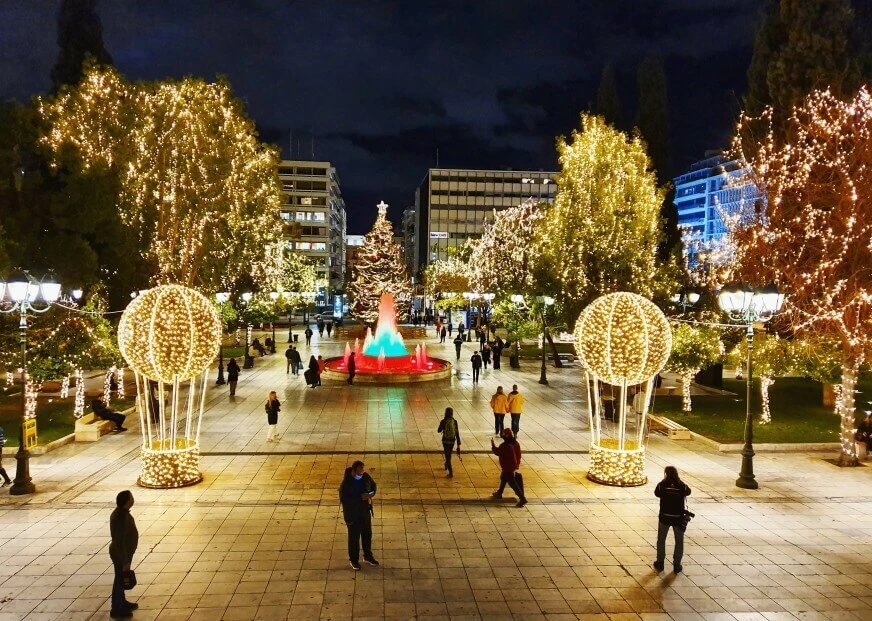
As winter wraps Athens, it emerges as a festive holiday destination, adorned with twinkling lights, festive cheer, and an array of activities to delight locals and visitors alike. The city comes alive with a unique blend of ancient charm and modern cheer. From the iconic Acropolis to the bustling markets, each corner of the city invites you to unwrap the joy of the season. Join us on a journey through enchanting streets and intriguing delights, as the city dons its holiday attire. Find below our top suggestions about things to do around Athens this Christmas: Syntagma Square Wonderland Syntagma Square is where stories unfold and memories are made. Twinkling lights, the scent of seasonal treats, and the joy of the holliday fill the air. The square is home to a dazzling 17 metres tall Christmas tree, which came all the way from the town of Karpenisi, adorned with 24.000 led Christmas lights. This is the perfect starting point for your Christmas adventure. Join the energy and embrace the magic, as Syntagma is where Athens gathers. Christmas time @ Syntagma Square | © Skoulas Shop til you Drop Discover the joy of holiday shopping in the heart of Athens! Syntagma Square and its surrounding streets are adorned with festive lights, creating the perfect backdrop for a magical shopping spree. Explore boutique shops on Ermou Street, find unique treasures in Kapnikarea Square, and embrace the charm of Plaka's artisanal boutiques. Discover numerous traditional markets such as Monastiraki, the Varvakios Central Municipal Market on Athinas St., and the Athens Central Vegetables Market in Renti. Athens city centre offers the ultimate Christmas shopping experience. They are there to fulfil your seasonal shopping desires. Unwrap the spirit of the season with every stroll. Luxury in Kolonaki For those seeking a more upscale experience, head to Kolonaki, Athens' chic district. High-end boutiques and designer stores line the streets, offering luxurious options for fashion, accessories, and beauty products. Indulge in some holiday splurging in this elegant part of the city. The neighbourhood also unfolds its story of opulence through a tapestry of exquisite restaurants. Nestled among the designer boutiques and chic cafes, these culinary gems offer a journey into the world of refined tastes and indulgent pleasures. Bohemian Vibes In the vibrant neighbourhood of Exarchia, don’t miss the Kallidromiou open market, which takes place every Saturday where the creativity and artistic flair of local vendors along with products and produce from around the country is showcased in the most authentic way. From handmade crafts to unique artworks, the Exarchia market embodies the bohemian spirit of Athens. The lively ambiance, accompanied by street performers and eclectic goods, makes every visit a delightful adventure. Christmas décor, Technopolis Gazi, Athens | © Skoulas A beacon of Christmas spirit Technopolis Gazi is a former gasworks turned into a cultural hub. As Christmas descends upon the city Technopolis unfolds its festive mood, blending the industrial history of Athens with the festive traditions that bring people together. In this vibrant space, the essence of the season is not just celebrated but embraced, making Christmas at Technopolis Gazi an unforgettable experience that seamlessly weaves together the past, present, and the enchantment of the holidays. National Garden Escape the bustling city for a tranquil retreat in the National Garden. Take a leisurely stroll along winding paths, breathe in the crisp winter air, and revel in the serenity of nature. The National Garden offers a peaceful respite amidst the festive hustle and bustle. Zappeion Hall | © Skoulas The Acropolis Glow Experience the awe-inspiring Acropolis, as the sun sets, the ancient marvel transforms into a captivating spectacle against the Athenian winter night sky. As the city lights twinkle below, light displays illuminate the unique structures, adding an extra layer of enchantment to your experience. Witness the iconic monument bathed in a soft glow, creating an ethereal ambiance. Savour the views and capture the moment with friends and family. Embrace the freshness of the New Year with the spectacular celebration of the fireworks bursting over the radiant silhouet of the Acropolis. As fireworks illuminate the imposing ancient site, let them ignite a year of brilliance and new beginnings. Plaka's Festive Flavours Venture into the charming cobblestone streets of Plaka, where the festive spirit is intertwined with traditional Greek hospitality. Cosy tavernas offer a warm refuge from the winter chill, serving mouthwatering Greek delicacies and seasonal treats. Embrace the local culture as you enjoy live music performances and immerse yourself in the heartwarming atmosphere of this historic neighbourhood. Stavros Niarchos Foundation Cultural Centre | © Skoulas Christmas Concerts and Performances Immerse yourself in the sounds of the season by attending one out of many Athens' Christmas concerts and performances in a venue nearby, such as the Megaron The Athens Concert Hall, the newly revamped Olympia City Music Theatre “Maria Callas”, and the Municipal Theatre Of Piraeus. From classical renditions to contemporary celebrations, the city's theatres and concert halls come alive with the spirit of Christmas. Whether it's a symphony orchestra or a local choir, the musical offerings in Athens promise to leave you enchanted. Take a look at Visit Greece’s events calendar for more info. Until we meet again for the next holiday embrace, may the magic of Athens stay with you, filling your heart with enduring glow and festive memories. Wishing you a wonderful new year filled with joy, prosperity, and the timeless charm of this extraordinary city!

30/11/2023
Things to do Around Athens this Christmas
Travel Tips

Andros Greece Fall in Love With This Little-Known Greek Island

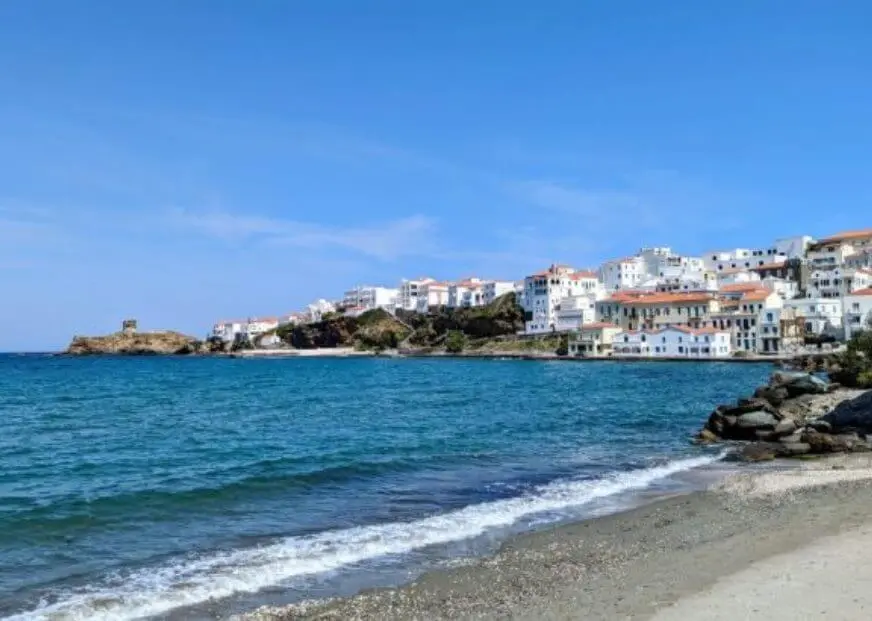
Andros took me by surprise. I came here to relax and catch up on work during my five-week trip all over Greece and before heading on a Greek Island cruise. Yet I found my favorite Greek Island yet. Just 2 hours by ferry from Athens, this unexposed Greek island “should” be overrun by tourists. Yet it remains one of those “hidden gems” that has flown under the radar of mass tourism. Andros has had a long history as the center of the Greek maritime industry and therefore never had to rely on tourism as an income stream. Only recently have they started expanding their tourism infrastructure with a focus on sustainable, nature-focused tourism. Here are 5 Reasons why you will fall in love with this beautiful little island in Greece. 1. The Natural Beauty After Naxos, Andros is the second largest of the Cycladic Islands which also includes the tourist hot spot Mykonos. With a population of only 8300, you will find many areas of Andros that are completely unspoiled and off the beaten path. What makes Andros so special is how green it is. While most Greek islands have a very arid climate and desert-like landscape, Andros is lush and green year-round. Here you will find citrus orchards, forests, waterfalls, and lakes. Combined with steep, rocky cliffs plunging into the turquoise ocean, scenic sandy beaches, and you have a landscape that will make mountain AND beach lovers’ hearts beat faster. That makes it the perfect destination if you and your travel companions are split between the two camps ;-) © Europe Up Close 2. Outdoor Adventures & Hiking in Andros I was lucky to go on a few hikes and outdoor adventures in Andros. There are several options for you, whether you are looking for a quick hike to a waterfall or a multi-day trek traversing the island. A volunteer organization called Andros Routes maintains over 180 km of trails. Go check out their website for a description of the trails. They also make sure the trails are well-marked and easy to follow. Apikia to Pythara Waterfall I hiked a short section of hiking trail 2A from the mountain village of Apikia to the picturesque Pythara waterfall. This hike is pretty easy and short (about 15 minutes from the village), so perfect for beginner hikers or if you are pressed for time or did not bring hiking boots. In the summer, you can even go swimming in the little pools below. Well, not swimming as they are not deep, but you can cool off. © Europe Up Close Gerolimni Waterfall Trek I also joined a guided waterfall trek to Gerolimni waterfall which was absolutely fantastic. This trek is a little more challenging and includes some steep sections and light bouldering. I highly recommend you wear hiking boots or at least trainers with grippy soles. The waterfall hike takes about 3 hours and leads through a lush valley. There is no marked trail to the waterfall, so a tour guide is a must to stay safe. Our guide Argie was incredible and always there to help me through the more challenging sections. Of course, make sure you have all the appropriate hiking gear, and that you tell someone about your route and when you expect to return. The same company, Explore Andros, also offers rock climbing and abseiling, as well as jeep tours, if you are really into outdoor adventures. 3. The Food Who doesn’t like Greek food? From tasty dips, fresh seafood, saganaki, succulent lamb, juicy Greek salads, crumbly feta, and salty olives, the Greeks know how to tantalize your tastebuds. Farm to table is not a bougie concept here, but the way of life. Greeks know high-quality ingredients and cherish their local cuisine. On Andros, there are a few local specialties that you need to try that this island is known for: Spoon sweets: These are fruits and vegetables that are preserved in thick sugar syrup. They are usually eaten either by themselves as a small dessert, or over yogurt or ice cream. I tried pumpkin, lemon, and cherry and they were all fantastic. Tzipouro: This is the local alcohol of choice, made from leftover grapes. It is quite strong and can either be drunk as a shot or sipped (with ice, or water). Lemons: Andros is known for its lemons and they are very prevalent in the local cuisine. You will find lemon used in desserts, sweets, and also many savory dishes. Pastries: The island’s love affair with decadent sweets goes back to Venetian times. The world-faring mariners brought back sweet treats and recipes from all over the world. On Andros, you can find many desserts and pastries based on traditional recipes from other countries with a unique “Andros’ twist”. Thyme honey: Thyme, oregano, and other herbs grow plentiful on Andros and so the island has become known for its delicious thyme honey. Wine: Andros wine has just received a big honor: It was served at the White House! If it is good enough for the president, it is good enough for me ;-) Check out Kourtesis Winery near Chora (by appointment only). They are currently the only winery open for wine tasting on Andros and their wines are fantastic. And check out the view from their estate! 4. The Stunning Hotels & Accommodation Options Hotels are usually not why I fall in love with a place. But Andros has some seriously beautiful hotels that made my trip here extra special. There are two main tourist areas to stay on Andros: Batsi and Chora. Batsi is on the West side of the island, near the port city of Gavrio. I would not recommend staying Gavrio, as it doesn’t have much to offer for visitors. Hotels in Batsi Batsi is what I would call a resort town. Not many locals live there and it mainly consists of resorts, restaurants, bars, and tourist shops. This is a great spot if you don’t have a car and are looking for more of a traditional resort vacation and access to great beaches right at your doorstep. I did not stay there, but these hotels were recommended to me by some locals: • Iliades Luxury Boutique Suites • Aneroussa Beach Hotel • Blue Bay Resort Village Hotels in Chora I chose to stay in Chora, the capital on the East side of the island. This is a great village if you plan to explore on your own a bit and want to do some outdoor adventures, explore mountain villages, and a traditional Greek small town with lots of things to do. Micra Anglia My hotel was Micra Anglia, a luxury boutique hotel in the heart of the town. The property is absolutely stunning and the service was fantastic. The location couldn’t have been better – just one block off the main street and within walking distance of everything (if you don’t mind hills and stairs). I had some issues with my internet and they didn’t leave any stone unturned until it was fixed. Everyone was extremely kind and helpful. They also have a nice restaurant on the property. I usually avoid hotel restaurants, but this one surprised me with delectable food and top-notch service. I would definitely stay here again! I also visited two more hotels and a vacation rental that looked absolutely fantastic and that I would definitely stay at the next time I visit Andros. Anemomiloi Andros Boutique Hotel This hotel has a modern style with a fun vibe. They have a beautiful pool and the rooms come equipped with a small kitchen. The location is also very convenient you can reach any part of Chora on foot from there. Archontiko Hotel Eleni This stunning boutique hotel is in a historic captain’s villa in the center of Chora that has been renovated with style and authenticity. The rooms, furniture, and decor are simply stunning. Castel Abaso Boutique Apartments But my absolute favorite place I visited was this vacation rental. This 3-unit traditional house in the heart of Chora has one downstairs unit and two upstairs units. If you can, get one of the upstairs units. They come with a stunning rooftop terrace with a WHIRLPOOL. I mean can you imagine soaking here, sipping on an Aperol Spritz, and watching the sun go down? 5. The People of Andros & Their History There is no question that Greek people are among the most hospitable, friendly, and welcoming in the world. I have met so many incredible people during my travels in Greece. In most places in Greece, tourism is the main source of income for people and the locals know how to make tourists happy. Andros is different though. The island has a history of a flourishing maritime industry. Many locals are maritime ship captains and own several ships. There is substantial wealth on this island. The previous generations built a successful industry for their island. However, it came with a cost. The captains were often gone for months, sometimes years at a time. The women stayed home and ran the island. From their fortunes, the locals invested in their island and built a good infrastructure, hospitals, and schools, and supported the local monasteries. © Europe Up Close One of the monasteries I visited, Saint Irene, was rebuilt by a local captain, Lefteris Polemis. He not only paid for everything but also showed up every day to make sure the workers had what they needed. Once the renovation was complete, he paid for groups of Greek orphans to come to Andros for a vacation until he passed away in 2022. This is just one example of how the locals are giving back to their local communities, honoring their past, and making investments for the future success of Andros. When you visit, make sure to talk to some of the locals and listen to their stories. It is a fascinating place, but the people are the true gems of this island.

06/11/2023
Andros Greece Fall in Love With This Little-Known Greek Island
Travel Tips

Paradise Ermionida In Greece

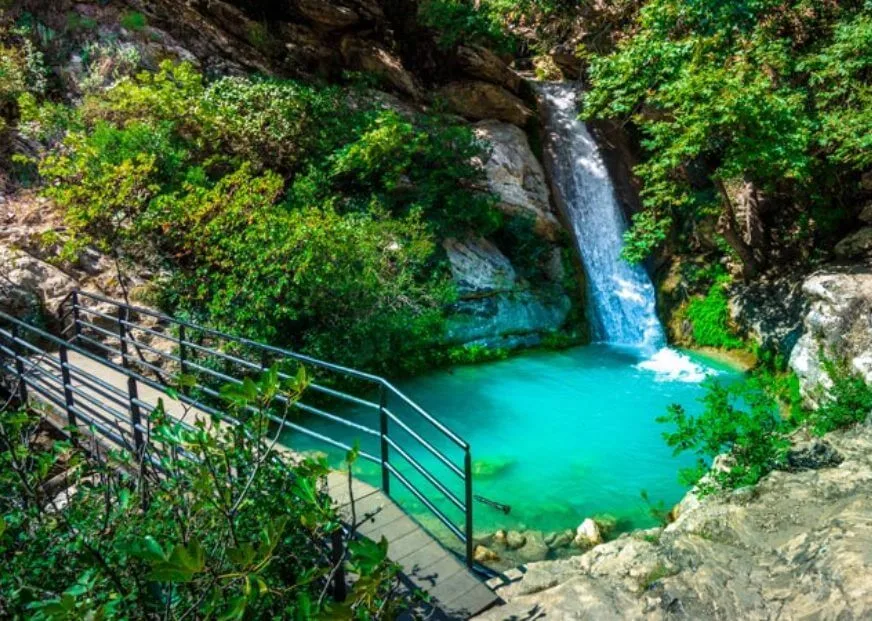
Ermionida in the Peloponnese region is a paradise for nature lovers with plenty of opportunities for hiking and exploring the mountains. Ermionida is also home to some of the most beautiful beaches in Greece, where you can enjoy swimming and sunbathing. The beaches in Ermionida are located in natural locations, with crystal clear turquoise water and are mostly protected by nature, which provides a comfortable environment for you as a beach visitor. The spacious coastline offers plenty of space to relax and enjoy the sun and sea. Ermionida has many beaches to choose from so here you can find the perfect spot for you to enjoy by the water. Discover Nature In Ermionida With over 3,710 trails offering stunning scenic views and waterfalls, you can choose from a variety of hiking trails. The mountains of Ermionida offer a unique opportunity to explore the beautiful landscape of Greece and experience the local flora and fauna. Hiking in the mountains is a great way to connect with nature and enjoy the fresh air and breathtaking views. In addition to hiking and beaches, Ermionida offers visitors the chance to visit natural springs and waterfalls. These natural wonders are a must for anyone visiting the area. The waterfalls and natural springs offer a peaceful environment where visitors can relax and enjoy the beauty of nature. The waterfalls of Ermionida are a popular attraction, as they provide a fantastic backdrop for photos and offer a unique experience for you as a visitor. Overall, Ermionida offers a variety of nature activities that are guaranteed to delight visitors of all ages. © First Class Magazine A Day At Sea In Ermionida Crystal clear water! Snorkeling and diving are popular activities in Ermionida due to the area's diverse marine life and underwater topography. Whether you are a beginner or an experienced diver, the waters of Ermionida offer an unforgettable experience. With its calm and clear waters, snorkeling in Ermionida is a great way to explore the vibrant marine life and colorful reefs. If you wish to experience a day where you explore the marine life under water, we recommend Ergodive in Porto Heli, Incredibly professional! Kayaking and paddleboarding are also popular sea activities in Ermionida. These activities give you an opportunity to explore the coastline and hidden coves that are difficult to reach on foot. Renting a kayak or paddleboard is a fun and adventurous way to discover the beautiful surroundings of Ermionida. This is an unforgettable experience for nature lovers. Fishing and sailing are also popular activities in Ermionida. The Aegean Sea, with its challenging winds and currents, is ideal for experienced sailors looking for an adventure. The Sporades and Dodecanese offer a combination of challenging and relaxing sailing experiences, while the Cyclades are mainly for experienced sailors. Fishing is also a popular activity in Ermionida, with the area's rich marine life providing an abundance of fish to catch. Whether you are an experienced fisherman or a beginner, fishing in Ermionida is an enjoyable and rewarding experience. © First Class Magazine Dining Experiences In Ermionida Take Greek Food To A New Level Ermionida is a coastal town known for its delicious seafood dishes. When visiting Ermionida, trying the local seafood is a must. The town is close to the ocean and provides access to a variety of fresh seafood options. A popular seafood dish is grilled squid, which is usually marinated in olive oil, lemon and oregano before being grilled to perfection. Other seafood dishes to try include fried squid, baked fish and seafood pasta. These dishes are often served with a side of fresh vegetables and a glass of local wine, providing a truly authentic Greek dining experience. Besides seafood, visitors to Ermionida should also try traditional Greek food. Greek cuisine is known for its use of fresh, local ingredients and simple but flavorful dishes. Some traditional Greek dishes to try include moussaka and souvlaki which are grilled meat skewers usually served with pita bread and tzatziki sauce. Vegetarian options such as spanakopita, a spinach and feta cheese pie, and dolmades, stuffed grape leaves, are also delicious options to try. No meal in Ermionida is complete without sampling the local wines and olive oils. Greece is known for its high quality olive oil, and Ermionida is no exception. Olive oil tastings are a popular activity in the city, where visitors can sample different varieties and learn about the production process. Local wines, such as the Agiorgitiko and Moschofilero varieties, are also a must try. These wines are made from grapes grown in the region and go perfectly with the local cuisine. Overall, the dining experiences in Ermionida are not to be missed, offering a delicious taste of the local culture and traditions.

05/11/2023
Paradise Ermionida In Greece
Travel Tips

The Cats Of Greece: The Purrfect Travel Companions

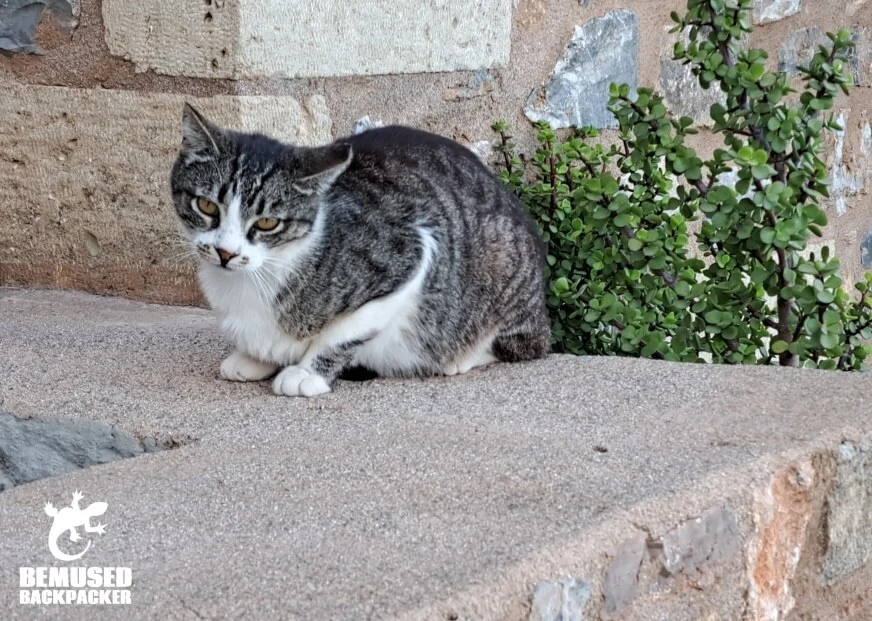
Greece is a popular destination famous for its myth and legend, its ancient history and breathtaking islands and beaches, but it is also famous for being home to a population of cats that hold a special place in the hearts of locals and visitors alike. These feline inhabitants have become an integral part of Greek culture, symbolizing the Greek way of life and the enduring spirit of the country, and are the purrfect temporary companion for any solo traveller. Greece is the perfect destination for any solo traveller, and the famously traditional Greek hospitality means that there is often no shortage of local company if you want it. From people watching whilst enjoying the country’s famous coffee culture and the historical sites where you can’t escape the crowds to its infamous nightlife, you are never really alone in Greece. But for animal lovers like myself there are other companions to find in Greece that are often overlooked by many tourists, companions that can often give the warmest and most meaningful welcome to travellers of all. The ubiquitous cats. Cats are everywhere in Greece, and I mean everywhere. Constant, silent companions watching over their human neighbours and allowing the occasional interaction for those who they deem worthy enough of their attention. And for those travellers who love cats and are smart enough to return that affection in kind, they open up a whole new world of cultural immersion that most tourists will never experience. Cats have a long and noble history in Greece dating back to at least the Minoan age. Initially – according to legend at least – coming over from Egypt where they were rightfully revered as gods, cats quickly adapted to the laid back Greek way of life and were welcomed as beloved companions to sailors, farmers, scholars and nobles and peasants alike. Their natural feline tendencies perfectly suited the slow, procrastinating Greek way of life. The days are long and hot, and just like a cat is naturally predisposed to do, there is no better way to spend your time than slowing down, enjoying your time with friends, lazing in the sun and living life in the moment. As cats adopted and came to symbolise the Greek attitude to life, Greek culture in turn embraced cats as the free spirits they are, allowing them to roam the streets and lounge near the ancient ruins, quaint tavernas, or basking in the sun on the island beaches. Many cat lovers simply leave food and drink out for them as they need or even toss them the odd fish from their catch of the day! © Bemused Backpacker A recent trip to Greece was filled with amazing parties, great nightlife, epic food and catching up with old friends. As travels tend to do they fill your social calendar up very quickly, and there is nothing wrong with that. I had a great time and am not complaining. Any and every traveller to Greece should fill their time up with as much food, drink and friendship as they can! But as someone who has spent the better part of the last 25 years travelling solo I am genuinely at my happiest when I am alone, taking an aimless walk around a new destination, getting lost occasionally, sitting with my thoughts at a coffee shop or two, it is a great way to travel and I always carve out some time to be alone during any trip when I can. It is my solace, my peace. But as anyone who knows me will attest to, the one and only thing I will allow to disturb that peace once I have it, are animals. Any animals, dogs and cats in particular, know they can come up to me and get the warmest of welcomes, and I think they sense that, because from my first day in Kalamata, the famous cats of Greece all wanted to say hello! I genuinely loved just sitting back and watching the cats living their best lives roaming around the docks of Kalamata, lazing under the tables of the tavernas, waiting for the inevitable scraps the fishermen or the restaurant cooks would happily and frequently leave out for them. Of course, I wasn’t going to snitch when occasionally seeing one run up and sneak off with part of the fisherman’s catch when they weren’t being fast enough for the cats liking! And this is where I spent most of my time in Greece, yes I explored the ancient ruins, went snorkelling in the crystal clear waters and enjoyed the museums and the tavernas, but I also took the time to sit back and just be with the cats that gave me the honour of a moment or two of their time. From the little ginger cat who decided to join me on my journey up and down the winding steps of Monemvasia, hopping between my legs and jumping up for the occasional head scratch to the kitten who joined me for a coffee at a taverna in a small fishing village, fascinated by the smell of the national drink (don’t worry, I didn’t let it have any and got her a small bowl of water and a fish snack instead), my time in Greece was filled with new feline friends. I have always loved animals, all animals, including cats, but have had an extra special relationship with my feline friends ever since one saved my life in Cairo many years ago, and I will never not slow down and give one the time of day when they decide to say hello. Greece is after all their country, I am merely a visitor. They own it and rule over it with a vaguely disinterested attitude and only say hello to a select, lucky few they deem worthy. It would be rude to not say hello back really. © Bemused Backpacker A cats affection, or even interest for that matter, is a true privilege that no one should take lightly. A true gift from the gods. It is a common misconception that cats were domesticated but in fact it is cats who domesticated themselves, and humans in the process, learning to meow only as a unique way to communicate with their human neighbours and purring as a Machiavellian tactic to get their own way, integrating themselves into a society that they deem as being built for their comfort and convenience. And they aren’t wrong! They know exactly how to wrap us around their tiny little paws so we may as well just accept it! When a seemingly lone cat can give you the big, sad eyes and convince you to share your seafood meal with him, and then run off to bring back five of his friends when you inevitably give in, you know you aren’t in charge any more! This time I spent with cats in Greece, quite apart from just being an enjoyable way to spend the time in general, allowed me to slow down far more than I would have otherwise. This gave me the chance to just be still, be in the moment with nothing but my thoughts and the cats presence, and that gave me a profound sense of appreciation for where I was and what I was doing at the time, enjoying life in the traditional Greek way. The cats of Greece, with their independent spirit and symbolic presence, have become an integral part of the country’s cultural fabric, so the next time you are in Greece spend some time with our cat friends. Appreciate them, learn from them, adopt their way of thinking and immerse yourself in the real Greek way of life. If nothing else, you will have spent some time making a little feline soul happy, and nothing is worth doing more than that.

04/11/2023
The Cats Of Greece: The Purrfect Travel Companions
Travel Tips

Sailing the Greek Islands: Rent a Boat in Greece with Skipper

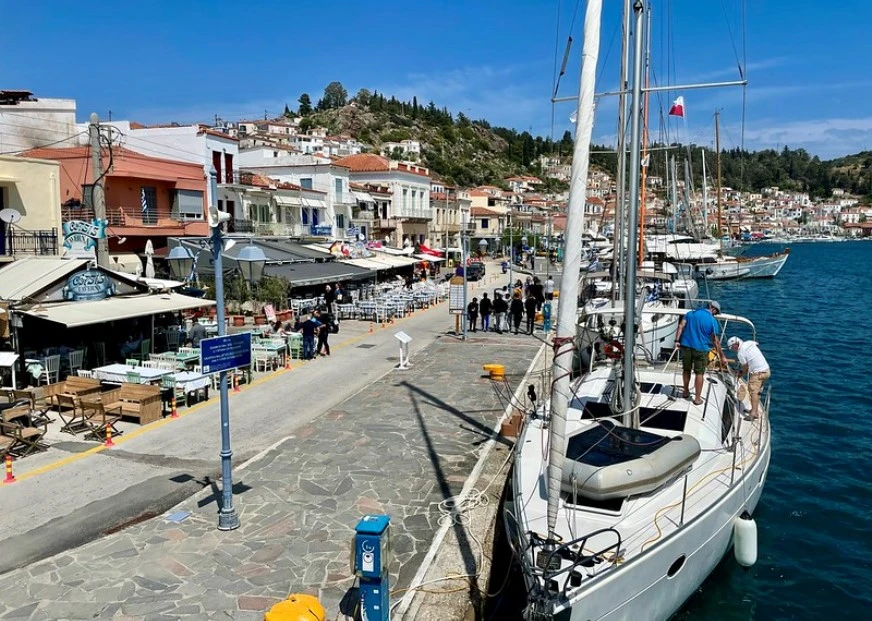
We sat by the clock tower at the top of the hill on the Island of Poros Greece and watched the ships coming and going in the small harbor. This, my wife declared, was the “money shot”. This is what she had expected and desired in a sailing trip in Greece that had been planned for more than a decade. Back Story More than 10 years ago my wife decided that for her next “round number” birthday she wanted to do a small boat cruise with friends in Greece. It was a great idea, but that birthday came and went as did others after it. Our kids had weddings. One grandchild was born. There was a pandemic. Birthdays and anniversaries came and went. Finally, I had a travel blogging conference in Greece and declared to her that I was going to Greece in May and she should come along also. We started looking for options for boats and itineraries but it was all a bit overwhelming. Coincidently, I was approached by a yacht company Navigare Yachting that wanted me to write about their offerings. Would I be willing to take a week-long journey and write about it if they provided the boat? Well now… do you have boats in Greece? © Chris Christensen, Amateur Traveler Navigare Yachting Navigare Yachting started in Sweden but also has yachts in the Bahamas, Virgin Islands, Croatia, Greece, Seychelles, Spain, Thailand, and Türkiye. They have 40 boats based out of Athens alone. They paid for the cost of a boat for the week and we paid for the crew, provisions, docking fees, etc.  Our planning went into high gear once we had a charter company. We peppered them with questions. What itineraries did they recommend? We understand what the captain does, but what does the host do? What kind of electrical plugs are on the ship? See the answers below. Choosing a One Week Sailing Itinerary from Athens Sailboats don’t move as fast as fast ferries so you will need to be realistic with your schedule. If you want to sail down to some of the well-known islands in the Cyclades like Mikonos, that will work better with a two-week trip from Athens. With only a one-week itinerary we opted for the much closer Saronic Islands and the coast of the Peloponnese Peninsula (the southern part of Greece south of Corinth). We visited the islands of Aegina, Poros, Hydra, and Spetses as well as the mainland ports of Monemvasia, Kyparissi, and Epidaurus. Monemvasia was amazing to see but it did mean we traveled further than they often do on a one-week charter. That meant we cruised more than we sailed and we did have high fuel costs… but totally worth it. An alternative that Navigare suggested was the northern part of the Cyclades visiting the islands of Kithnos, Serifos, Siros, and Kea. These are the closest islands in the Cyclades to Athens. Because you are sailing, you should assume any itinerary is a plan, but that the plan might change. We were sailing in early May when the water was still chilly and the weather was a bit rainy, so one night the captain suggested that our visit the next day to an uninhabited island to swim could be changed to a visit to the ancient theatre of Epidaurus instead. It was a great change… for our group… in that week. © Chris Christensen, Amateur Traveler Aegina - Perdika We arrived at the Navigare port in the mid-afternoon as instructed. We paid for the groceries and meat deliveries, filled out paperwork in triplicate, and waited for our clearance to leave. While we waited we had an introduction to the boat. We were reminded that nothing that didn’t come out of us goes into a marine toilet and received a safety talk from our captain Kostas. Our host Panos stored groceries into every nook and cranny including compartments in the floor you open with a pair of suction cups. Then we sailed out to our first port of call. We motored directly into a 15 km/hour breeze from the south so the seas were choppy. Just because you are on a sailboat does not mean you will always have the sails up. Because of the weather and itinerary, we motored most of the time. As we were trying to get our sea legs Kostas told us that he will typically lose 10 kg over the course of a season because of the different muscles you use on a boat for balance. When you are on the Parthenon in Athens and you look out to sea, you can easily see the large island of Aegina just off the coast of Athens. We stopped by Aegina both at the beginning and the end of our trip. Our first stop was the tiny port of Perdika where we arrive just as night was falling on the first day of our sail. Perdika is a small fishing village. After our boat docked we “walked the plank” from the back of the boat onto the dock and strolled around to the brightly lit tavernas on the water’s edge for dinner. © Chris Christensen, Amateur Traveler Hydra Our cruise to Hydra was in a flat sea and 3km winds so we ate breakfast while we cruised – eggs, fruit, bread, bacon, coffee, yogurt, juice. It was the start of what turned out to be a delicious trip. We would often cruise for 3 hours a day. For me, that usually meant one hour of sightseeing and just marveling at the beauty of the area, one hour working on Amateur Traveler, and one-hour napping. I can’t say that I have ever been on a more relaxing trip. The island of Hydra has a beautiful but incredibly compact harbor. Kostas had only managed to find space in the harbor maybe 3 times in 100 trips. This was his 4th successful effort. As the “Ocean’s Twelve” was moored directly looking at the beautiful town it was definitely one of those, “well… I guess this is my life now”. All of the Saronic Islands and the Peloponnese Peninsula that we visited were very hilly with rocky peaks behind the ports. The typical hike on many of these islands is up into the hills to a monastery. On Hydra that is a one-hour climb and then 450 steps up to the Prophet Elias Monastery. After hiking the hills of Athens for a few days before our sail we were satisfied with the coastal walks instead. Kyparissi On Day 3 we stopped in Kyparissi on the way to Monemvasia on our longest day on the water. Kyparissi is a tiny village at the base of impressively rugged mountains on the mainland. Until the 1960s there was no road into town at all and all commerce was done via boat. We had lunch on the boat before proceeding on to Monemvasia. © Chris Christensen, Amateur Traveler Monemvasia Monemvasia was easily my favorite stop on our trip. It is sometimes called the “Gibraltar of the east”. It is one of the oldest continually-inhabited fortified towns in Europe… although the permanent population of the lower town is only about 10 people now. The old town is at the base of a huge rock which is covered by the ruins of the upper town. During the 6th century the inhabitants of ancient Sparta finally abandoned their city in the face of an invasion by Slavic people and started fortifying Monemvasia. There is no port in the old city so we docked in the new city which is the other end of the bridge from the island and a 35-minute or so walk to and from the old town. There is a shuttle that runs from the new town to the old town’s gates if you prefer. The lower town is a warren of cobblestone passages built on a hill. The main passage goes from the main gate out through the back of the city to a second gate on a path that leads to an old lighthouse. The paths are very hard on a wheeled suitcase as I would learn when I returned to the city the following week as part of a press trip. They also can be quite slick. The day that we were visiting on the sailboat we did not make the hike all the way to the top of the rock to see the ruins at the top. It was not so much that the hike up was difficult as the hike down was a bit treacherous with the slick stones that day. We saw at least one tourist with her arm in a makeshift sling who learned that the hard way. I was pleased to get back to the city when I could make that climb on a day when the steps were dry to see the view and visit the few remaining buildings on the top, including the Hagia Sofia church. © Chris Christensen, Amateur Traveler From Monemvasia, we did a bit of night sailing back to Kyparissi to avoid some back weather the following morning. Kyparissi again We awoke on the 4th day back in a harbor opposite the town of Kyparissi with the rugged mountains framed behind it. Our boat was parked next to a boat with high school students from St George’s prep school in Rhode Island. The kids were on a 4-week trip. That sure seemed better than any field trip I did in high school. © Chris Christensen, Amateur Traveler Spetses Our next stop was the island of Spetses which also does not allow cars, but only in the city center. Spetses was the first island to raise the flag of independence in the 1821 Greek War of Independence. It supplied many ships for the new Greek Navy and still has small shipyards that produce wooden boats. The weather caught up with us again in Spetses and we hung out in the boat waiting for some of the rain to pass before we explored the main harbor. We were glad we had thought to pack some small games to pass the time. Poros The weather the next day on the Island of Poros was spectacular. We tied up right on the main promenade. The owner of the local Oasis Tavern is a friend of Kostas. Not only did he help with the lines but he brought out a pitcher of wine to greet us. We reciprocated by having a lovely dinner at his tavern. It feels like when you are on a boat you are part of a community that you may not have known existed. The next day Poros was having a boat show featuring all the different yacht rental companies and the different types of boats they have. We were able to see a couple of the boats that Navigare has that are even larger than our “Oceans Twelve”, not that we regretted our choice. © Chris Christensen, Amateur Traveler We hiked up to the clock tower where this blog post started and then out from the smaller island of Poros to the larger one to one of the nearby beaches with the youngest of our crew heading on to Love Beach for a quick swim. Epidaurus Our original itinerary was to go to an uninhabited island where we could swim and picnic on the beach, but the weather in May was still a bit too cold for that so Kostas recommended we instead detour to Epidaurus with its ancient theatre. The theatre is inland from the port so we grabbed a couple of taxis that took us to the archeological site and then agreed to meet us a couple of hours later. Two hours turned out to be a bit rushed for all there was to see. The ancient theatre was part of the ancient center of healing at the site. The theatre is renowned for its acoustics. The theatre was part of the healing center with the understanding that watching dramatic performances were good for your health. The healing center is dedicated to the Greek god Asclepius whose serpent entwined staff is still a symbol for medicine. My fellow travelers may claim that I gave them a short impromptu performance of “Amazing Grace” to test the acoustics… but they have no proof of this. Aegina – Aegina We sailed from Epidaurus back to the island of Aegina on the last day, to the city of Aegina which is the main port of the island. I enjoyed Aegina which was a little bigger with some better shopping than some of the other ports we had visited. We anchored off the harbor and took the small inflatable boat into the harbor. © Chris Christensen, Amateur Traveler We visited the ruins of Apollo’s temple on the hill above the town. Human habitation in this location can be traced back 7000 years and the small museum has a great collection of pottery and other items going back to the many civilizations that were on this hill over that span of time. Athens We sailed back to the port south of Athens to check in the boat and do the last bit of paperwork. We stayed on the boat one more night before catching our shuttle in the morning. By this time we already considered ourselves to be “boat people” and were talking about the next trip. Frequently Asked Questions… at least by us When is the best time to go? We did our trip at the first part of the season at the start of May. While this was the best time for us, it is probably not the best time for you. The ports were less crowded but the weather was still a bit rainy and the water a bit too cold still for swimming. The Greeks don’t usually swim in the sea until the first of May. Kostas, our captain, said his favorite time is late September when the water is still warm, the weather is still good, the crowds are less than they would be in July and August and the restaurants and services on the islands are still open. Do I need a crew? If you are an accomplished and certified sailor, you can certainly save money by crewing the boat yourself. Once you’re out of port, sailing the boat will be about the same as sailing wherever you are familiar with. You need an ASA 104 and a European license to charter in Europe. Only the skipper needs to be certified. The challenge with Greece, however, will be getting in and out of port. In most ports in Greece, there will not be a marina and you will not tie up alongside the dock. Instead, the process is a bit more complicated as you drop your anchor maybe 100 feet out and back your boat back into the dock. You then tie up the back of the boat at two or more mooring cleats, loops, or bollards. You will have to deal with crossed anchor chains and crowded ports, especially in August. Also in summer, the tiny ports on some islands will get a lot more crowded. There always seems to be someone I’m sure willing to grab a line and help you tie up, but this won’t come without advice. And as we watched some people who were bare boating, pull away from the port of Poros, it was clear that not everyone is up to the challenge of sailing in Greece. Also be aware that as we sailed out of Athens, we were crossing major shipping lanes. We had to cross the path of container ships, fishing vessels, and at least one cruise ship. What is the role of the captain? The captain’s job is fairly straightforward. He gets you there safe and back again. Obviously, a good captain does that with good humor and skill. Our captain, Kostas, showed the required skill to parallel park a 45-foot catamaran in a crowded port. As we entered every port he would welcome us to Mykonos (not on our itinerary). He told us the apocryphal story of a captain hired to take a charter to the Cyclades Islands who just sailed to the Island of Aegina off Athens and sailed around the island all week welcoming his passengers to a “new” island each night. What is the role of a cook or host? We opted for a second crew member called a host. We understood what a cook would do (cook 3 meals a day) but the role of a host was a bit more confusing. Our host was a chef named Panos, who owns and runs his own restaurant, but does this part-time. With some guidelines from us on what we eat and don’t eat, he did the meal planning and shopping, and cooking for two meals a day. This is usually breakfast and the midday meal. We were told that many hosts would make that a light lunch but Panos made our lunch meal the largest meal of the day. The food was wonderful and he figured out how to best use the leftovers into imaginative meals throughout the voyage. © Chris Christensen, Amateur Traveler Your second crew member is also helping you get in and out of port by manning the lines and the anchor. He helped us get in and out of the boat and the dinghy when we use that. If you don’t have a second remember then someone in your group will have to take on those responsibilities. Where does the crew sleep? Our boat was configured as a 4+2 meaning there were 4 guest cabins and 2 crew “coffins” in the front of the boat with no windows. Our captain preferred to just sleep on the couch in the kitchen area. Our boat had 4 toilets but none in the crew area so one of our toilets was used by the crew for showers, etc, usually when we were ashore. As you choose a boat with a crew, this is one of the considerations you will have to take into account. When do we contact the skipper and host? In our experience, you will get contact info for your crew a week or two before your cruise. This is when you can start talking to the skipper about what you are interested in for your itinerary and when you can start talking to your host or cook about food. We had read on the Navigare site that we would expect to go shopping with the host but that was not our personal experience. We gave Panos an idea of what our group liked to eat and didn’t (not big seafood eaters and one who didn’t eat chicken). Panos then did the shopping and by the time we arrived the groceries had mostly been put away and the meat delivery was just arriving. Should I get a monohull or a catamaran? If you really like to sail, then you might want to get a monohull sailboat. Kostos told us that they are more fun to sail and are the choice of the majority of people who are barebooting. As with most crewed charters, we opted for a catamaran, which has significantly more space. Outside of the cabins, our catamaran had an inside dining area that would seat all 8 passengers, an outside dining area that would also seat the whole group with some additional seating, an area on top that would also seat all 8 people and an area on the front of the boat that could hold all 8 as well. So while sailing cabins are small, the communal space on a catamaran is significant. The monohulls we saw had one cockpit area in the back. What should I pack? Pack as little as possible. A sailboat, even a catamaran, has small cabins. Each of our cabins had a small closet, some had more overhead storage and a storage space at the foot of the bed but not a lot of extra space. We each had a backpack for the plane and a wheeled carry-on suitcase. There would not have been much room for much else. Navigare recommends: • 3 swimsuits (I only brought 1 and my wife brought 2) • 3 pairs of shorts (in May we needed long pants more than shorts) • 7 t-shirts (we brought about 7 shirts, not all t-shirts, and also washed some out as we went) • sandals and walking shoes (either tennis shoes or boat shoes) which can get wet (I just brought water shoes with closed toes) • swimsuit cover-up (for me that’s a t-shirt) • enough underwear for the week • sleepwear if people other than your spouse or partner are on the cruise (don’t ask) • a light windbreaker for quick downpours – in May we also needed a sweatshirt • a beach towel (we didn’t bring one, there were towels on board) • toiletries • sunscreen I would add: • Apple AirTag – if you are going to check your bag on the airline • Camera / Smartphone • Camera recharger / Smartphone cables • plug adapter for Europe Will I have Wi-Fi and Internet? Surprisingly we did have access to a Wi-Fi hotspot which had connectivity most of the way. While I had my work laptop with me I intentionally did not do work work on the cruise… but I could have most of the time. This was included as part of the Navigare Carefree Pack (which also included damage waiver insurance/full coverage, welcome package, final cleaning, bed sheets & towels, dinghy, outboard engine & fuel, gas, full water tanks, snorkeling equipment). You are sailing so close to the shore that you are usually in cellular range as well. I also had a data plan and an e-sim for my iPhone. What can I expect for Power in the cabin? This is going to depend on the boat so you should ask in advance. Some boats have DC plugs (those of us with a few more years think of them as cigarette lighter plugs) and some have standard European type C and F plugs with round pins 230V supply voltage and 50Hz. We checked with Navigare and found that our boat had a standard USB-A and a European C plug. We also had a second USB-A on each reading light, one on each side of the bed. To be sure we brought a DC plug adapter which we did not need. I also usually travel with a small Anker travel power strip which is capable of handling the 220-230V used in Europe. That came in handy to plug in multiple devices. I also bought a portable charger which I did not use as much as I anticipated. How can I get to and from the Dock? At the beginning and end of the trip, you can take a cab or an Uber to the port. Navigare operates from the port near Glyfada Beach, south of the main port of Piraeus. You can also book a van from Navigare for an additional cost which is what we opted to do. The cost will depend on the location of your hotel. What Marine Life will I see? Seeing whales off Greece we were told is pretty rare on these trips but that dolphins are more common. We had an encounter with dolphins that our Captain Kostas was able to capture on video. Do we need cash? We ended up bringing more cash than we needed. We thought we would have to pay cash for the groceries but were able to charge that. We did know that the crew tips are usually given in cash in an envelope to the captain. The boat, crew costs, Carefree package, and transfers were paid for ahead of time. Port fees and fuel will be paid at the end of your trip as they will vary. If your boat sits at anchor instead of at a dock then there will be no port fees. Fuel will depend on how much you sail and how far you go. How much does a chartered yacht trip cost in Greece? Not counting flights and hotels on the mainland, these would be the costs for the trip we did with Navigare. Our fuel total was a bit more because we did not sail as much and went pretty far for a one-week itinerary. I have divided this by 6 since we have 6 of us on our boat, but there are 4 cabins so you can easily have 8 people. The food here covered 2 meals a day. Our 3rd meal was usually about $10-20 a person. As mentioned above, Navigare did cover the cost of the boat for us, but even with that cost these prices did not seem bad to us compared to other less personal “it’s my boat and I can go where I want” trips. We immediately started talking about where we would want to go the next time. Kostas pitched us a two-week trip down to the Cyclades… and that sounds pretty good.

03/11/2023
Sailing the Greek Islands: Rent a Boat in Greece with Skipper
Travel Tips

A Brief History Of Greek Folk Art: Visual Arts

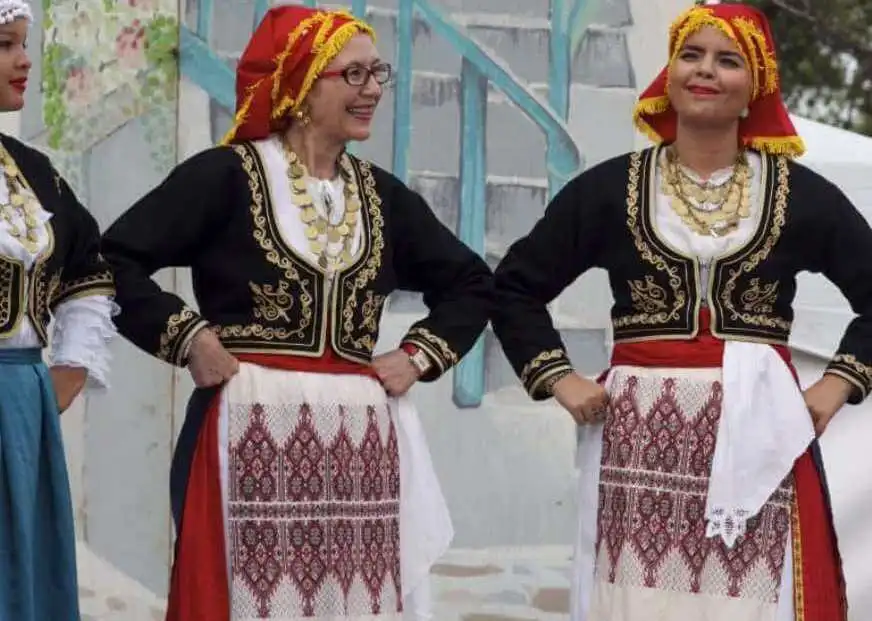
Greece is a land known for its rich cultural heritage and artistic traditions and its Greek folk art is a testament to the creativity and craftsmanship of its people. Among the various forms of Greek folk art, the visual arts hold a special place, showcasing the diverse and vibrant artistic expressions found throughout the country. In this article, we will explore the fascinating Greek visual arts through history and focus on four prominent styles: pottery and ceramics, embroidery, woodcarving, and icon painting. We will also discuss the various Greek folk art techniques that have contributed to Greece’s art as we know it. © Albion Gould What Types Of Greek Folk Art Techniques Are There? Pottery and Ceramics: Pottery making has been an integral part of Greek culture for thousands of years, dating back to ancient times. Greek pottery is renowned for its exquisite craftsmanship and distinctive styles. Two notable techniques are black-figure and red-figure pottery, which emerged during the 6th century BC. Black-figure pottery featured black figures on a reddish background, while red-figure pottery reversed the colors, depicting red figures against a black background. These techniques allowed artists to depict intricate mythological scenes, everyday life, and important events. Each region in Greece developed its unique pottery styles, such as the black-glazed pottery of Corinth, the red-figure pottery of Athens, and the decorative pottery of Crete. The art of pottery and ceramics continues to be a vibrant folk art tradition in Greece. Skilled artisans create handmade ceramic items, such as bowls, plates, and decorative pieces. Many regions in Greece have their distinct styles and techniques, preserving the heritage of Greek ceramics. Embroidery: Embroidery is a cherished folk art in Greece, reflecting the country’s rich cultural tapestry. Greek embroidery is renowned for its intricate needlework and vibrant colors. Passed down through generations, each region has its distinct embroidery style and motifs. Traditional Greek embroidery often features geometric patterns, floral designs, and symbolic motifs inspired by nature, mythology, and daily life. Skilled artisans employ techniques such as cross-stitch, satin stitch, and backstitch to create stunning textiles used for clothing, household items, and decorative purposes. Embroidered garments, including traditional costumes, are treasured for their beauty and cultural significance. The art of embroidery and weaving continues to thrive in modern Greece. Skilled artisans create intricate designs and patterns using traditional techniques passed down through generations. Embroidered textiles and woven fabrics are used for clothing, home decor, and ceremonial purposes, maintaining the rich tradition of Greek needlework and textile arts. Woodcarving: Woodcarving holds a prominent place in Greek folk art, showcasing the talent and skill of Greek craftsmen. This traditional craft involves the intricate carving of wood to create decorative pieces and sculptures. Woodcarving in Greece often features religious and mythological themes, with craftsmen expertly sculpting figures, patterns, and intricate details. These wooden masterpieces are used as decorative elements for furniture, architectural embellishments, and religious artifacts. The artistry of Greek woodcarvers is celebrated for its precision, creativity, and ability to breathe life into the wood, resulting in stunning works of art. Icon Painting: Icon painting is a sacred art form deeply rooted in Greek Orthodox tradition. Icons are religious images that hold significant spiritual and cultural importance. Greek icon painters, known as iconographers, follow specific techniques and strict iconographic rules to create these sacred works of art. The process involves using natural pigments and egg tempera to paint religious figures, saints, and scenes on wooden panels. Greek icons are known for their spiritual depth, attention to detail, and symbolic representations. They serve as objects of veneration, aiding in worship and contemplation. Icons are found in churches, monasteries, and homes, acting as a visual connection to the divine. Icon painting remains an important art form in Greek Orthodox tradition. Skilled iconographers continue to create sacred images using ancient techniques and materials. These icons are highly valued within the church and among collectors, and they play a significant role in religious ceremonies and private devotion. The visual arts of Greece encompass a rich tapestry of creativity, craftsmanship, and cultural heritage. Pottery and ceramics, embroidery, woodcarving, and icon painting are just a glimpse into the diverse and captivating world of Greek folk art. These art forms have not only preserved the traditions and stories of Greece but also served as expressions of identity and spirituality. Exploring the history and beauty of these visual arts provides a deeper understanding of Greece’s artistic legacy and the enduring impact of its folk art traditions. © Albion Gould Where Can I Explore Folk Art Traditions In Greece? There are several places in Greece where you can explore Greek folk art in person. Here are some notable destinations: Athens: The capital city of Athens is home to various museums and cultural institutions that showcase Greek folk art. The Benaki Museum and the Museum of Greek Folk Art are excellent places to explore a wide range of folk art objects, including pottery, textiles, woodcarvings, and icons. Thessaloniki: Located in northern Greece, Thessaloniki is known for its rich cultural heritage. The Museum of Byzantine Culture and the Folklore Museum of Macedonia-Thrace are worth visiting to discover traditional crafts, including pottery, embroidery, and textiles. Cyclades Islands: The Cyclades Islands, such as Mykonos, Santorini, and Paros, have a strong tradition of folk art. You can find local artisans who specialize in ceramics, producing beautiful pottery inspired by ancient Greek designs and techniques. Crete: The island of Crete has a distinct folk art tradition. The Heraklion Archaeological Museum and the Historical Museum of Crete offer insights into Cretan folk art, including pottery, textiles, and iconography. Pelion: The region of Pelion in central Greece is known for its wood carving traditions. The village of Makrinitsa is particularly famous for its skilled woodcarvers, and you can find intricately carved wooden objects and artwork there. Zagorohoria: The traditional villages of Zagorohoria in the Pindus Mountains are renowned for their stone architecture and local craftsmanship. Here, you can find handmade textiles, woodwork, and other folk art objects. Greek Festivals and Cultural Events: Attending Greek festivals and cultural events throughout the country is another way to experience Greek folk art firsthand. During these events, you can witness traditional music, dance performances, and browse local crafts and artwork. These are just a few examples, and there are many more places in Greece where you can explore Greek folk art. Whether in major cities, islands, or rural areas, you will find opportunities to immerse yourself in the vibrant and diverse folk art traditions of Greece.

02/11/2023
A Brief History Of Greek Folk Art: Visual Arts
Total 98 items<1...789...13>

It takes a lifetime to discover Greece,

but it only takes an instant to fall in love with her.

—Henry Miller

Let Greece inspire you!

Subscribe to our newsletter and discover unique ideas and hidden treasures for your next trip.