The Venetian Guard of Messinia
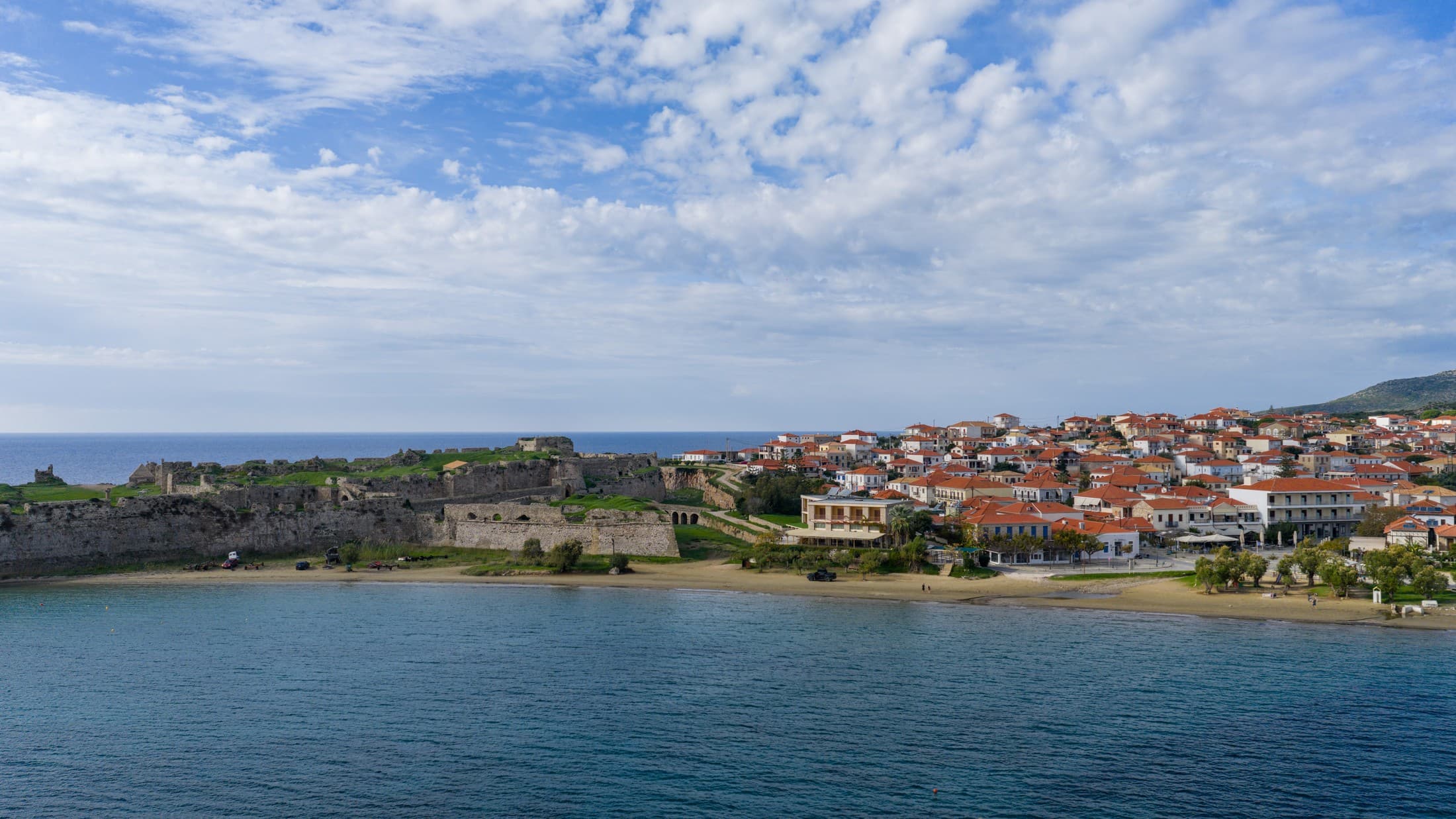
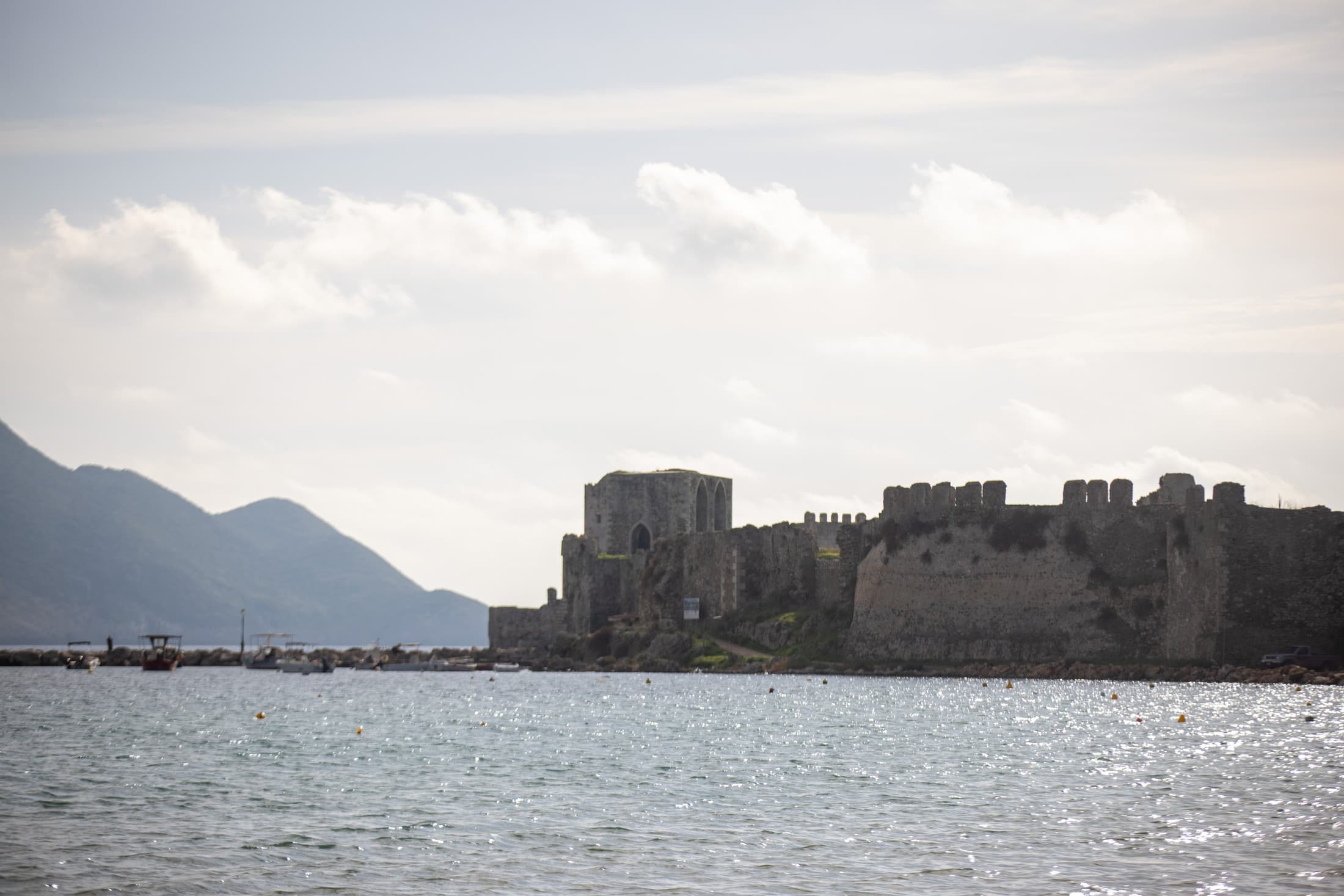
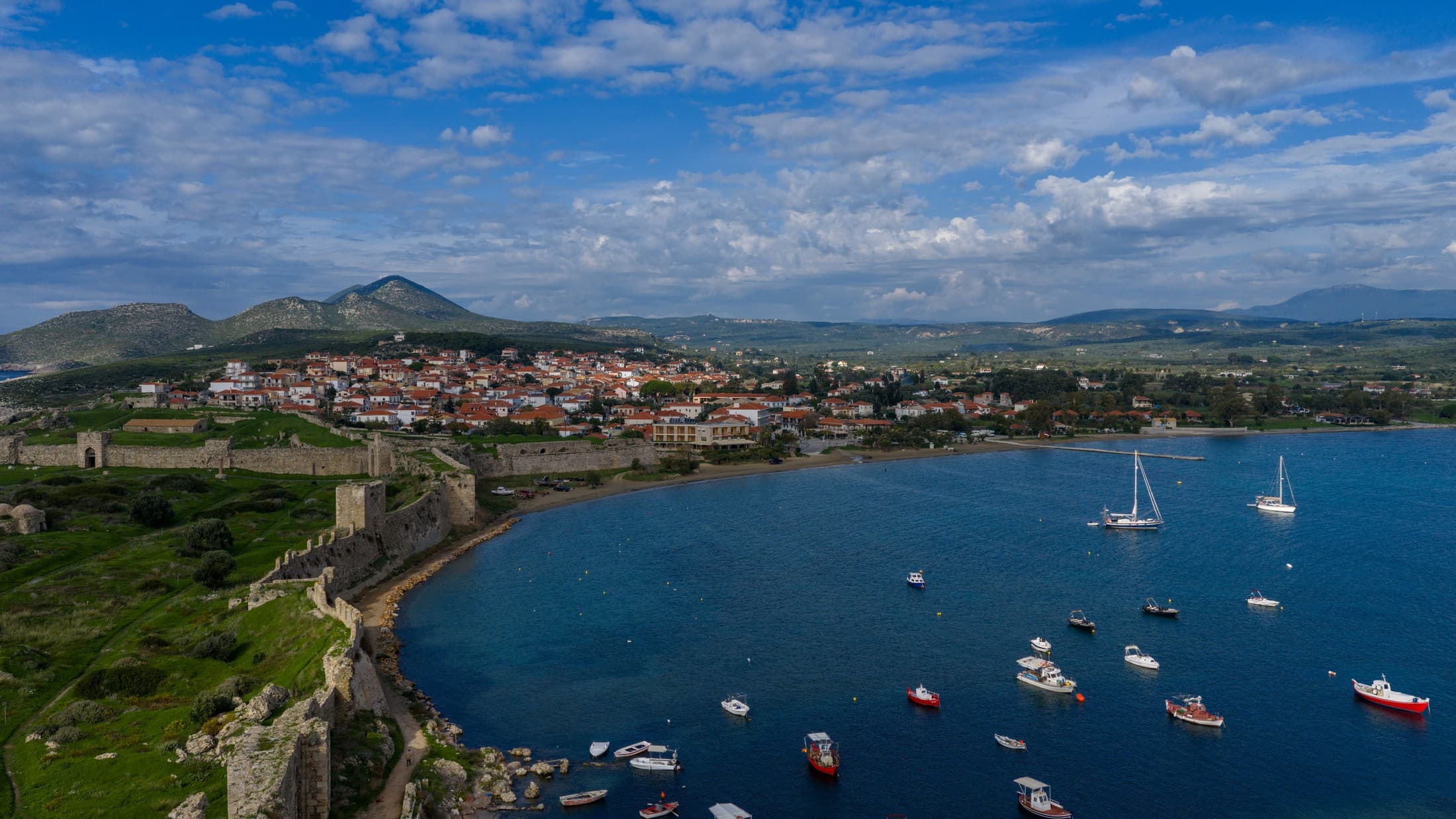
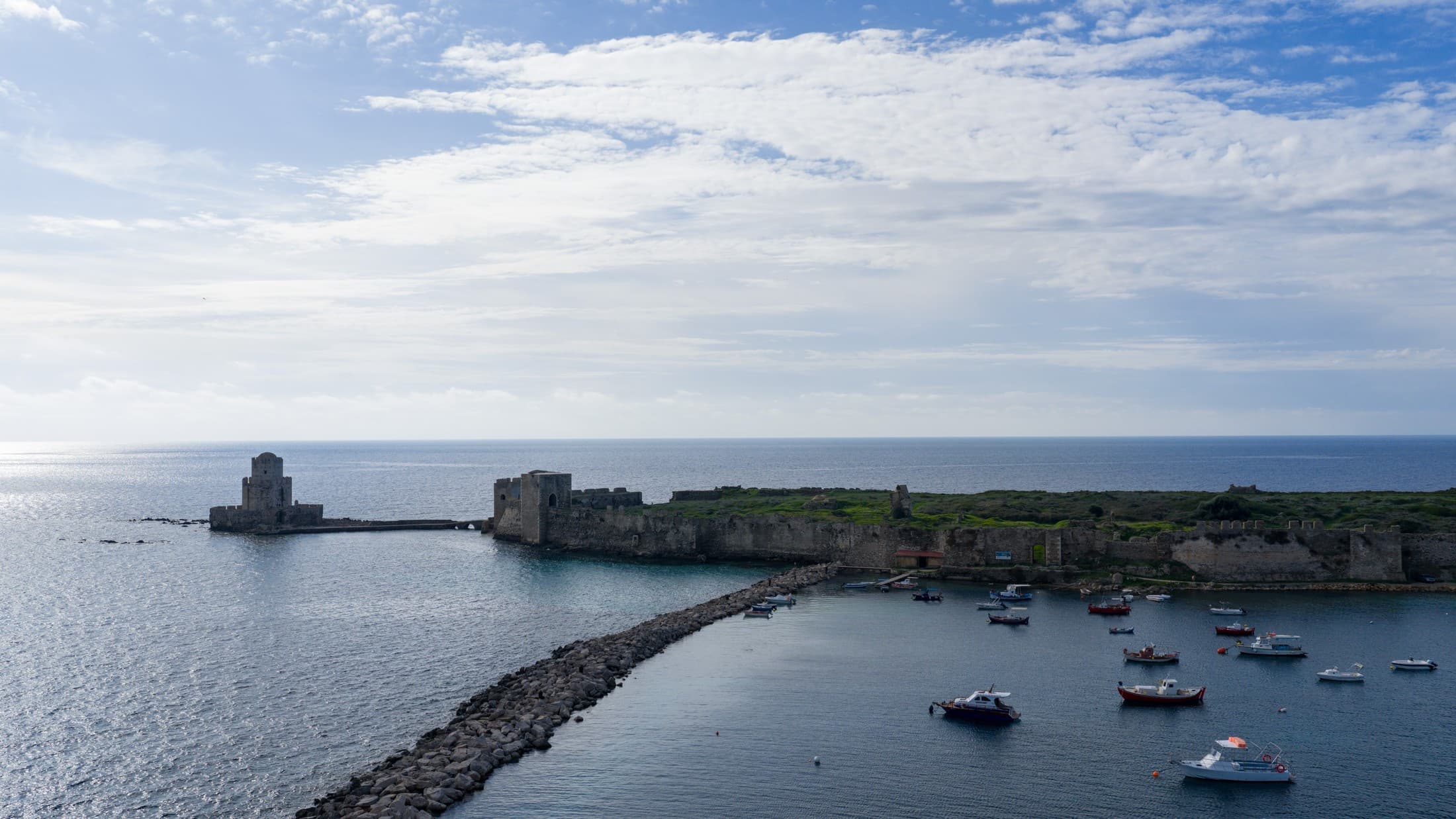
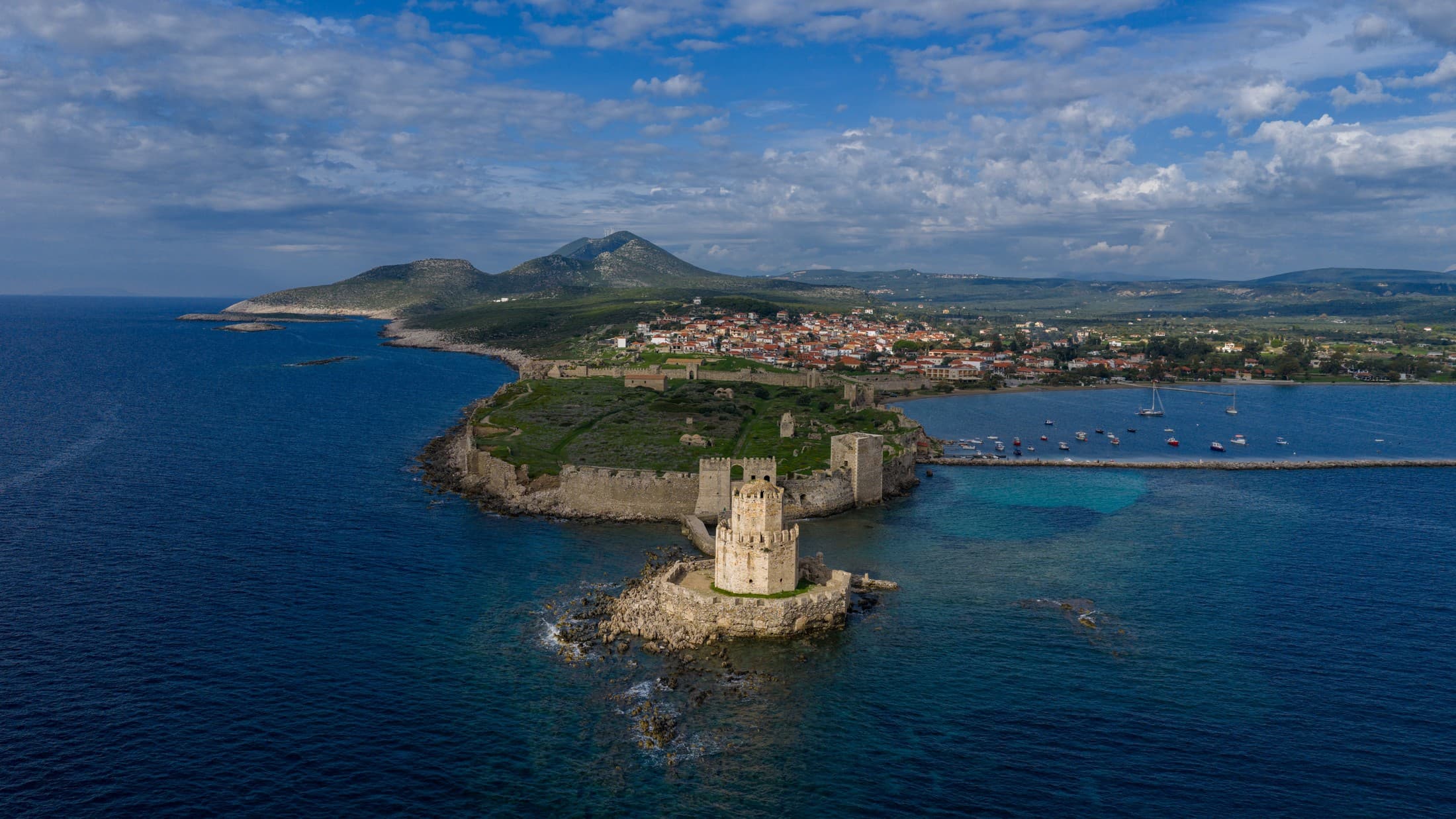
Built by the Venetians in the early 13th century, Methoni Castle occupies the entire promontory on the western coast of Messinia and is one of the most important fortified complexes in the Mediterranean. It is lapped by the sea on three sides, while the northern side is strongly fortified by the acropolis. Access is via an impressive stone bridge with 14 arches, which replaced an earlier wooden structure.
Within the City Walls
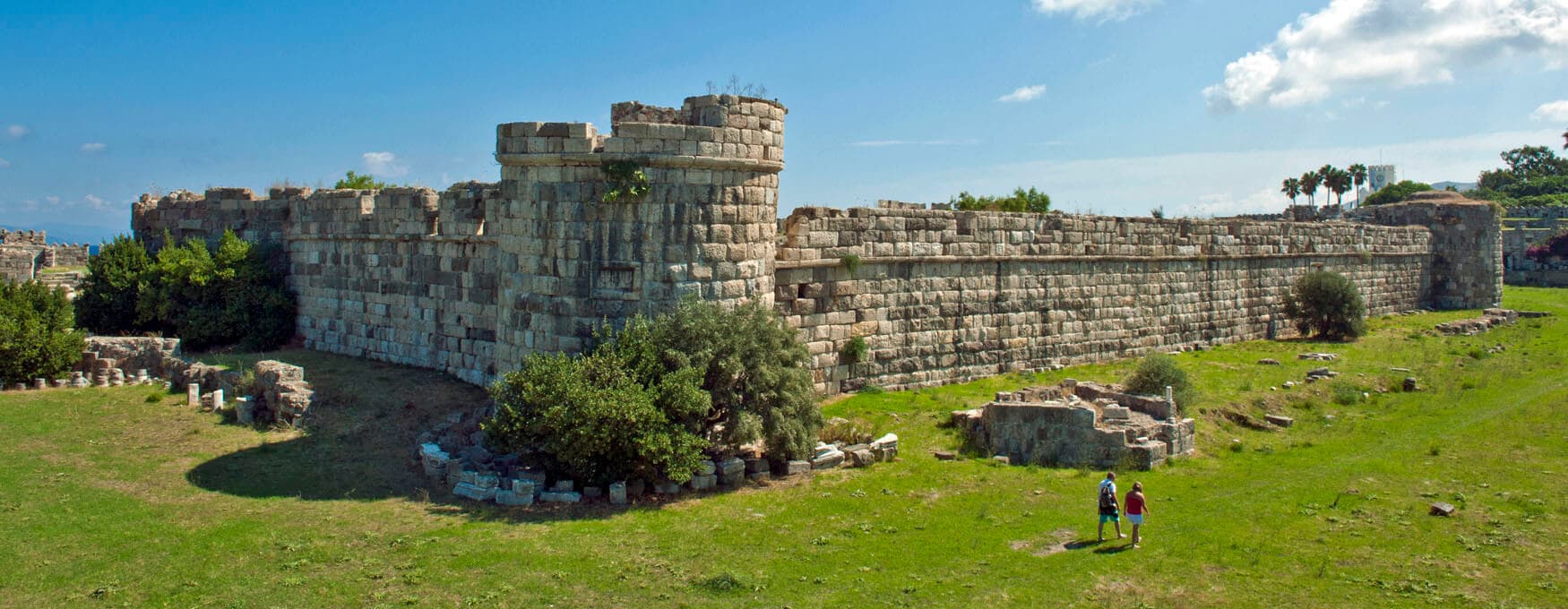
The castle gate is adorned with the lion of Saint Mark, a symbol of Venice. Within the archaeological site, visitors will discover the ruins of Venetian mansions, coats of arms, ruins of Ottoman baths, and the Loredan and Bembo bastions. Of particular interest are the sections of the Byzantine church of Saint Sophia, Morosini’s stele (column), and the Church of the Transfiguration of the Saviour, built in 1830 by the French Expeditionary Corps.
Bourzi and the Legend
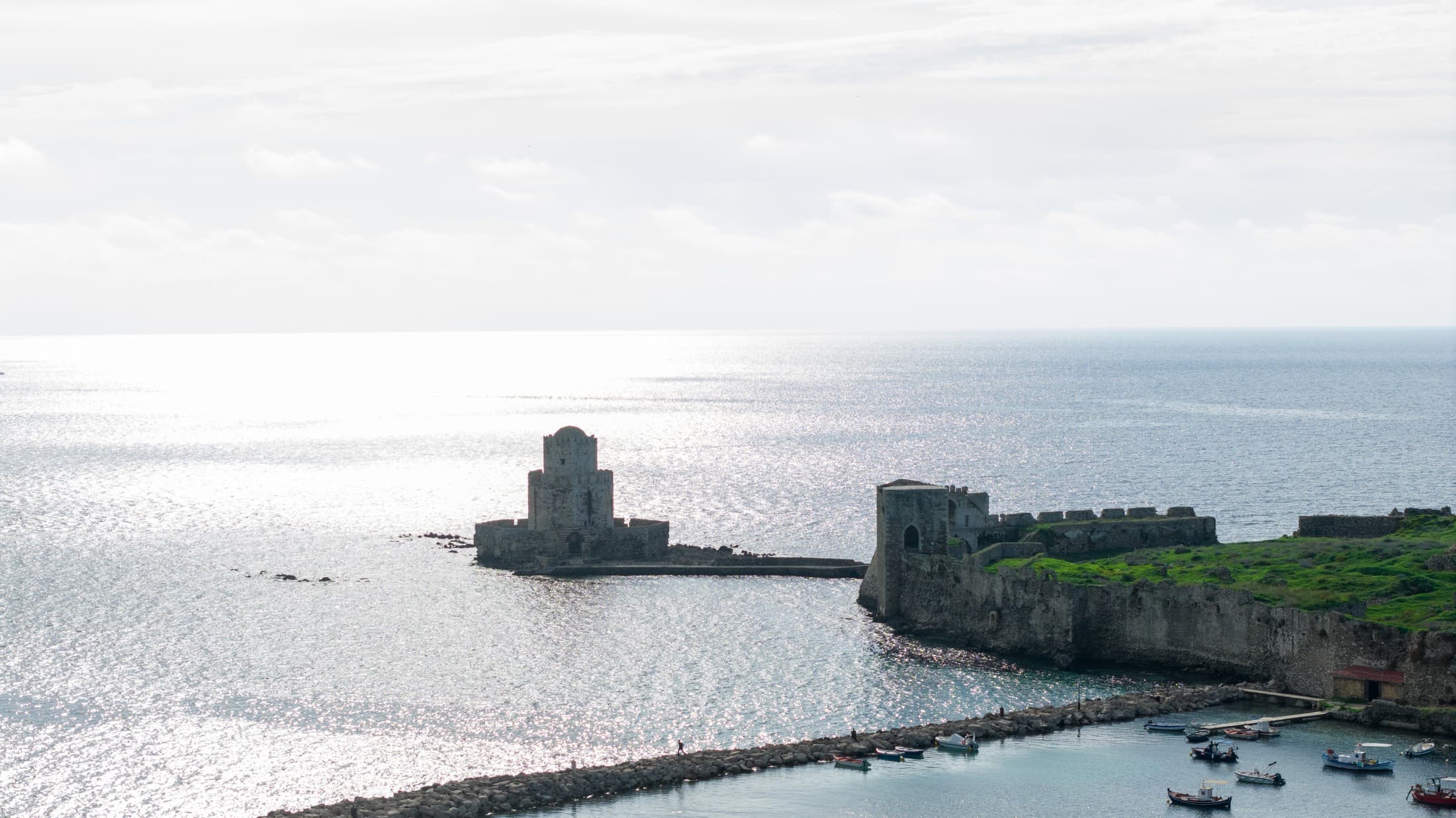
A paved road starts at the Sea Gate, leading to the Bourzi, the fortified islet at the southern edge of the castle. This octagonal structure, dating back to 1,500, served as a bulwark for the port, but also as a prison and execution site during the Ottoman era. According to local legend, when the wind howls, the cries of the prisoners can still be heard. The ideal time to visit is at sunset, when the lights accentuate the imposing walls.
Exploring the Surrounding Area
Your experience in Methoni culminates with:
Within the City Walls
The castle gate is adorned with the lion of Saint Mark, a symbol of Venice. Within the archaeological site, visitors will discover the ruins of Venetian mansions, coats of arms, ruins of Ottoman baths, and the Loredan and Bembo bastions. Of particular interest are the sections of the Byzantine church of Saint Sophia, Morosini’s stele (column), and the Church of the Transfiguration of the Saviour, built in 1830 by the French Expeditionary Corps.
Bourzi and the Legend
A paved road starts at the Sea Gate, leading to the Bourzi, the fortified islet at the southern edge of the castle. This octagonal structure, dating back to 1,500, served as a bulwark for the port, but also as a prison and execution site during the Ottoman era. According to local legend, when the wind howls, the cries of the prisoners can still be heard. The ideal time to visit is at sunset, when the lights accentuate the imposing walls.
Exploring the Surrounding Area
Your experience in Methoni culminates with:
- A stroll through the picturesque town with its traditional mansions.
- A visit to the carved Catacombs of Saint Onuphrius and the Agiou Leontos Monastery.
- A dip at the beach beside the castle or along the shores of Mavrovouni, Anemomylos, and Loutsa.
- An excursion to the Messinian Oinousses: discover Sapientza with its wealth of wildlife, Schiza with its cave, and Agia Mariani.