Award-winning Greek cheeses, with their distinctive flavours, help explain why annual per capita consumption in Greece surpasses that of any other European country.
Soft, creamy, hard, white and yellow, fresh and aged, savoury and sweet—each variety is of noble origin, crafted with skill and artistry. Cook them, blend them, grate them, sprinkle them, pair them with wine, fry them, adore them… Join us on a journey across Greece to discover regions with unique cheese varieties.
Nothing captures the dreamlike landscape of Greece better than the Aegean, home to countless large and small islands, where culinary traditions are as ancient as Homer himself. The islanders remain deeply connected to their land and their roots, sharing a common heritage—whether they come from alternative Ikaria or cosmopolitan Santorini.
Let’s begin our journey through the Aegean, starting in the Northeast. Enjoy Manoura of Sifnos, aged in wine sediment, or Kalathaki of Lemnos, a white brined goat’s cheese similar to feta, which takes its name from the small basket in which it is made.
A little further south, we arrive in the Dodecanese. Here, let’s sample Krasotyri and Sitaka. You’ll find Krasotyri on the island of Kos—log-shaped, with ridges, and infused with wine. In recent years, local producers have even begun exporting it beyond the island. Similar wine-infused cheeses can also be found on Nisyros and Leros. Sitaka, a speciality of Kasos and one of the most unusual dairy products in Greece, is a tangy, almost creamy (yogurt-like) cheese made from fermented sheep’s or goat’s milk. It is lightly salted and slowly cooked in a traditional oven. It is typically served with delicious local pasta, topped with caramelised onions.
The cheeses of the Cyclades are no less remarkable. San Michalis of Syros, a Protected Designation of Origin cheese; Manoura of Sifnos, with its rosy hue and intense wine aroma; or Chloro of Santorini, enjoyed fresh and soft or aged and paired with pasta—all are waiting to be discovered… we’ll leave the rest to you.
If you find yourself on Crete, you’ll quickly understand why locals consider cheese a cornerstone of their well-being and longevity. All Cretan cheeses are made from sheep’s milk, goat’s milk, or a blend of the two. Here’s a brief selection: Graviera, Crete’s most famous cheese, evolves in flavour— slightly sweet when young, becoming richer and pleasantly nutty as it matures. Kefalograviera is sharper and firmer than Graviera, commonly served as a table cheese and widely used in dishes such as pastitsio or moussaka. Mizithra, fresh and milky with relatively low-fat content, is reminiscent of ricotta. And then there is Staka, rich in both flavour and cholesterol, found only in western Crete and made from the skimmed cream that rises to the top of sheep’s milk.
What more can be said about the famous Graviera, other than that it has become a true tradition? It is produced all across Greece—from northern Macedonia down to Crete, from Corfu to Lesvos—spanning the entire country.
Epirus, on the other hand, is undoubtedly the kingdom of Feta. In fact, in the region of Dodoni, near the ancient oracle and amphitheater, the feta produced there ranks among the finest in the country. In Epirus, you will also find Galotyri, incredibly creamy and bold in flavour, though rarely found beyond the pastoral lands of Epirus, Thessaly, and Roumeli. The hard, spicy Kefalotyri, made from sheep’s and goat’s milk, is mainly used for grating. Meanwhile, the sweet Manouri, crafted from sheep’s milk or a blend of sheep’s and goat’s milk with added cream, is soft and shaped into long, bright white cylinders—delicious on its own or paired with fruit as a dessert.
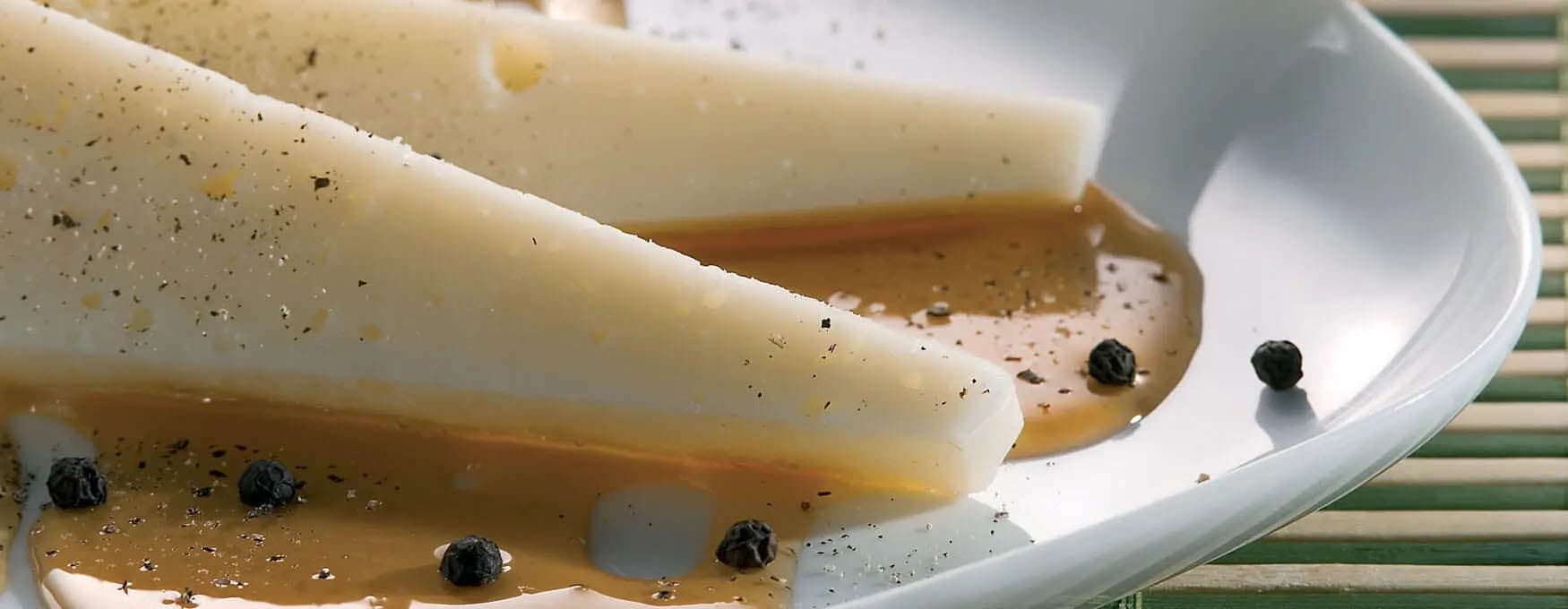
We have saved for last the most quintessentially Greek cheese of all: Feta. Our national cheese. As is well known, cheese in Greece is an essential companion to every meal. Winter salads, boiled wild bitter greens, summer grilled vegetables drizzled with olive oil, a late-night snack, even a slice of chilled, sweet watermelon—all can be perfectly paired with, and its flavour remains beautifully intact as it matures while immersed in brine.
Feta is the very essence of the Greek table. It features in countless dishes and is used in a wide variety of recipes, beyond simply accompanying meze dishes. It can be grilled, baked in the oven, roasted wrapped in paper, or pan-fried—try it fried with nuts or sesame seeds, or coated in an egg-and-flour batter. However, you prepare it, feta can easily stand as a dish in its own right.
Over time, as Greece became more urbanised and automation gained ground in agricultural work, technology also reached the dairies, and cheese production was no longer exclusively a local affair. The same trend occurred across Europe, prompting the European Commission to establish the Protected Designation of Origin (PDO) system for each distinct traditional product. Today, twenty Greek cheeses proudly carry the PDO label.
Soft, creamy, hard, white and yellow, fresh and aged, savoury and sweet—each variety is of noble origin, crafted with skill and artistry. Cook them, blend them, grate them, sprinkle them, pair them with wine, fry them, adore them… Join us on a journey across Greece to discover regions with unique cheese varieties.
Nothing captures the dreamlike landscape of Greece better than the Aegean, home to countless large and small islands, where culinary traditions are as ancient as Homer himself. The islanders remain deeply connected to their land and their roots, sharing a common heritage—whether they come from alternative Ikaria or cosmopolitan Santorini.
Let’s begin our journey through the Aegean, starting in the Northeast. Enjoy Manoura of Sifnos, aged in wine sediment, or Kalathaki of Lemnos, a white brined goat’s cheese similar to feta, which takes its name from the small basket in which it is made.
A little further south, we arrive in the Dodecanese. Here, let’s sample Krasotyri and Sitaka. You’ll find Krasotyri on the island of Kos—log-shaped, with ridges, and infused with wine. In recent years, local producers have even begun exporting it beyond the island. Similar wine-infused cheeses can also be found on Nisyros and Leros. Sitaka, a speciality of Kasos and one of the most unusual dairy products in Greece, is a tangy, almost creamy (yogurt-like) cheese made from fermented sheep’s or goat’s milk. It is lightly salted and slowly cooked in a traditional oven. It is typically served with delicious local pasta, topped with caramelised onions.
The cheeses of the Cyclades are no less remarkable. San Michalis of Syros, a Protected Designation of Origin cheese; Manoura of Sifnos, with its rosy hue and intense wine aroma; or Chloro of Santorini, enjoyed fresh and soft or aged and paired with pasta—all are waiting to be discovered… we’ll leave the rest to you.
If you find yourself on Crete, you’ll quickly understand why locals consider cheese a cornerstone of their well-being and longevity. All Cretan cheeses are made from sheep’s milk, goat’s milk, or a blend of the two. Here’s a brief selection: Graviera, Crete’s most famous cheese, evolves in flavour— slightly sweet when young, becoming richer and pleasantly nutty as it matures. Kefalograviera is sharper and firmer than Graviera, commonly served as a table cheese and widely used in dishes such as pastitsio or moussaka. Mizithra, fresh and milky with relatively low-fat content, is reminiscent of ricotta. And then there is Staka, rich in both flavour and cholesterol, found only in western Crete and made from the skimmed cream that rises to the top of sheep’s milk.
What more can be said about the famous Graviera, other than that it has become a true tradition? It is produced all across Greece—from northern Macedonia down to Crete, from Corfu to Lesvos—spanning the entire country.
Epirus, on the other hand, is undoubtedly the kingdom of Feta. In fact, in the region of Dodoni, near the ancient oracle and amphitheater, the feta produced there ranks among the finest in the country. In Epirus, you will also find Galotyri, incredibly creamy and bold in flavour, though rarely found beyond the pastoral lands of Epirus, Thessaly, and Roumeli. The hard, spicy Kefalotyri, made from sheep’s and goat’s milk, is mainly used for grating. Meanwhile, the sweet Manouri, crafted from sheep’s milk or a blend of sheep’s and goat’s milk with added cream, is soft and shaped into long, bright white cylinders—delicious on its own or paired with fruit as a dessert.
We have saved for last the most quintessentially Greek cheese of all: Feta. Our national cheese. As is well known, cheese in Greece is an essential companion to every meal. Winter salads, boiled wild bitter greens, summer grilled vegetables drizzled with olive oil, a late-night snack, even a slice of chilled, sweet watermelon—all can be perfectly paired with, and its flavour remains beautifully intact as it matures while immersed in brine.
Feta is the very essence of the Greek table. It features in countless dishes and is used in a wide variety of recipes, beyond simply accompanying meze dishes. It can be grilled, baked in the oven, roasted wrapped in paper, or pan-fried—try it fried with nuts or sesame seeds, or coated in an egg-and-flour batter. However, you prepare it, feta can easily stand as a dish in its own right.
Over time, as Greece became more urbanised and automation gained ground in agricultural work, technology also reached the dairies, and cheese production was no longer exclusively a local affair. The same trend occurred across Europe, prompting the European Commission to establish the Protected Designation of Origin (PDO) system for each distinct traditional product. Today, twenty Greek cheeses proudly carry the PDO label.