An iconic temple at the edge of Attica
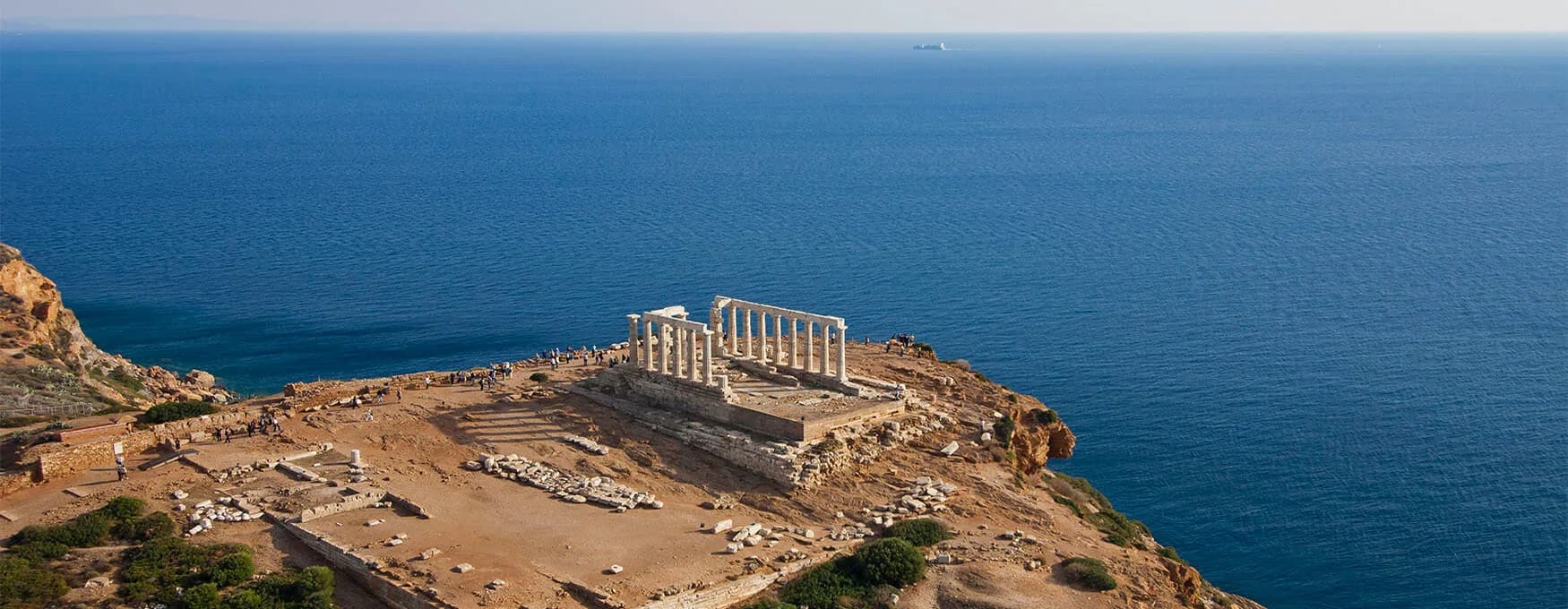
The Temple of Poseidon dominates Cape Sounio, at the southernmost tip of Attica. The approach to the site is an integral part of the experience: as you ascend towards the archaeological area, the sea opens up before you and the temple gradually appears —simple yet imposing— having served as a steadfast landmark for travellers for centuries.
The temple was built circa 444–440 BC during the Classical period, likely during the time of Pericles, upon the ruins of an earlier Archaic temple. It is dedicated to Poseidon, god of the sea, and its location is no accident: from here, the sea passages towards the Saronic Gulf and Piraeus are clearly visible.
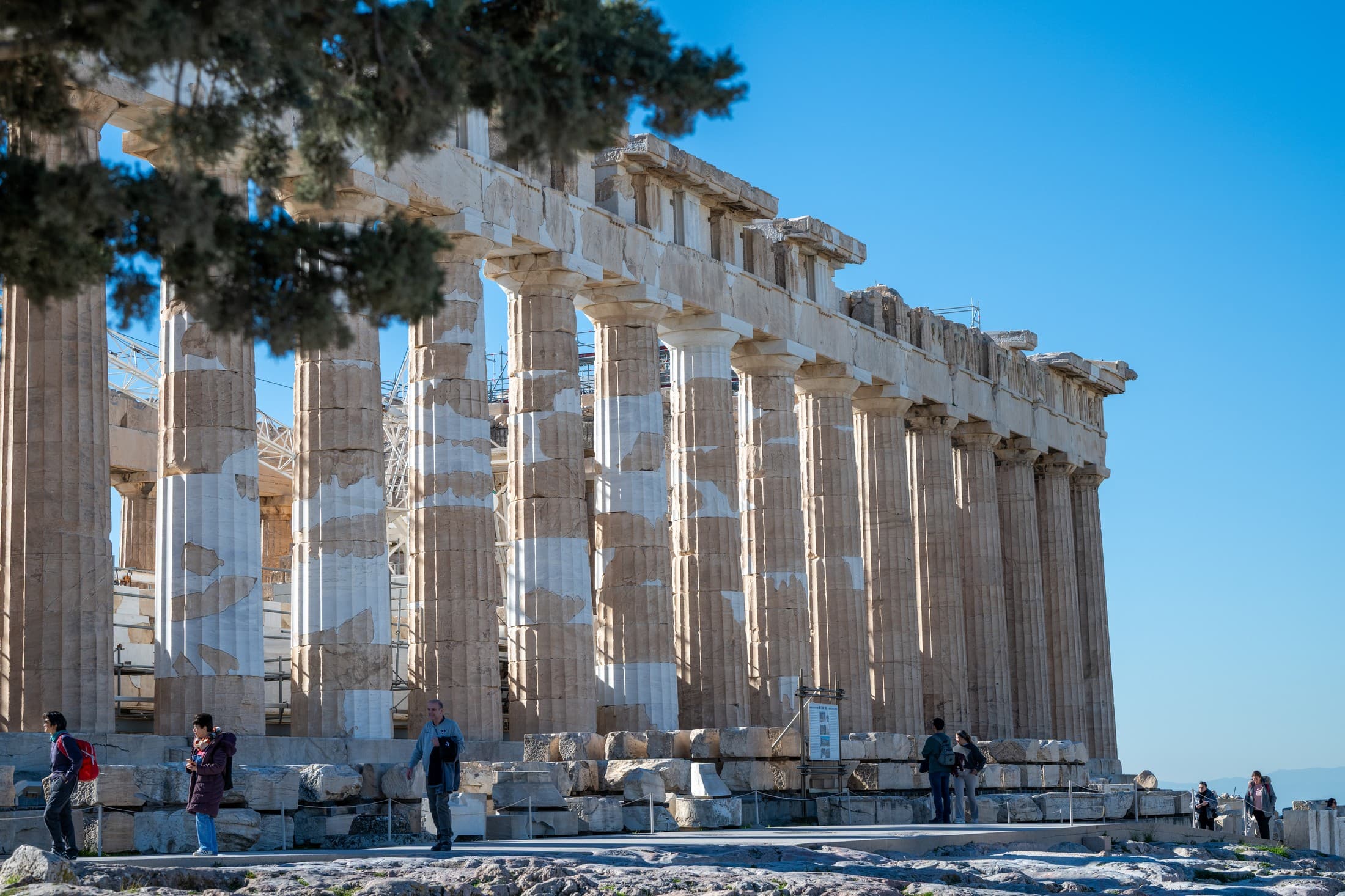
The temple is Doric, constructed from local Agrileza marble, and originally featured 38 columns. Today, 15 survive — enough to convey the monument's power and harmony.
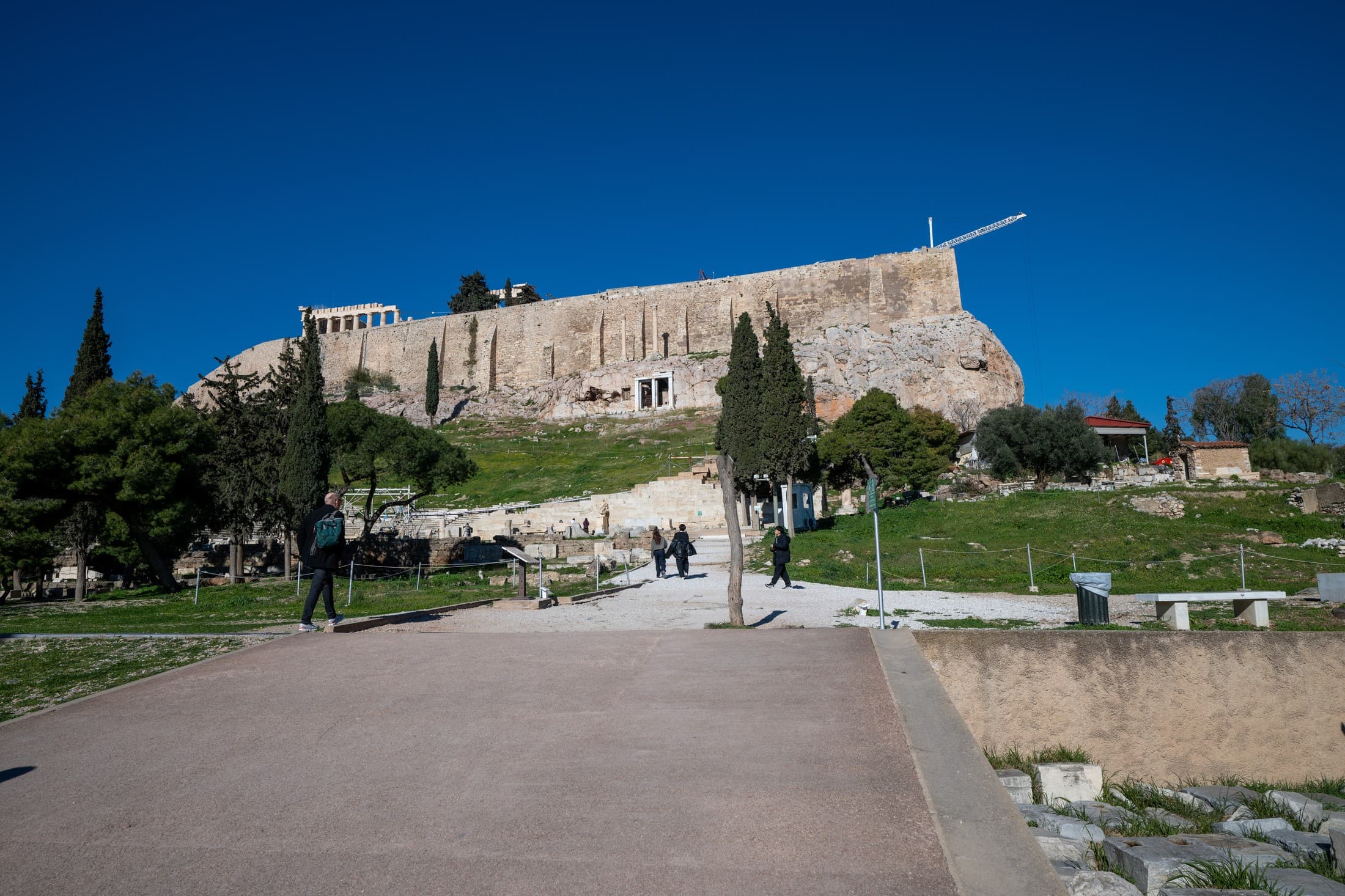
Upon entering the archaeological site, you follow a gentle upward path. To the left and right, low vegetation and rocky terrain heighten the sense of seclusion.
Upon reaching the temple, pause for a moment at a slight distance: from here, you can appreciate its geometry and relationship with the landscape. The columns frame the sea and, as you walk among them, your gaze is naturally drawn towards the horizon.
Walk around the perimeter of the temple. From the southern side, the Aegean stretches out open and radiant, while to the north, the Saronic Gulf comes into view. The wind, the light, and the salt of the sea create an environment that explains why this site was chosen for the worship of a sea god. Here, the architecture does not impose itself upon the landscape — it engages in dialogue with it.
The Temple of Poseidon was a symbol of safety for sailors returning to Athens, but also a point of farewell for those departing for the open sea. This sense of a boundary —between land and sea— remains palpable to this day.
The temple was built circa 444–440 BC during the Classical period, likely during the time of Pericles, upon the ruins of an earlier Archaic temple. It is dedicated to Poseidon, god of the sea, and its location is no accident: from here, the sea passages towards the Saronic Gulf and Piraeus are clearly visible.
The temple is Doric, constructed from local Agrileza marble, and originally featured 38 columns. Today, 15 survive — enough to convey the monument's power and harmony.
Upon entering the archaeological site, you follow a gentle upward path. To the left and right, low vegetation and rocky terrain heighten the sense of seclusion.
Upon reaching the temple, pause for a moment at a slight distance: from here, you can appreciate its geometry and relationship with the landscape. The columns frame the sea and, as you walk among them, your gaze is naturally drawn towards the horizon.
Walk around the perimeter of the temple. From the southern side, the Aegean stretches out open and radiant, while to the north, the Saronic Gulf comes into view. The wind, the light, and the salt of the sea create an environment that explains why this site was chosen for the worship of a sea god. Here, the architecture does not impose itself upon the landscape — it engages in dialogue with it.
The Temple of Poseidon was a symbol of safety for sailors returning to Athens, but also a point of farewell for those departing for the open sea. This sense of a boundary —between land and sea— remains palpable to this day.