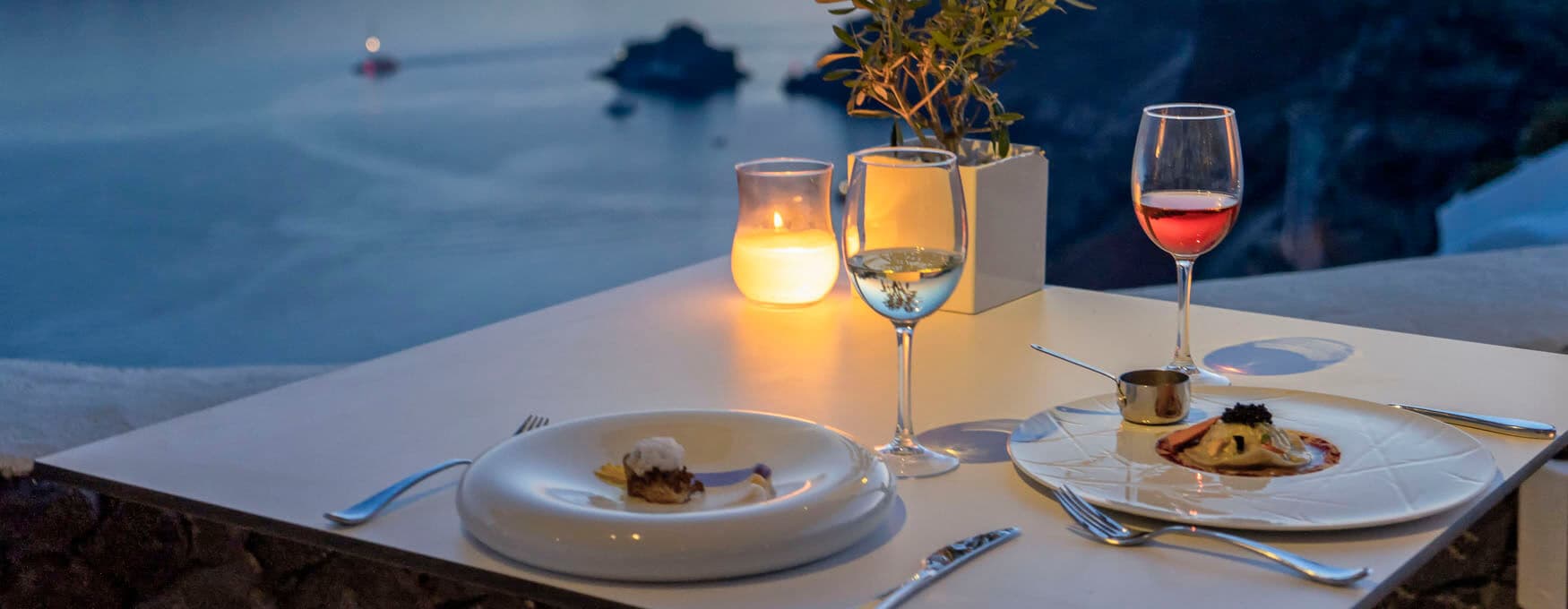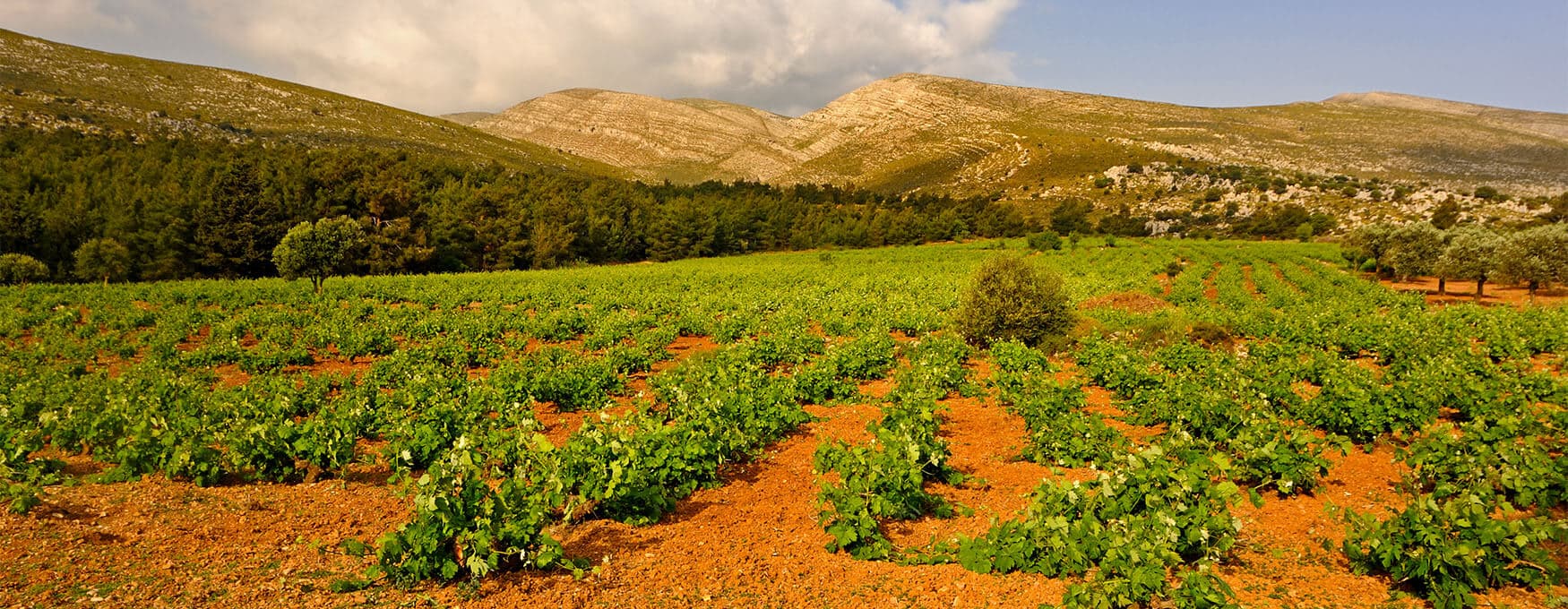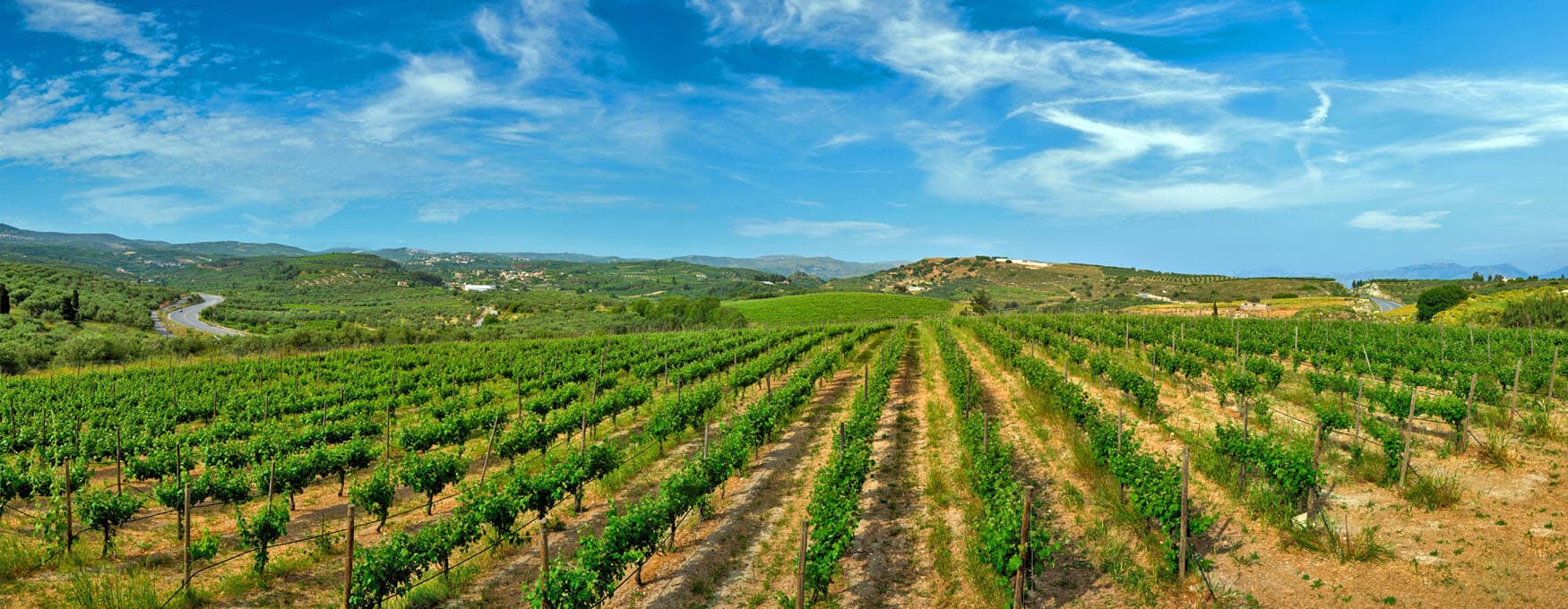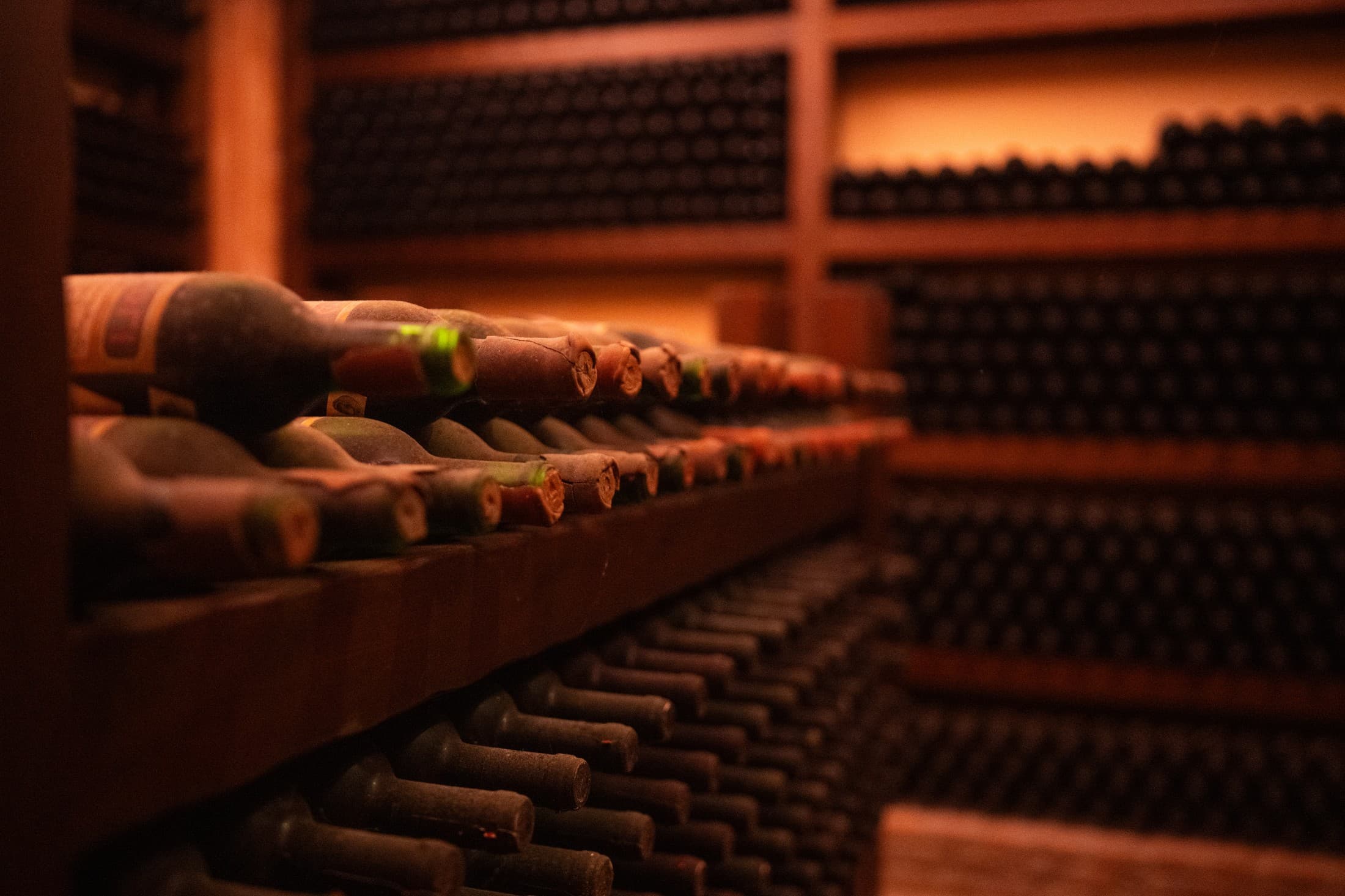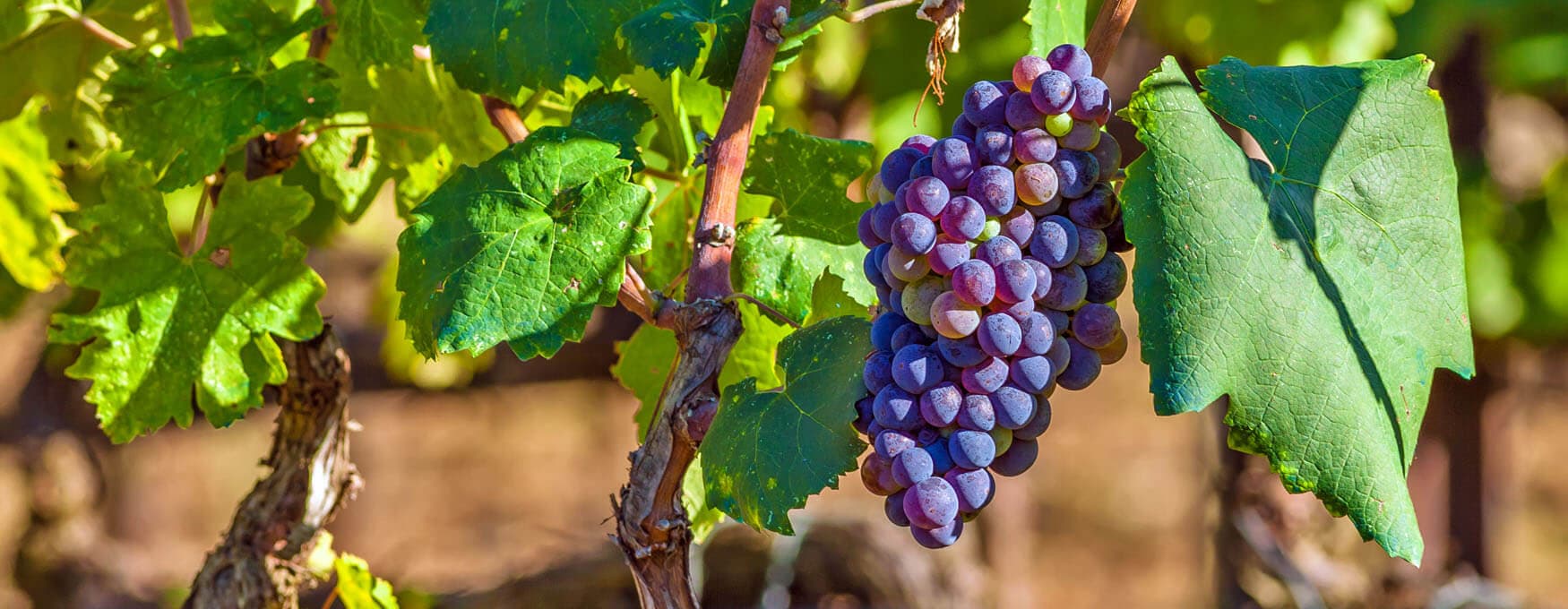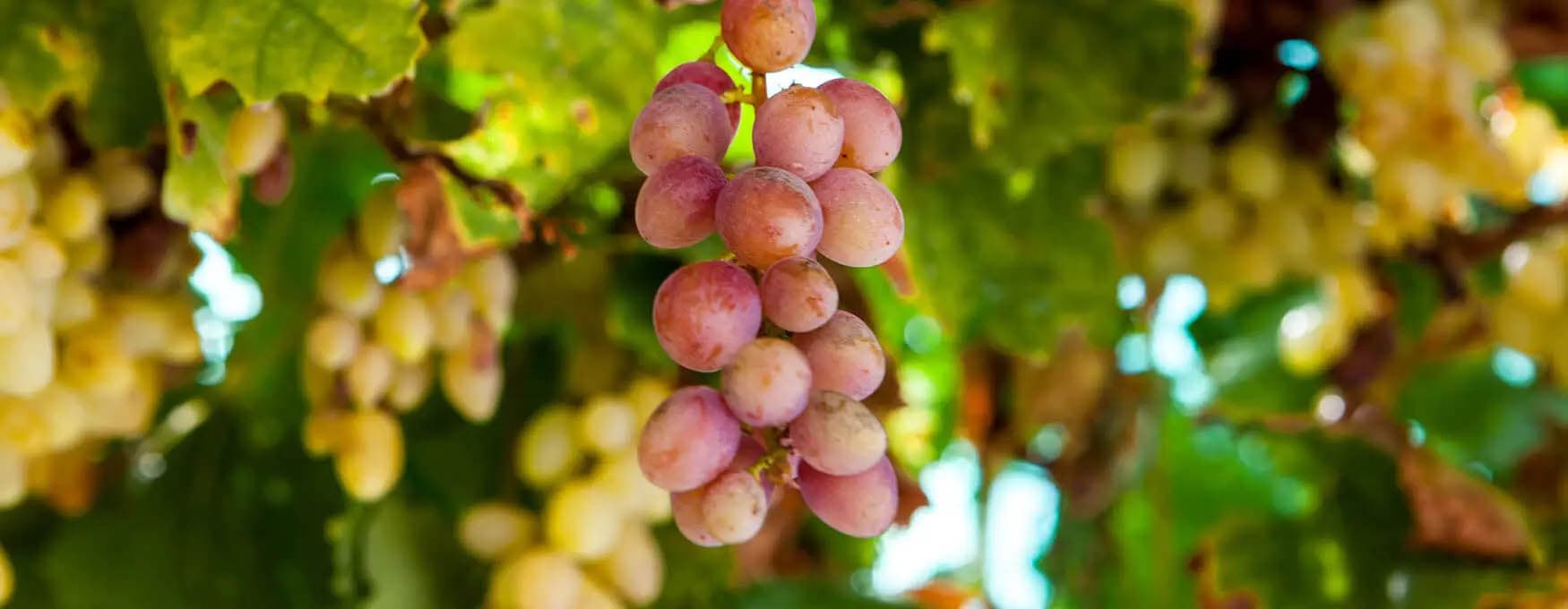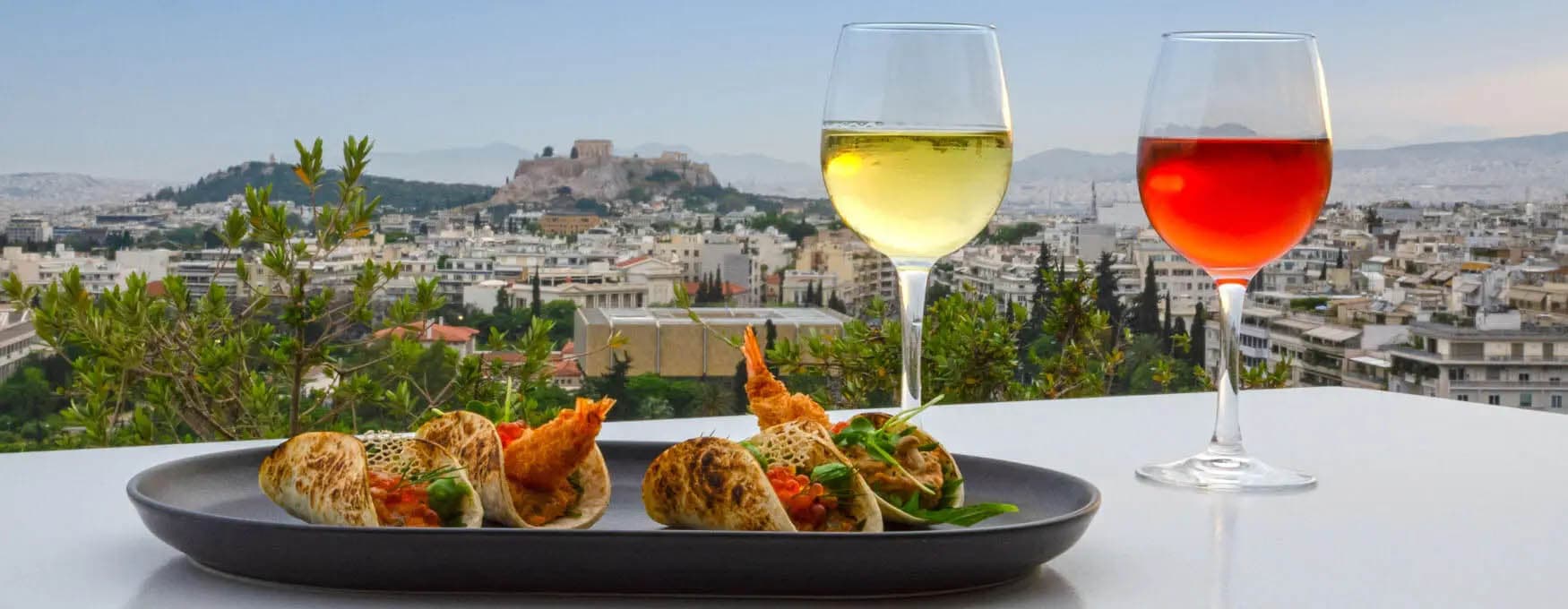
Whatever wine you choose from the rich palette of the Greek vineyard, its high quality and distinctive character are sure to win a special place in your heart and become a delightful companion to every meal.
Start your evening on a sweet note
Sun-dried wines (known as liasta wines, from the word “sun”) are naturally sweet wines traditionally produced throughout Greece. Their name reflects the age-old practice of drying overripe grapes under the sun after harvest, allowing them to partially dehydrate. The island of Santorini invites you to discover a world-renowned expression of this tradition: the uniquely sweet and captivating Vinsanto.
As for Vinsanto, produced from a blend of the Assyrtiko and Aidani grape varieties, in the early 19th century the traveller Louis Lacroix wrote in his book Iles de la Grèce (1853):
“…As a dessert wine, none compares to the white Vinsanto of Santorini. It is made from grapes left exposed to the sun for fifteen days on the rooftops of houses before being taken to the wine press. After a year, it becomes an exceptional sweet wine that surpasses the finest vintages of the archipelago…”
Ideal Companions for Your Main Course
Greek grape varieties offer an excellent selection of high-quality red, white, and rosé wines—perfect for choosing the one that will “flirt” with your meal throughout the evening.
Among red wines, one could not overlook:
Xinomavro, the noblest red grape variety of Northern Greece (Naoussa, Rapsani, Goumenissa, Amyntaio, Trikomo, Siatista), with a total cultivation area now exceeding 2,000 hectares. Wines made from Xinomavro range in colour from deep red to purple, with variations depending on ageing. Younger wines display violet and deep cherry hues, while, as they mature, they develop red-brown tones. Aromatically, they are dominated by notes of spices, along with red fruit.
Agiorgitiko or “Mavro Nemeas”
“The Blood of Hercules”. If you wish to add a regal touch to your dinner, this is the perfect choice! Discover one of Greece’s most important and versatile red grape varieties, cultivated exclusively in the vineyards of mythical Nemea, the land of the famed “Phliasian wine” once enjoyed by Agamemnon in the palaces of Mycenae! Depending on cultivation and winemaking techniques, Agiorgitiko produces outstanding wines, most notably the Protected Designation of Origin (PDO) Nemea. With its deep ruby colour, full body, rich aroma, and velvety taste, it pairs exquisitely with meat dishes and red sauces.
Mavrotragano is an ancient red grape variety from Santorini, the only one to have survived from the island’s distant past of exceptional vineyards. Once nearly extinct, it has experienced a revival in recent years and is now systematically cultivated on the island. It produces wines with a high alcohol content and moderate acidity, characterised by a deep red colour and an intensely fruity bouquet, complemented by notes of spices and red forest fruits. With rich, refined tannins, balanced acidity, and the potential for ageing up to six years.
If you prefer to explore the world of Greek white wines or wish to accompany a cheese platter, choose:
Athiri – “the gold of the Cyclades”
An ideal choice for those wishing to discover the vibrant character of dry white wines from the Aegean Sea (cultivated in the Cyclades, the Dodecanese, and Crete). Its pale yellow colour with green highlights, delicate and subtle fruity aroma, light and elegant structure, and gentle flavour make wines from this variety exceptionally versatile. They pair beautifully with a wide range of dishes—especially those that are typically difficult to match with wine. Exclusively from the Athiri variety comes the “Rhodes” dry white wine which is a Superior Quality Demarcated Wine while it also contributes to the dry SQDW “Santorini.”
Assyrtiko – “the wine of Santorini”
With the volcanic essence of the island etched into its DNA, Assyrtiko is perhaps the noblest of Greek white grape varieties. It is widely cultivated on Santorini, as well as on other islands such as Paros and Naxos. This variety produces wines that range from pale to bright white in colour, with dominant aromas of zesty citrus fruits, complemented by notes of apple and pear. Particularly in wines from Santorini, you’ll also discover hints of honey, raisin, and incense, as the island’s light volcanic soil imparts Assyrtiko with its distinctive and unforgettable character.
Moschofilero
Primarily cultivated on the Arcadian plateau, in the region of Mantinia, with which it is closely associated. The area has been renowned for its viticulture since ancient times and is linked to the worship of Dionysus, as well as to winemaking, as evidenced by numerous archaeological finds. Moschofilero is a highly versatile grape variety, capable of producing a wide range of wines—from dry whites to rosés, sparkling, and even sweet wines. It is also behind the distinctive dry wine of Mantinia, a label we wholeheartedly recommend. Please note that wines made from Moschofilero, despite their individual differences depending on vintage and origin, are characterised by their floral and fruity aromas, lively acidity, and elegant, fairly full-bodied taste. They pair beautifully with a wide range of “exotic” dishes, as well as with intensely aromatic and spicy dishes.
Robola – “the Kefalonian”
One of the noblest Greek white grape varieties, Robola has even lent its name to the region where it is grown. It produces a wine of pale lemon colour with pronounced aromas of summer fruits and citrus, a light body, relatively high acidity, and notable alcohol content. Robola is a pleasant, deceptively light, and refreshing wine, best served chilled. It pairs wonderfully with fish and seafood, and on its native Kefalonia, it is traditionally enjoyed alongside the local cod dish with garlic sauce, known as “Aliada”.
Savvatiano
One of the most widespread Greek grape varieties, Savvatiano has a history stretching back over 2,500 years. Today, it is mainly cultivated in the broader region of Central Greece. It produces white wines ranging from yellow-green to deep yellow, with aromas of peach, lemon, kiwi, banana, melon, and strawberry, and relatively low acidity. Savvatiano is the primary grape used to produce the traditional white resin wine, known as Retsina, which pairs delightfully with Mediterranean cuisine.
Malagouzia
This elegant Greek white grape variety is likely linked to the famous medieval wine “Malvasia.” It was preserved from obscurity thanks to the foresight of a few Greek producers who believed in its potential. The praise from critics and the enthusiastic response from consumers have since vindicated them. Malagouzia wines are highly fragrant, with muscat-like aromas, and leave a subtly peppery taste on the palate.
For Your Dessert
Ideal for dessert are the Greek “mistelles”—officially classified as Vins de Liqueur. We recommend:
Muscat (Moschato) – a variety cultivated on Samos, producing sweet wines with Protected Designation of Origin, the most notable being Muscat of Samos, followed by Muscat of Lemnos. In the same category, also note Muscat of Patras and Rio, Muscat of Kefalonia, and Muscat of Rhodes.
Mavrodafni
This coloured Greek grape variety is primarily cultivated in the regions of Patras and Kefalonia. Enjoy exceptional naturally sweet red wines, suitable for ageing—requiring at least 2 years in oak barrels and capable of maturing up to 8 years—developing remarkable aromatic complexity. Mavrodafni wines are deep red in colour, with aromas of vanilla, cherry, dried fruits - mainly raisins - and chocolate.
Start your evening on a sweet note
Sun-dried wines (known as liasta wines, from the word “sun”) are naturally sweet wines traditionally produced throughout Greece. Their name reflects the age-old practice of drying overripe grapes under the sun after harvest, allowing them to partially dehydrate. The island of Santorini invites you to discover a world-renowned expression of this tradition: the uniquely sweet and captivating Vinsanto.
As for Vinsanto, produced from a blend of the Assyrtiko and Aidani grape varieties, in the early 19th century the traveller Louis Lacroix wrote in his book Iles de la Grèce (1853):
“…As a dessert wine, none compares to the white Vinsanto of Santorini. It is made from grapes left exposed to the sun for fifteen days on the rooftops of houses before being taken to the wine press. After a year, it becomes an exceptional sweet wine that surpasses the finest vintages of the archipelago…”
Ideal Companions for Your Main Course
Greek grape varieties offer an excellent selection of high-quality red, white, and rosé wines—perfect for choosing the one that will “flirt” with your meal throughout the evening.
Among red wines, one could not overlook:
Xinomavro, the noblest red grape variety of Northern Greece (Naoussa, Rapsani, Goumenissa, Amyntaio, Trikomo, Siatista), with a total cultivation area now exceeding 2,000 hectares. Wines made from Xinomavro range in colour from deep red to purple, with variations depending on ageing. Younger wines display violet and deep cherry hues, while, as they mature, they develop red-brown tones. Aromatically, they are dominated by notes of spices, along with red fruit.
Agiorgitiko or “Mavro Nemeas”
“The Blood of Hercules”. If you wish to add a regal touch to your dinner, this is the perfect choice! Discover one of Greece’s most important and versatile red grape varieties, cultivated exclusively in the vineyards of mythical Nemea, the land of the famed “Phliasian wine” once enjoyed by Agamemnon in the palaces of Mycenae! Depending on cultivation and winemaking techniques, Agiorgitiko produces outstanding wines, most notably the Protected Designation of Origin (PDO) Nemea. With its deep ruby colour, full body, rich aroma, and velvety taste, it pairs exquisitely with meat dishes and red sauces.
Mavrotragano is an ancient red grape variety from Santorini, the only one to have survived from the island’s distant past of exceptional vineyards. Once nearly extinct, it has experienced a revival in recent years and is now systematically cultivated on the island. It produces wines with a high alcohol content and moderate acidity, characterised by a deep red colour and an intensely fruity bouquet, complemented by notes of spices and red forest fruits. With rich, refined tannins, balanced acidity, and the potential for ageing up to six years.
If you prefer to explore the world of Greek white wines or wish to accompany a cheese platter, choose:
Athiri – “the gold of the Cyclades”
An ideal choice for those wishing to discover the vibrant character of dry white wines from the Aegean Sea (cultivated in the Cyclades, the Dodecanese, and Crete). Its pale yellow colour with green highlights, delicate and subtle fruity aroma, light and elegant structure, and gentle flavour make wines from this variety exceptionally versatile. They pair beautifully with a wide range of dishes—especially those that are typically difficult to match with wine. Exclusively from the Athiri variety comes the “Rhodes” dry white wine which is a Superior Quality Demarcated Wine while it also contributes to the dry SQDW “Santorini.”
Assyrtiko – “the wine of Santorini”
With the volcanic essence of the island etched into its DNA, Assyrtiko is perhaps the noblest of Greek white grape varieties. It is widely cultivated on Santorini, as well as on other islands such as Paros and Naxos. This variety produces wines that range from pale to bright white in colour, with dominant aromas of zesty citrus fruits, complemented by notes of apple and pear. Particularly in wines from Santorini, you’ll also discover hints of honey, raisin, and incense, as the island’s light volcanic soil imparts Assyrtiko with its distinctive and unforgettable character.
Moschofilero
Primarily cultivated on the Arcadian plateau, in the region of Mantinia, with which it is closely associated. The area has been renowned for its viticulture since ancient times and is linked to the worship of Dionysus, as well as to winemaking, as evidenced by numerous archaeological finds. Moschofilero is a highly versatile grape variety, capable of producing a wide range of wines—from dry whites to rosés, sparkling, and even sweet wines. It is also behind the distinctive dry wine of Mantinia, a label we wholeheartedly recommend. Please note that wines made from Moschofilero, despite their individual differences depending on vintage and origin, are characterised by their floral and fruity aromas, lively acidity, and elegant, fairly full-bodied taste. They pair beautifully with a wide range of “exotic” dishes, as well as with intensely aromatic and spicy dishes.
Robola – “the Kefalonian”
One of the noblest Greek white grape varieties, Robola has even lent its name to the region where it is grown. It produces a wine of pale lemon colour with pronounced aromas of summer fruits and citrus, a light body, relatively high acidity, and notable alcohol content. Robola is a pleasant, deceptively light, and refreshing wine, best served chilled. It pairs wonderfully with fish and seafood, and on its native Kefalonia, it is traditionally enjoyed alongside the local cod dish with garlic sauce, known as “Aliada”.
Savvatiano
One of the most widespread Greek grape varieties, Savvatiano has a history stretching back over 2,500 years. Today, it is mainly cultivated in the broader region of Central Greece. It produces white wines ranging from yellow-green to deep yellow, with aromas of peach, lemon, kiwi, banana, melon, and strawberry, and relatively low acidity. Savvatiano is the primary grape used to produce the traditional white resin wine, known as Retsina, which pairs delightfully with Mediterranean cuisine.
Malagouzia
This elegant Greek white grape variety is likely linked to the famous medieval wine “Malvasia.” It was preserved from obscurity thanks to the foresight of a few Greek producers who believed in its potential. The praise from critics and the enthusiastic response from consumers have since vindicated them. Malagouzia wines are highly fragrant, with muscat-like aromas, and leave a subtly peppery taste on the palate.
For Your Dessert
Ideal for dessert are the Greek “mistelles”—officially classified as Vins de Liqueur. We recommend:
Muscat (Moschato) – a variety cultivated on Samos, producing sweet wines with Protected Designation of Origin, the most notable being Muscat of Samos, followed by Muscat of Lemnos. In the same category, also note Muscat of Patras and Rio, Muscat of Kefalonia, and Muscat of Rhodes.
Mavrodafni
This coloured Greek grape variety is primarily cultivated in the regions of Patras and Kefalonia. Enjoy exceptional naturally sweet red wines, suitable for ageing—requiring at least 2 years in oak barrels and capable of maturing up to 8 years—developing remarkable aromatic complexity. Mavrodafni wines are deep red in colour, with aromas of vanilla, cherry, dried fruits - mainly raisins - and chocolate.