The Sacred Island of the Book of Revelation
Patmos, known as the "island of spirituality", owes its international radiance to Saint John the Evangelist, the beloved disciple of Christ. Here, the wild and arid landscape was transformed into an invaluable cultural treasure, centered on the monastic complex that rises above Chora.
The Sacred Cave of the Book of Revelation
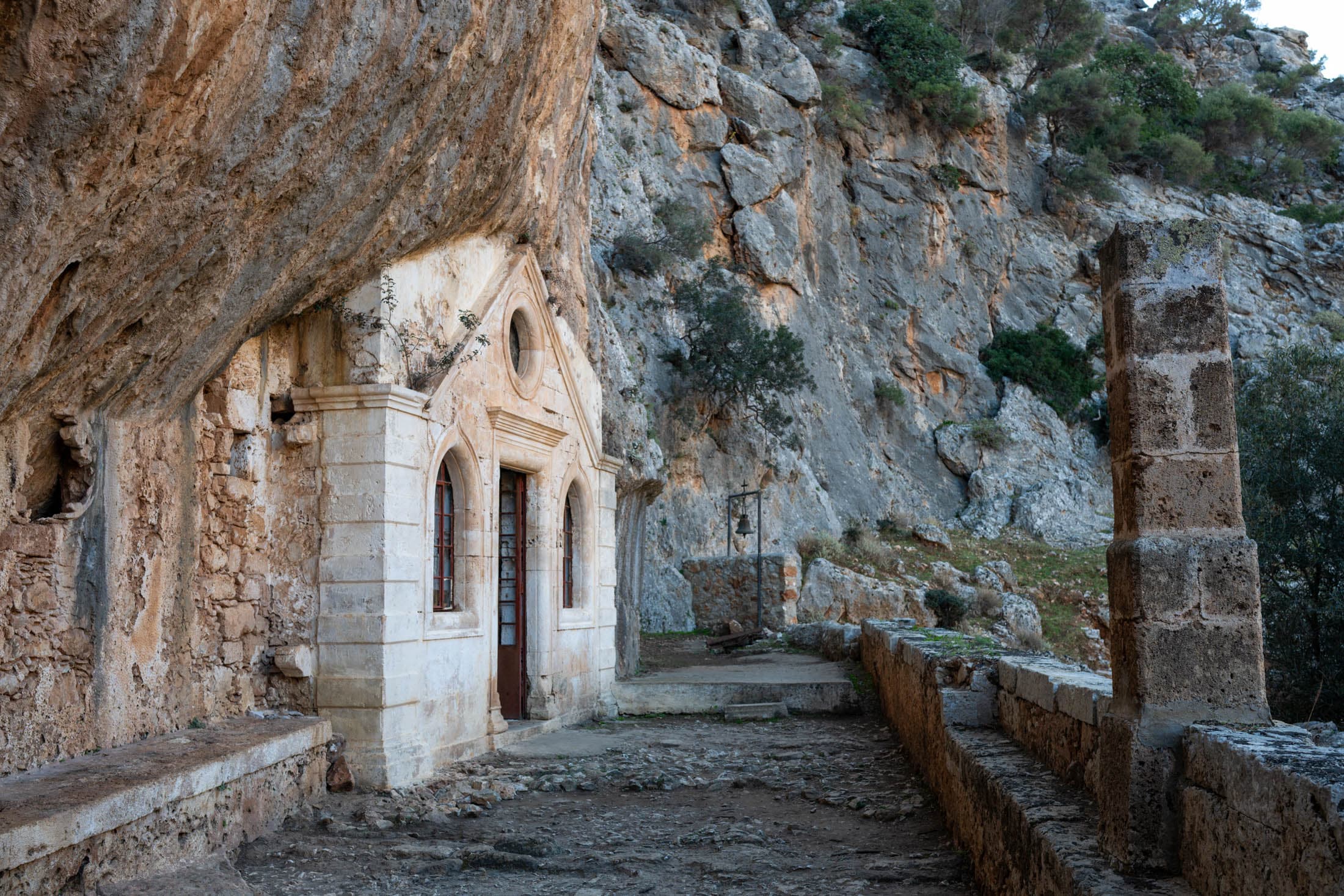
In the heart of the island is the Cave where John, with the help of his disciple Prochoros, wrote the Book of Revelation, the last and most symbolic book of the New Testament. The site is the most sacred pilgrimage site of Patmos, as tradition preserves the places where the Theologian rested, as well as the crevice of the rock through which the Divine Voice was heard.
The Monastery of St. John the Theologian (Agios Ioannis Theologos)
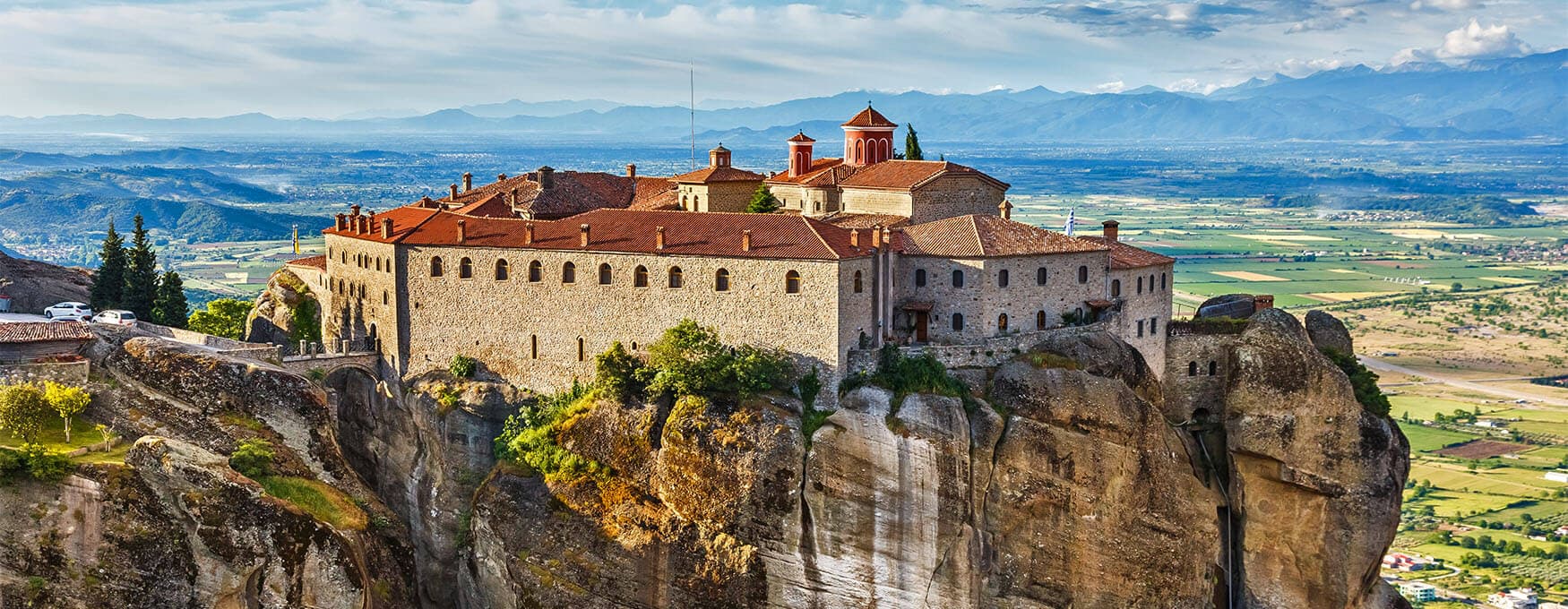
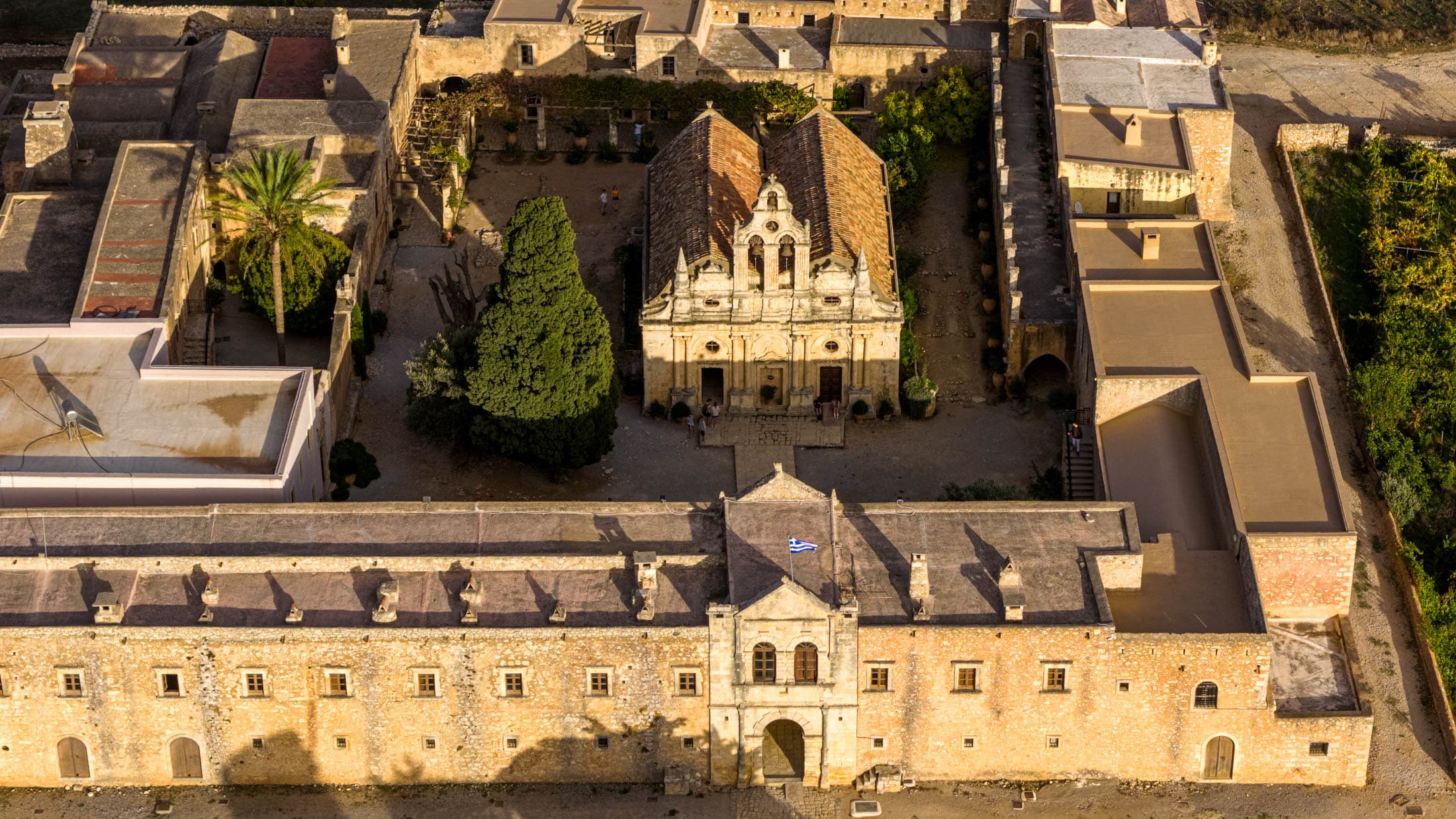
In 1088, the visionary monk Christodoulos, with a chrysobull of Emperor Alexios I Komnenos, founded the Monastery. Due to the pirate raids, the complex acquired a fortress-like form, with tall towers and battlements, creating an impregnable spiritual core. Inside, the labyrinthine layout includes chapels, cells, storerooms and the historic Refectory of the monks.
Central point is the small inner courtyard and the old Katholikon. The chapel of the Virgin Mary stands out with the rare frescoes of the 12th century, reflecting the refined artistry of Constantinople.
A World Monument of Culture
Patmos is today one of the most important pilgrimages of Christianity. Treasures of immense value are kept in the Museum and the Sacristy of the Monastery: Byzantine manuscripts, rare printed works, icons and sacred relics that testify to the high education of its abbots over the centuries.
The inclusion of Chora, the Monastery and the Cave in the UNESCO World Heritage Sites affirms the universal importance of Patmos as a place where the light of faith and history meet in harmony.
The Sacred Cave of the Book of Revelation
In the heart of the island is the Cave where John, with the help of his disciple Prochoros, wrote the Book of Revelation, the last and most symbolic book of the New Testament. The site is the most sacred pilgrimage site of Patmos, as tradition preserves the places where the Theologian rested, as well as the crevice of the rock through which the Divine Voice was heard.
The Monastery of St. John the Theologian (Agios Ioannis Theologos)
In 1088, the visionary monk Christodoulos, with a chrysobull of Emperor Alexios I Komnenos, founded the Monastery. Due to the pirate raids, the complex acquired a fortress-like form, with tall towers and battlements, creating an impregnable spiritual core. Inside, the labyrinthine layout includes chapels, cells, storerooms and the historic Refectory of the monks.
Central point is the small inner courtyard and the old Katholikon. The chapel of the Virgin Mary stands out with the rare frescoes of the 12th century, reflecting the refined artistry of Constantinople.
A World Monument of Culture
Patmos is today one of the most important pilgrimages of Christianity. Treasures of immense value are kept in the Museum and the Sacristy of the Monastery: Byzantine manuscripts, rare printed works, icons and sacred relics that testify to the high education of its abbots over the centuries.
The inclusion of Chora, the Monastery and the Cave in the UNESCO World Heritage Sites affirms the universal importance of Patmos as a place where the light of faith and history meet in harmony.